Why Do My Drains Keep Clogging? Common Causes in Older Homes
How to tell a routine clog from a branch-line or sewer problem—and what a sensible diagnosis should include
A drain that clogs once is annoying. If it slows down again a few weeks or months after clearing, the opening may have been restored without addressing the underlying cause.
That doesn't automatically mean you need a new sewer line. The cause may be ordinary buildup, but an older home can also have rough pipe, roots, a shifted joint, or a low section that holds waste. The goal is to locate the restriction and decide whether cleaning or repair makes sense.
The short answer: the clog may be coming back because the cause never left
A cable machine—often called a snake or auger—can punch through or retrieve a blockage and restore flow. That's a successful service if a removable wad of hair was the whole problem. It may be only temporary if the cable opened a narrow path through heavy grease, mineral buildup, roots, or debris sitting in a damaged pipe.
Here's the thing: repeated clogs are a pattern, not a diagnosis. The pattern can help narrow the search. One slow tub usually points in a different direction than a basement floor drain that backs up whenever someone flushes an upstairs toilet.
What your drains are trying to tell you
| What you notice | What it may suggest | Reasonable next check |
|---|---|---|
| One sink, tub, or shower is slow | Stopper, trap, or nearby branch-line buildup | Remove accessible debris; clear the local line if needed |
| Several nearby fixtures are slow | A shared branch drain is restricted | Identify the last normally draining fixture and clear the shared branch |
| Fixtures on different floors are affected | A larger building drain or sewer lateral may be involved | Limit water use and arrange a main-line assessment |
| A low drain backs up when another fixture runs | Wastewater cannot pass freely downstream | Treat it as a possible main-line blockage |
| Drains gurgle or a trap loses water | A restriction or venting problem may be changing air pressure | Check both drainage and venting rather than guessing |
| The same clog returns on a schedule | Buildup, roots, pipe damage, or an incomplete clearing | Discuss cleaning history and whether a camera would change the plan |
Start with one question: is it one fixture or the whole house?
Before you call, map the symptoms. Run only enough water to observe what's happening; don't keep testing if sewage is backing up. Note which fixture is slow, what causes a reaction elsewhere, and where the lowest affected drain is located.
If only one bathroom sink is slow while every other fixture works normally, the issue is probably close to that sink. If the toilet bubbles when the washer drains, or water appears in a basement shower when an upstairs fixture runs, the restriction is more likely in a shared line downstream.
The common causes—starting with the simple ones
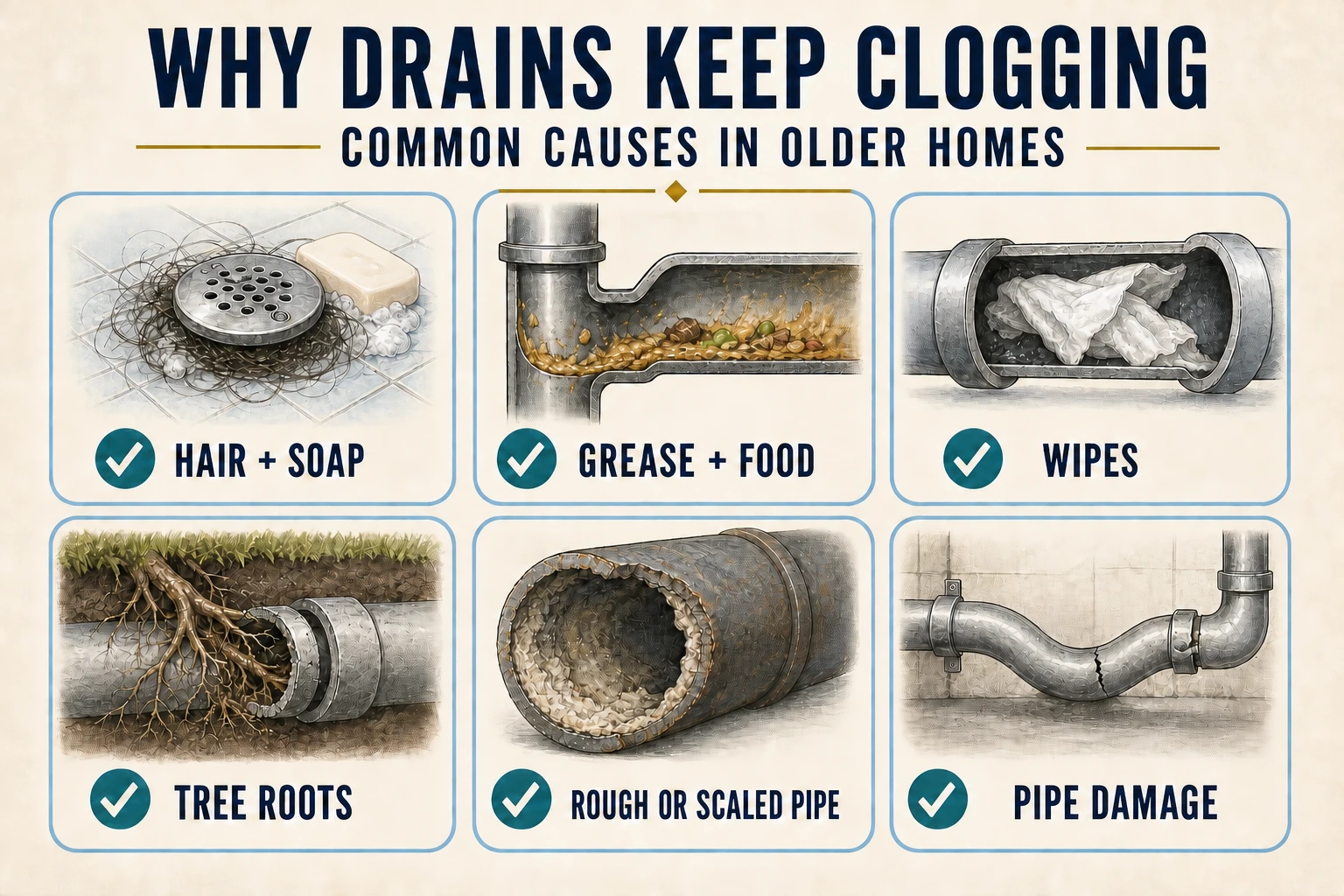
1. Hair, soap residue, and everyday bathroom buildup
Hair catches on a stopper, trap, or rough fitting. Soap residue clings to it, and the opening narrows. Removing visible debris may solve a shallow clog. If it returns quickly, buildup may extend into the branch or the drain may keep collecting material.
2. Grease and food residue in the kitchen line
Grease doesn't have to enter as a cup of hot oil. Residue from pans, dishes, and food can cool inside the line and trap more material. A disposal chops food; it doesn't make waste disappear. NEORSD advises putting fats, oils, grease, and greasy food waste in the trash, not the drain.
3. Wipes and other products that don't behave like toilet paper
A package may call a wipe flushable, but it doesn't break apart like toilet paper. Wipes can catch on roots, rough pipe, offsets, and debris. NEORSD says wipes, paper towels, floss, feminine products, rags, and similar items belong in the trash.
4. Tree roots entering a sewer lateral
Roots take advantage of openings such as cracks or separated joints. Inside, they can catch paper and waste. Cutting them may restore flow, but recurrence depends on the defect. A camera can show where roots enter and whether the line is otherwise stable; roots alone don't prove the entire lateral needs replacement.
5. Aging pipe with a rough or narrowed interior
Depending on age and renovations, a home may have cast iron, clay, older fiber pipe, PVC, or several materials. Cast iron can develop scale; segmented pipe can shift or admit roots; past repairs can leave snag points. Condition matters more than age, which is why footage is better than assumptions.
6. A belly, offset, crack, or partial collapse
Drain lines rely on gravity. A sag can hold waste, an offset can snag solids, and a collapse can reduce the opening. Cleaning can't correct the pipe's shape. If repair is recommended, ask to see the footage and have the defect located; 'bad sewer' isn't enough information for a major decision.
7. Venting or layout problems that mimic a clog
Vents admit air so water can move without pressure swings. A blocked vent or poor alteration can contribute to gurgling and slow drainage, but a partial drain restriction can create similar symptoms. Let the fixture pattern guide the diagnosis before anyone proposes opening walls or changing vents.
An older home doesn't automatically need a new sewer line
Be cautious when someone jumps from a slow drain to full replacement. Some old lines work with maintenance, some have one repairable defect, and others are too deteriorated for repeated clearing to make sense.
Ask whether the blockage, material, footage, defect location, and recurrence history explain the recommendation. If replacement is suggested, compare suitable spot-repair, lining, trenchless, and excavation options. Not every method fits every pipe, so consider an itemized second opinion unless there is an immediate risk.
Snake, hydro jet, or camera: what does each one actually do?
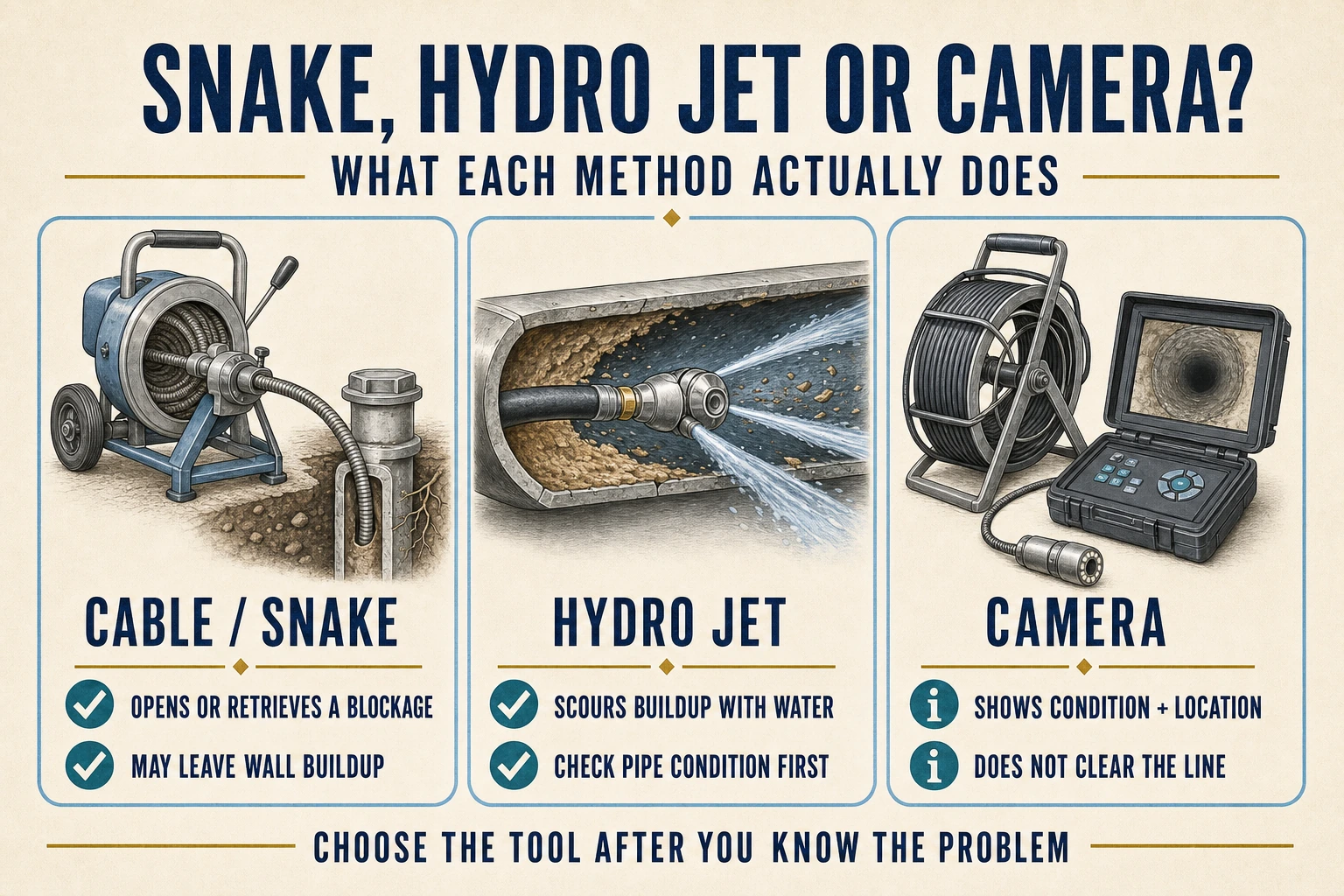
| Method | What it does well | What to understand first |
|---|---|---|
| Cable or snake | Breaks through or retrieves many localized blockages; can cut roots with the right head | May open a path without removing all wall buildup; tool size and access matter |
| Hydro jetting | Uses controlled high-pressure water to scour grease, sludge, roots, and buildup | Pipe condition should be assessed; it isn't appropriate for every fragile or damaged line |
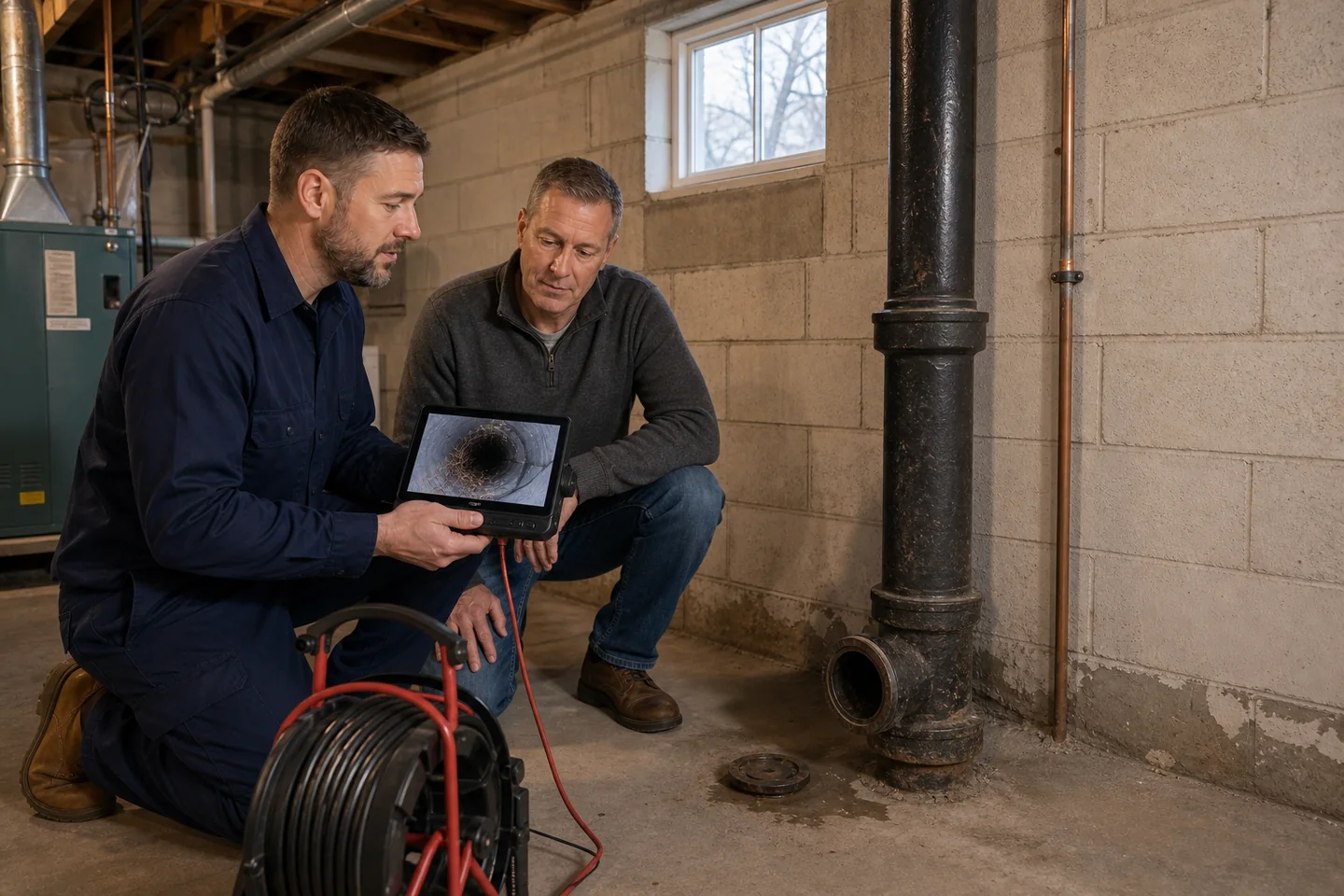
| Camera inspection | Shows accessible pipe condition and helps locate defects | It doesn't clear the line, and a blocked or dirty pipe may need cleaning first |
Hydro jetting can clean a structurally sound line, but more pressure isn't automatically better. Pipe material, condition, fittings, access, and safe pressure matter. A camera isn't mandatory for every first sink clog; it is more useful for recurring main-line trouble, suspected roots or damage, and repair planning.
How much does drain cleaning cost in 2026?
National cost guides are best used as planning ranges, not as promises for a specific your area house. HomeYou's 2026 drain-cleaning guide lists a national range of about $138 to $369, averaging $233, and an your state planning range of about $140 to $373. Angi's 2026 data lists a typical range of about $147 to $352, averaging $246.
| Service | 2026 planning range | Why your quote may differ |
|---|---|---|
| Routine drain cleaning | $138-$369 national; $140-$373 your state (HomeYou) | Fixture, access, severity, equipment, timing, and local labor |
| Routine drain cleaning | $147-$352; $246 average (Angi) | Service-call policy, blockage location, and whether more than one line is involved |
| Main sewer-line clearing | $298-$791 (HomeYou) | Cleanout access, distance, roots, repeat attempts, and line condition |
| Hydro jetting | $350-$600 typical visit (Angi) | Line length, buildup, access, inspection, and pipe condition |
| Camera pipe inspection | $168-$441; about $280 average (HomeYou) | Whether it is bundled, line must be cleared first, and locating/reporting scope |
After-hours work, sewage cleanup, difficult access, or a missing cleanout can raise the total. Ask whether the estimate includes the service call, clearing, cleanup, camera work, video, and any return-visit policy.
What you can try yourself—and when to stop
For one slow fixture, remove visible hair, clean an accessible trap if you can reinstall it without leaks, or use the correct plunger. Stop if a fitting is badly corroded or won't move normally.
Avoid turning a simple clog into a chemical hazard. Poison Control warns that many non-enzymatic drain cleaners contain highly corrosive acids or alkalis. Follow the label, use protective equipment, and never mix cleaning products. If a professional is coming, tell them exactly what product went into the drain so they can protect themselves from splashes or fumes.
It's time to stop experimenting when sewage is backing up, several fixtures are affected, the lowest drain reacts to upstairs use, the clog returns soon after clearing, or you don't know the condition of an older line. Reduce water use until the restriction is assessed. Running more water into a blocked system can move the mess into the house.
Cleaning or repair: how to make the decision without guessing
Cleaning fits a usable line with removable buildup, manageable roots, or an isolated blockage. Repair becomes more reasonable when footage shows a defect that repeatedly catches waste, a belly, a major offset, collapse, or deterioration. Recurring cleanings can add up, but one clog in an old pipe doesn't justify replacement. Connect the recommendation to evidence.
Permit and responsibility questions usually become relevant when work moves beyond cleaning into alteration or replacement. your local area lists repair or extension of plumbing and sewer systems among work requiring plumbing permits. Requirements and the boundary between homeowner and public responsibility can vary by municipality and utility, so confirm both before signing a repair agreement.
Questions to ask before you give anyone your contact information
- Based on my fixture pattern, do you suspect a local trap, branch drain, building drain, or sewer lateral?
- Is the service-call or diagnostic charge included, and what exactly does the quoted clearing cover?
- Which access point and clearing method will you use, and why is that method suitable for this pipe?
- If you recommend hydro jetting, how will you evaluate the condition of an older or unknown line first?
- Is camera inspection included or separate, and will I receive the video, written findings, and location of defects?
- What happens if the line cannot be cleared from the quoted access point or the camera cannot pass?
- Does your repeat-clog policy cover this line, and what conditions—such as roots or damaged pipe—are excluded?
- If repair is recommended, who handles permits, inspection, utility marking, cleanup, and restoration?
- Where does homeowner responsibility end at this address, and should I contact the municipality or sewer utility before approving work?
Frequently asked questions
Why does the same drain clog every few months?
The line may be collecting the same material because buildup remains on the pipe walls, household habits haven't changed, or a rough surface, root opening, offset, or low spot keeps catching debris. Ask what was removed and whether the recurrence pattern justifies a deeper inspection.
Why is only my kitchen sink affected?
A kitchen-only problem usually points to the trap or kitchen branch, especially when grease and food residue are involved. If other fixtures react when the sink or dishwasher drains, the restriction may be farther downstream.
What does it mean if several drains are slow at once?
Several affected fixtures can indicate a shared branch or main drain restriction. A low drain backing up when an upstairs fixture runs is a stronger main-line warning. Limit water use and have the system assessed.
Are flushable wipes safe for older pipes?
NEORSD advises that wipes should not be flushed because they don't break down like toilet paper. Older, rough, rooted, or offset lines give wipes even more places to catch, but they can cause problems in newer systems too.
Can hydro jetting damage old pipes?
It depends on pipe material and condition, the nozzle, access, and pressure used. Hydro jetting can clean a sound line very effectively, but a fragile, badly deteriorated, or collapsed pipe needs a different plan. Ask how condition will be evaluated first.
Do roots mean I need the whole sewer replaced?
Not necessarily. The answer depends on where roots enter, the number and severity of defects, pipe condition, recurrence, access, and whether a durable spot repair or other method is suitable. Review the footage before deciding.
Is a sewer camera always necessary?
No. A straightforward first-time fixture clog may not need one. A camera is more useful for recurring main-line trouble, suspected roots or damage, unexplained repeat blockages, and repair planning—usually after the line is clear enough to see.
Should I use chemical drain cleaner before calling a plumber?
Be cautious. Many products are corrosive and can splash from a blocked drain. Never mix cleaners, follow the label, and disclose anything already used. Multiple fixtures, sewage, or a recurring main-line problem needs diagnosis rather than repeated chemical treatment.
The practical next step
If one drain is slow for the first time, start with the accessible, low-risk causes. If the problem keeps returning—or several fixtures are involved—skip the cycle of temporary fixes and ask for a diagnosis that identifies the likely location and reason.
A good estimate should make the next decision easier, not more mysterious. It should tell you what will be cleaned, how it will be accessed, what the price includes, and what evidence would trigger a camera inspection or repair discussion. That's enough information to compare options without pretending you've already decided to buy.
Sources
Your area Regional Sewer District: 12 Clogs of Christmas
Your area Regional Sewer District: Wipes in Pipes
your local municipality: Plumbing Permits
Poison Control: What's in Drain Cleaner and What Happens if You Drink It?
Poison Control: Top Tips for Safe Spring Cleaning
HomeYou: Drain Cleaning Cost (2026)
HomeYou: Plumbing Inspection Cost (2026)
Angi: Drain Cleaning Cost (2026)