Frozen Pipes: Prevention, Emergency Steps, and Repair Costs
Frozen-pipe service: $120-$214 per hour | Burst repair: $318-$1,188
A faucet that suddenly slows to a trickle during a your area cold snap deserves attention. It may be a frozen aerator or a local service interruption, but it can also mean ice is blocking a water line. The safest response is calm and quick: locate the affected line, check for leaks, and avoid any thawing method that creates a fire or electrical hazard.
This guide covers prevention, safe thawing, burst-pipe response, and 2026 repair costs for homeowners in your local area, your local area, your local area, your local area, Warren, and nearby your area communities.
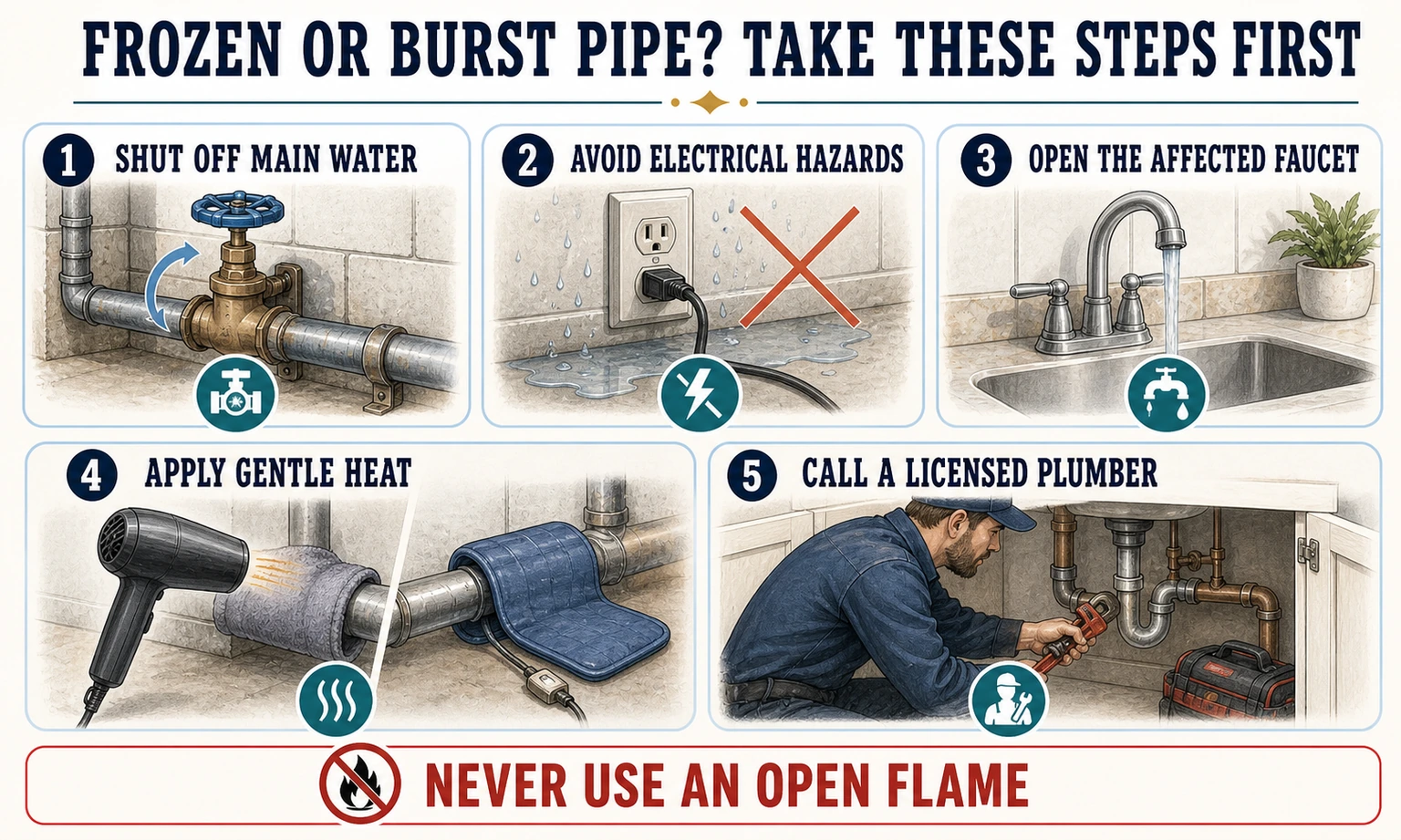
Frozen or burst pipe? Take these steps first
If water is already leaking, skip the thawing steps and shut off the water. If there is no leak and the pipe is exposed, you may be able to warm it gradually. When the pipe is hidden, visibly split, bulging, or near electrical equipment, call a licensed plumber.
- A pipe has burst: Close the home's main water shutoff immediately. Keep people and pets away from the wet area.
- Water is near outlets, wiring, a panel, appliances, or a wet basement floor: Do not enter or touch electrical equipment. Have power made safe by the appropriate utility or qualified professional.
- One faucet has little or no flow: Open that faucet, inspect accessible pipe for frost, bulging, or leakage, and check other fixtures.
- Several or all fixtures have no water: Check whether neighbors or the water utility report an outage before assuming the entire house is frozen.
- The frozen area is inaccessible or will not thaw safely: Stop and call a licensed plumber. Do not cut into walls or ceilings without knowing what is behind them.
How much does frozen-pipe repair cost in 2026?
HomeYou reports frozen-pipe professional rates of about $120 to $214 per hour, averaging $168. Its project ranges put diagnosis at $114 to $239, thawing at $168 to $419, frozen burst-pipe repair at $318 to $1,188, and replacement of a burst section at $439 to $1,795. HomeAdvisor reports a broader $200 to $3,000 normal range for burst-pipe repair, averaging about $500.
| Service | 2026 planning range | What can change the price |
|---|---|---|
| Frozen-pipe diagnosis | $114-$239 | Number of affected lines and time needed to locate the freeze |
| Professional thawing | $168-$419 | Access, severity, pipe length, and safe heating method |
| Frozen burst-pipe repair | $318-$1,188 | Material, number of breaks, and working space |
| Burst section replacement | $439-$1,795 | Length replaced, fittings, access, and testing |
| General burst-pipe repair | $200-$3,000 | HomeAdvisor national range; complex work can cost more |
| Emergency call-out | $100-$300 | After-hours response and local contractor policy |
These are national planning figures, not guaranteed your area prices. Drywall access, structural drying, insulation, flooring, mold work, and painting are usually separate. Ask the plumber to distinguish permanent pipe repair from access and restoration.
Why pipes freeze and break
Water expands as it freezes. A freeze can block the pipe and create pressure between the ice and a closed faucet or another restriction. The split may occur away from the visible ice plug, which is why a pipe can begin leaking only after it thaws and water pressure returns.
Both metal and plastic piping can fail. Exposure, airflow, insulation, temperature, and the duration of the cold all matter. A line that survived last winter may freeze after insulation shifts, an opening develops, or heat is reduced.
The highest-risk pipes in homes
- Supply lines along exterior walls, especially behind kitchen sinks, vanities, showers, or laundry hookups
- Pipes in unfinished basements, crawl spaces, attics, garages, and enclosed porches or additions
- The water-service entry near the foundation and lines close to rim joists, vents, cracks, or poorly sealed penetrations
- Outdoor hose bibs, irrigation supply lines, pool lines, and piping connected to an attached garage
- Lines in vacant rooms or homes where the thermostat is lowered and interior doors restrict warm airflow
Snow itself does not freeze plumbing; sustained cold and an exposed or underheated route do. Additions, mixed insulation, and hidden wall cavities can create cold pockets in homes of any age.
Before winter: prevent the predictable freezes
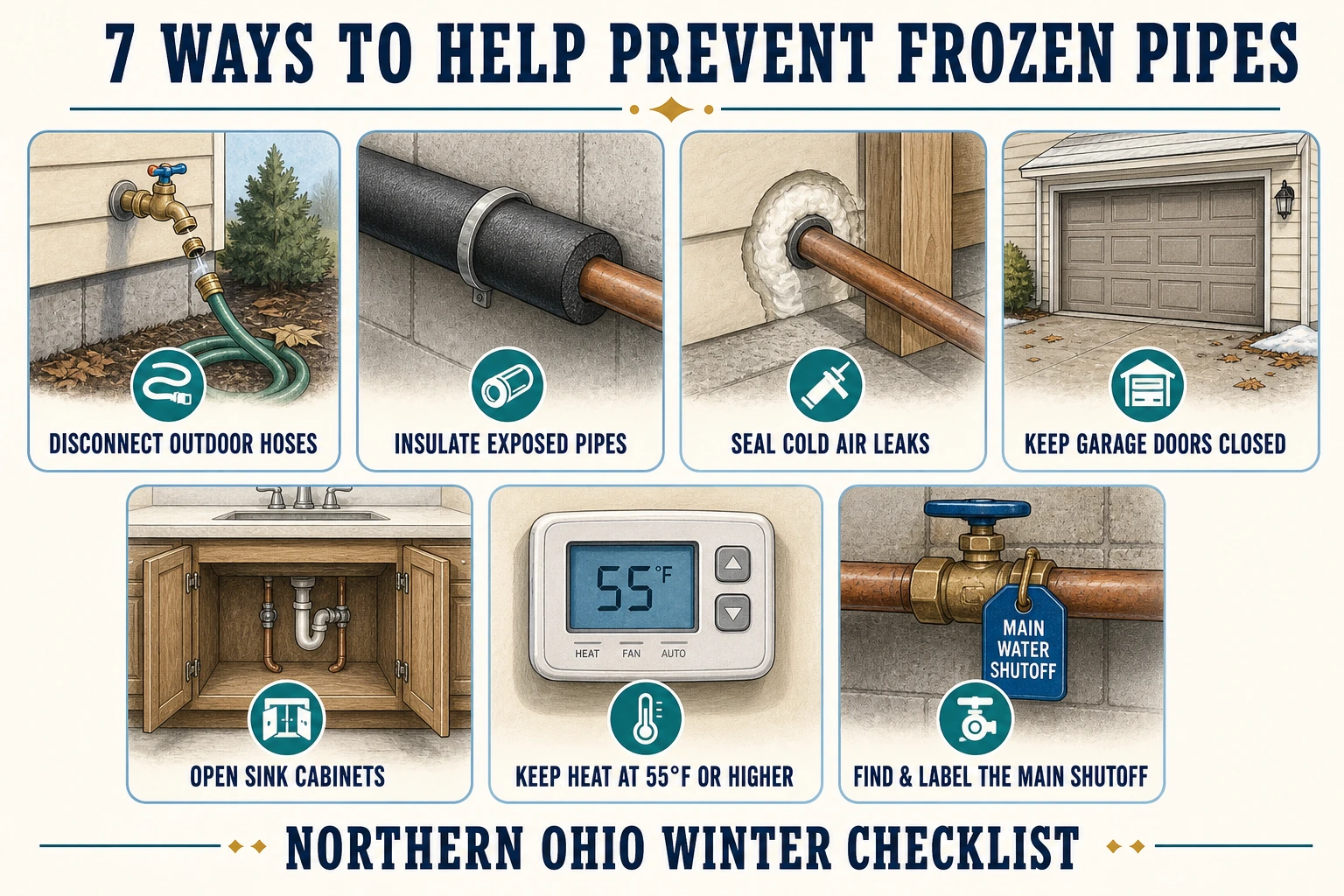
Before the first hard freeze, trace accessible water lines and note where they leave heated space or cross moving cold air.
- Disconnect, drain, and store outdoor hoses. Follow the home's plumbing design when draining or shutting off exterior faucets.
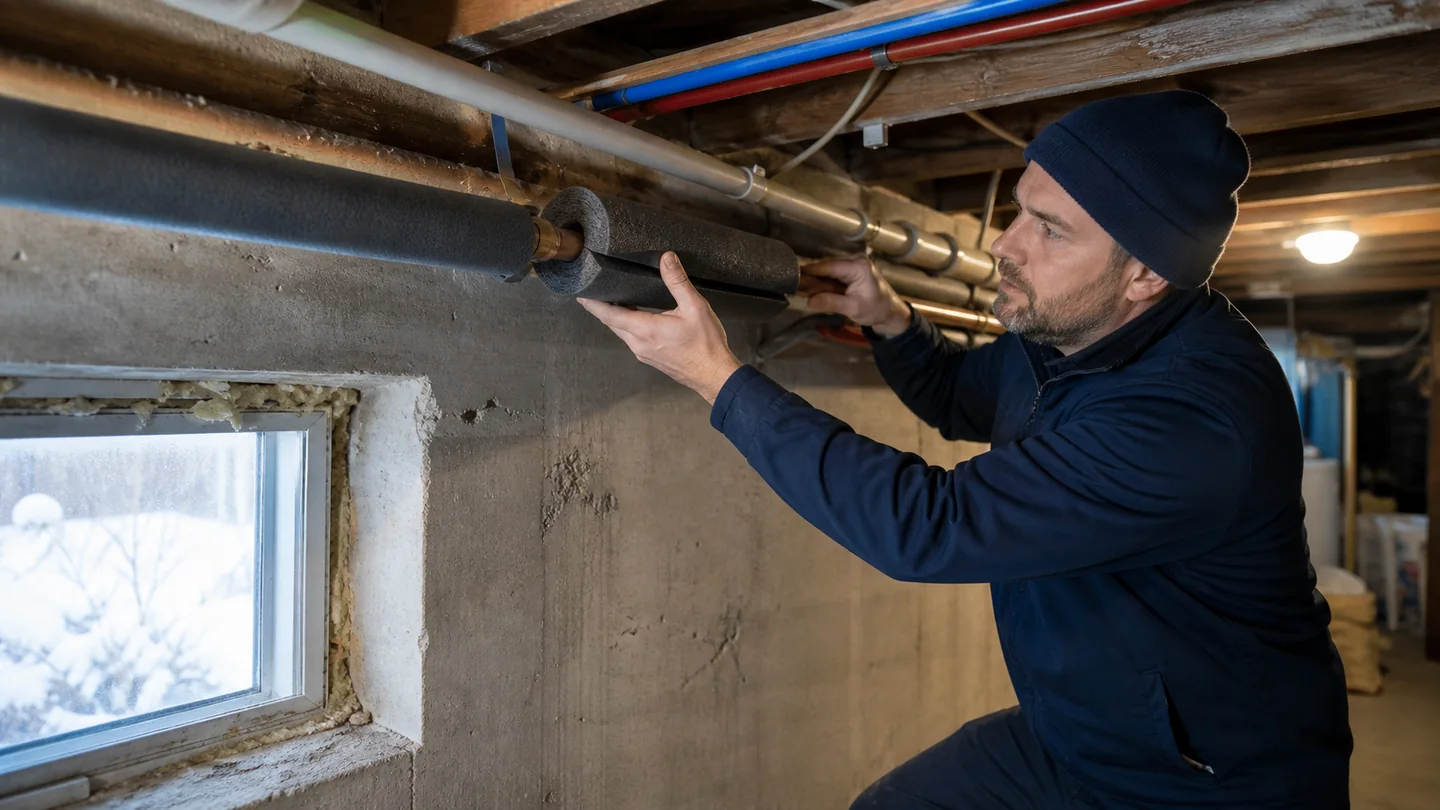
- Insulate accessible hot and cold water lines in unheated or marginal spaces with products intended for pipe insulation.
- Seal air leaks around foundation penetrations, rim joists, windows, doors, and utility openings without blocking required combustion air or ventilation.
- Keep garage doors closed when water lines run through the garage. Repair doors or weatherstripping that allows persistent cold airflow.
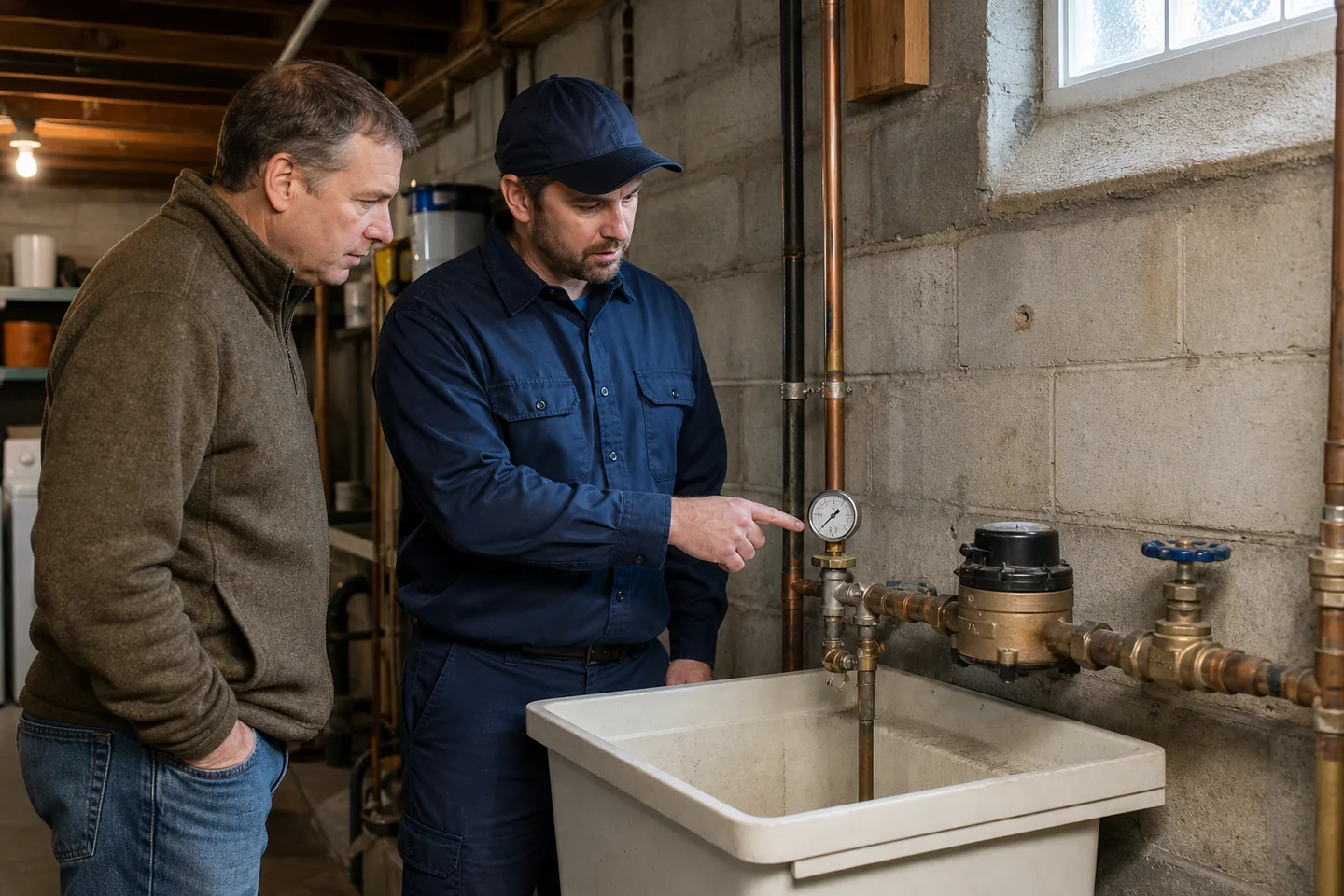
- Find and label the main water shutoff. Make sure responsible adults know where it is and how it operates; your local water utility notes it is often near the meter in a basement or crawl space.
- Have damaged shutoff valves, chronic cold spots, and recurring freeze locations corrected before winter rather than relying on emergency thawing each year.
During extreme cold: protect vulnerable plumbing
Keep heat steady and let warm air reach plumbing. The American Red Cross and your local water utility recommend at least 55 degrees Fahrenheit when a home is vacant during cold weather. A remote wall cavity or crawl space may still be colder than the thermostat reading.
- Open sink cabinet doors so heated air can circulate, after moving cleaners and chemicals out of children's and pets' reach.
- During the worst cold, your local water utility advises a pencil-lead-thin stream from the faucet farthest from the meter. The Red Cross similarly recommends a trickle from the faucet served by an exposed pipe.
- Keep interior doors open when they help conditioned air reach a cold bathroom, laundry area, or utility room.
- If leaving for several days, follow utility and plumber guidance for the property. your local water utility recommends either turning off the main and draining outside faucets or leaving the thermostat at 55 degrees or higher.
A drip is a short-term cold-weather measure, not a repair for missing insulation or air leakage. Follow local guidance, especially when a drain or sewer problem exists.
How to thaw an accessible frozen pipe safely
Only attempt thawing when the pipe is accessible, intact, dry, and away from electrical hazards. For a split, leaking, bulging, or hidden pipe, shut off the water as appropriate and call a plumber.
- Open the faucet served by the frozen line. Leave it open while warming the pipe so pressure can relieve and melting water can flow.
- Warm the pipe gradually. The Red Cross lists an electric heating pad wrapped around the pipe, a hair dryer, towels soaked in hot water, or a portable space heater kept away from flammable materials.
- Follow every appliance instruction, keep electrical cords and devices dry, and never leave a heater unattended.
- Continue until normal pressure returns, then check the entire accessible line and nearby fittings for leaks.
- Check other faucets. One frozen line is a warning that another exposed line may be at risk.
| Never use an open flame Do not use a blowtorch, kerosene or propane heater, charcoal stove, or another open-flame device to thaw plumbing. Avoid improvised high-heat methods that can start a fire, damage the pipe, or create an electrical hazard. |
|---|
What to do after a pipe bursts
First stop new water and protect people. Repair, drying, and insurance decisions follow once the flow is controlled.
- Close the main water shutoff. If a separate, known fixture shutoff safely isolates the break, it may also help, but do not lose time searching while water spreads.
- Stay out of wet areas with possible electrical exposure. Do not handle plugs, switches, panels, appliances, or extension cords while standing in water.
- Open a lower cold-water faucet after the supply is off to relieve pressure, provided the drain is usable and doing so will not worsen a sewer backup.
- Move belongings only when the area is safe. Use towels or containers for a small clean-water release; larger damage may need professional extraction and structural drying.
- Photograph the source and affected rooms before discarding material, then contact a licensed plumber. Notify the insurer promptly when damage may lead to a claim and follow its documentation instructions.
- Do not close walls or reinstall wet insulation until materials are dry and the repaired system has been tested.
What makes a frozen-pipe estimate higher or lower
Access is often the biggest variable. An exposed basement line differs from a break behind tile, above a finished ceiling, or below a slab. Diagnosis, multiple breaks, and deteriorated nearby pipe also add labor.
- Time and urgency: evening, weekend, holiday, and cold-wave demand may add emergency fees.
- Pipe and fittings: copper, PEX, CPVC, galvanized steel, valves, transitions, and tight assemblies require different labor and materials.
- Extent of damage: one split section costs less than several breaks or a longer replacement caused by deterioration.
- Access and restoration: drywall, plaster, ceilings, cabinets, tile, insulation, and concrete can add trades and schedule time.
- Water spread: extraction, dehumidification, cleaning, contents handling, and rebuilding are separate from the plumbing repair.
How to compare estimates without slowing an emergency
During active flooding, hire for safe shutoff and stabilization first. The written permanent-repair scope should identify the line, location, material, replacement length, access, testing, disposal, exclusions, warranty, and responsibility for finish work. Confirm diagnosis and emergency fees, and require approval for added work. For prevention projects, compare proposals against the same cold spots and insulation goals.
Will homeowners insurance cover a burst pipe?
Coverage depends on the policy, cause, maintenance, occupancy, exclusions, and deductible. The pipe and resulting water damage may be treated differently. Ask the insurer for a policy-specific answer and keep photographs, invoices, the plumber's cause statement, and a damaged-property list.
Frequently asked questions
At what temperature do pipes freeze?
There is no single indoor or outdoor temperature that predicts every freeze. Exposure time, wind-driven air leakage, insulation, pipe location, and indoor heat all matter. Treat any sustained cold as a reason to inspect known vulnerable lines.
Can hot-water pipes freeze?
Yes. The Red Cross recommends insulating both hot and cold water lines in vulnerable unheated areas. A pipe's recent water temperature does not protect it indefinitely when it sits in a cold location.
Should I leave every faucet dripping?
Usually the focus is a faucet served by an exposed or known vulnerable line. your local water utility advises a pencil-lead-thin stream from the faucet farthest from the meter during the worst cold. Follow local utility or plumber guidance for the home's layout.
How do I know whether a frozen pipe has burst?
Look for a bulge, split, dampness, staining, dripping, or the sound of water. Some breaks remain hidden until thawing restores pressure, so monitor the line and nearby walls and ceilings closely.
Can I use a heat gun or torch?
Do not use a torch or any open flame. A heat gun can deliver concentrated heat and damage pipe or nearby material, so use the gentler methods recommended by the Red Cross and your local water utility or call a plumber.
How long does it take to thaw a frozen pipe?
It depends on the length and location of the ice, surrounding temperature, pipe material, and access. If gradual warming does not restore flow, the area is inaccessible, or leakage appears, stop and call a licensed plumber.
Who should I call first after a burst?
Shut off the water first. Then call a licensed plumber; contact the insurer promptly if there is meaningful property damage. A water-damage restoration company may be needed for extraction and drying.
Prepare now, not during the next freeze
Prevention is timely maintenance: trace exposed lines, stop cold air, insulate vulnerable plumbing, keep heat reaching the space, and label the main shutoff. A recurring freeze is a defect worth correcting, not a seasonal ritual.
If a freeze occurs, use slow, supervised heat only on an intact, accessible pipe. When water leaks, electricity is a concern, or the pipe is hidden, shift to damage control and professional help.
Sources
HomeYou: Frozen Pipes Cost Guide 2026
American Red Cross: Preventing and Thawing Frozen Pipes
your local water utility: Winterizing Pipes
HomeAdvisor: Burst Pipe Repair Cost
Ready.gov: How to Prepare for a Winter Storm
Consumer Financial Protection Bureau: Disaster and Insurance Preparedness