Water Damage Restoration: Costs, Mold, and Insurance Guide
Typical restoration: $1,390-$6,392 | Complex losses can cost more
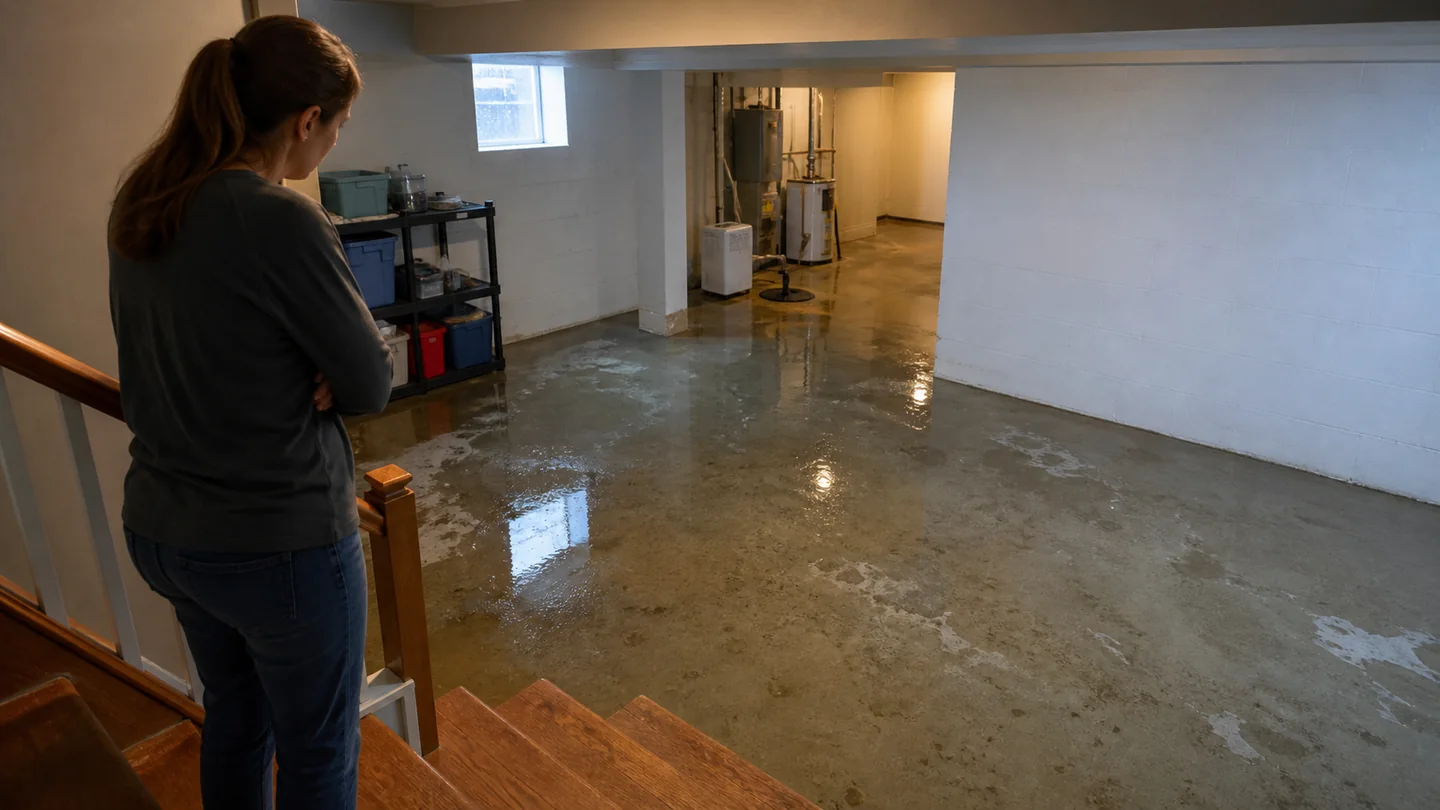
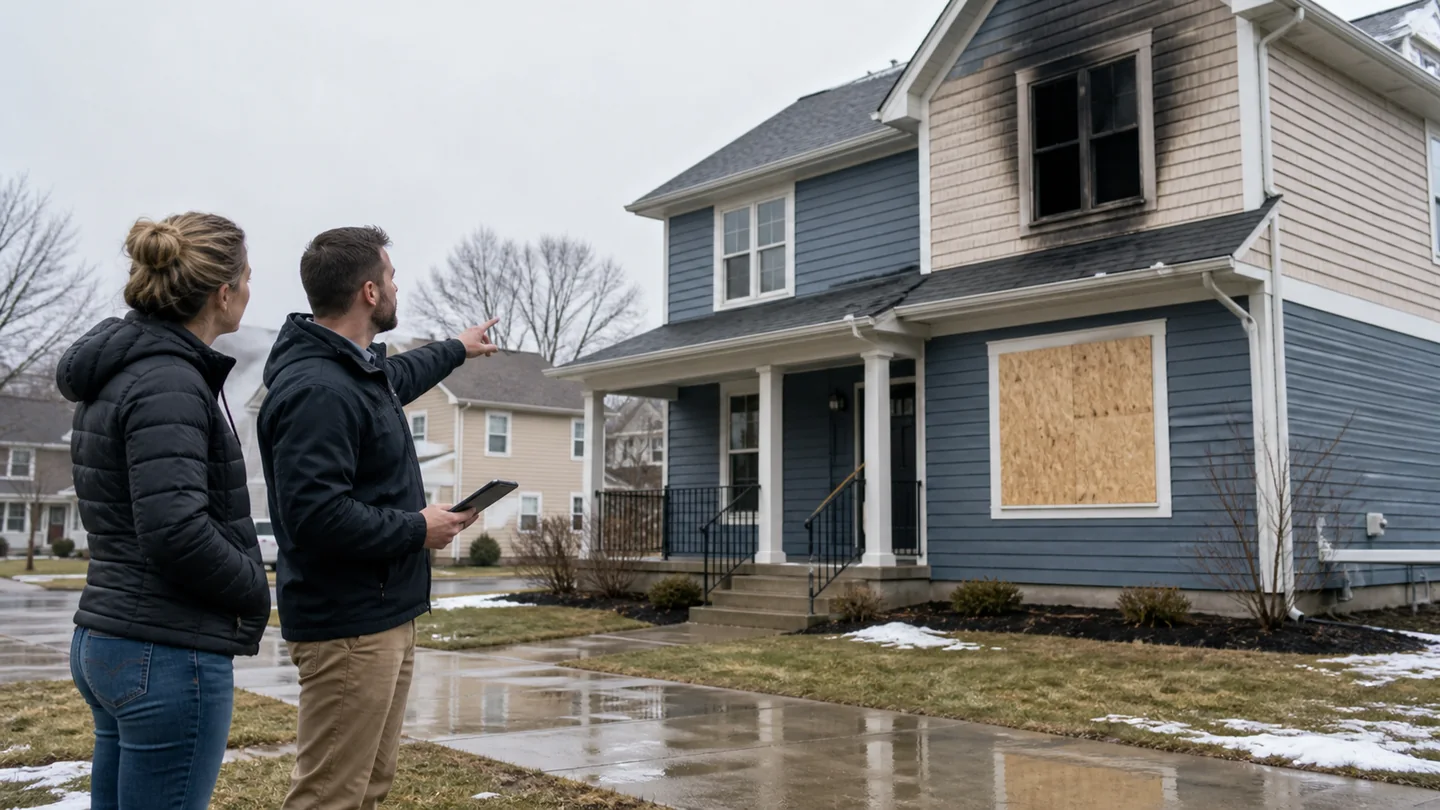
A burst pipe, failed sump pump, roof leak, or sewer backup can change an ordinary day in minutes. The first priorities are safety, stopping the source when possible, and removing moisture before damage spreads.
Typical water damage restoration costs range from about $1,390 to $6,392 in 2026, with a national average near $3,864. That range is useful for early planning, but it is not a cap. Sewage, widespread saturation, hidden moisture, mold, damaged mechanical systems, or major reconstruction can push a project well beyond it. This guide explains what restoration includes, what drives the price, when mold becomes a concern, and how to document the loss for an insurance conversation.
Water damage restoration: quick answer
- Treat standing water near electrical equipment, sewage, a sagging ceiling, or visible structural movement as a safety hazard. Do not enter the area until it is safe.
- Stop the water at a shutoff only if you can reach it safely, then call the appropriate plumber, roofer, utility, or emergency service.
- Begin extraction and controlled drying promptly. EPA guidance says water-damaged areas and items should be dried within 24 to 48 hours when possible to help prevent mold growth.
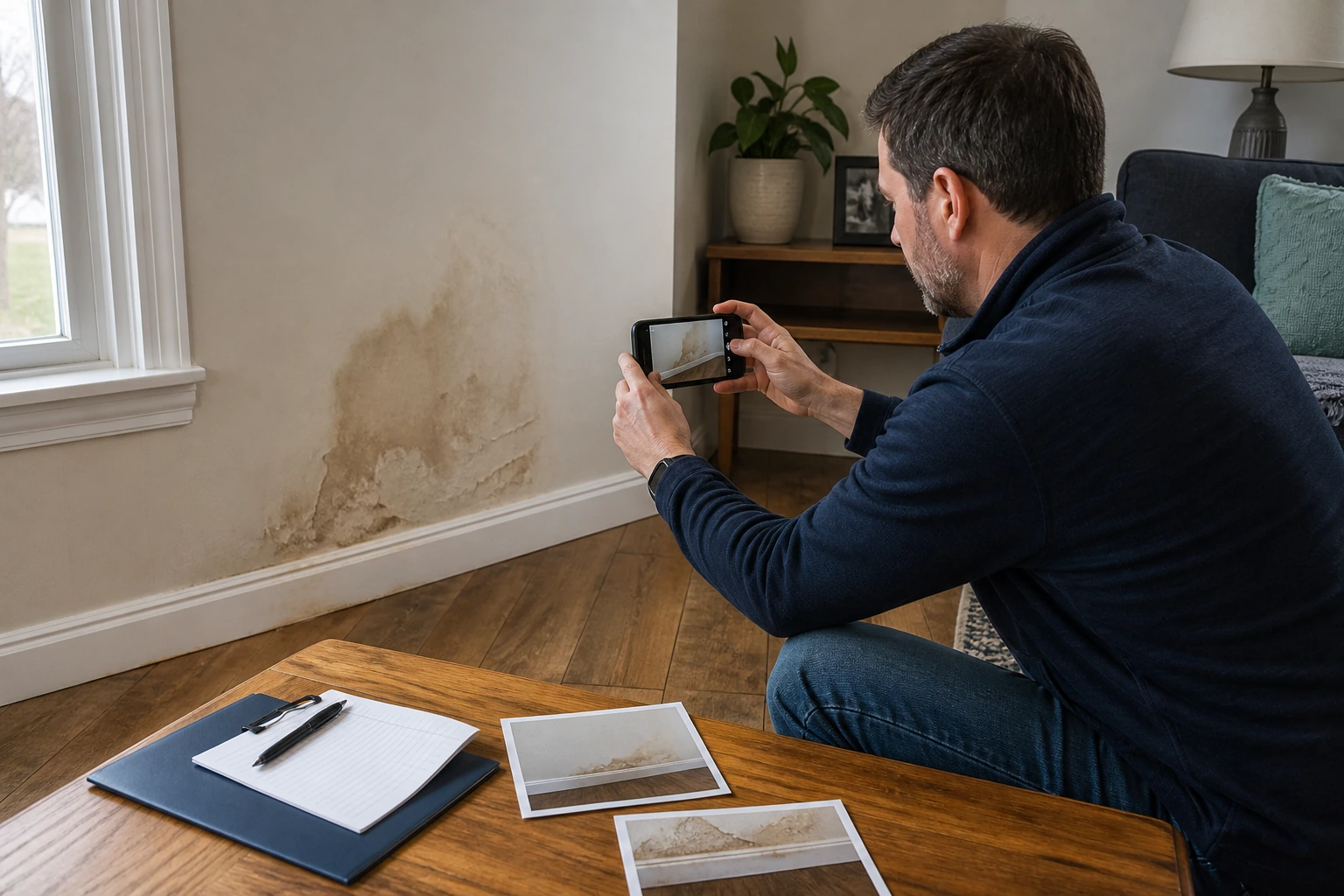
- Photograph the source and damage before cleanup when doing so will not delay an urgent safety step. Contact the insurer for claim-specific instructions.
- Ask the restorer for a written scope that separates emergency mitigation, drying, material removal, cleaning, mold work, and reconstruction.
How much does water damage restoration cost?
The amount of water is only one part of the bill. A small clean-water leak caught quickly may need extraction and drying. A finished basement with sewage, wet drywall, ruined flooring, and contaminated contents requires a different crew, protective measures, disposal, cleaning, and rebuilding.
| Service or loss type | 2026 planning range | What the range may include |
|---|---|---|
| Leak inspection | $118-$490 | Source finding and an initial damage assessment |
| Water extraction | $1,191-$3,551 | Removal of standing water from an accessible residential area |
| Structural drying | $877-$3,562 | Air movement, dehumidification, monitoring, and moisture checks |
| Typical restoration | $1,390-$6,392 | Mitigation and repairs for many small-to-moderate losses |
| Basement flood restoration | $2,191-$7,845 | Extraction, drying, cleanup, and limited repairs |
| Sewage cleanup | $2,085-$9,843 | Specialized removal, cleaning, sanitation, and odor control |
| Mold removal | $1,135-$15,239 | Containment and removal; scope varies widely by area and materials |
These HomeYou figures are broad national planning ranges, not your area price guarantees, and services may overlap. Ask whether reconstruction—such as drywall, flooring, cabinets, paint, or electrical work—is included or separate.
Safety comes before cleanup
Water can conceal electrical, biological, chemical, and structural hazards. Never operate electrical equipment while standing in water. If the main disconnect cannot be reached from a dry location, wait for the utility or an electrician. Avoid bulging ceilings, sagging floors, shifting walls, and gas or chemical odors.
Treat floodwater and sewage as contaminated. Keep children, pets, and vulnerable occupants away. CDC disaster guidance calls for gloves, goggles, and at least an N95 respirator for mold cleanup, but protective gear does not make an electrically unsafe, unstable, or sewage-contaminated space a do-it-yourself project.
| Immediate danger: Call 911 for a life-threatening emergency. Contact the gas or electric utility for suspected utility hazards, and use a qualified professional for standing water near electricity, sewage, extensive contamination, or structural damage. |
|---|
Common causes of water damage in your area
Your area freezes can split pipes, while wind and ice expose roof weaknesses. Heavy rain can overwhelm drainage or sump systems, and older homes may hide slow leaks behind finished walls.
- Frozen or burst pipes, failed supply lines, and leaking shutoff valves
- Water heater, washing machine, dishwasher, refrigerator, or HVAC condensate failures
- Roof, chimney, skylight, flashing, gutter, or ice-dam leaks
- Sump pump failure, power loss, blocked discharge lines, and overwhelmed drainage
- Sewer or drain backups and contaminated stormwater
- Basement seepage, foundation cracks, grading problems, and overflowing gutters
Restoration cannot succeed until the source is controlled. Drying a wall below an active roof leak or replacing basement drywall without correcting drainage invites the same problem back.
Clean water, contaminated water, and why the source matters
Restorers classify water by contamination and required precautions. A supply-line break differs from appliance discharge, sewage, or outside floodwater, and conditions can worsen as water contacts dirty materials.
| Plain-language type | Common examples | Practical response |
|---|---|---|
| Sanitary-source water | Fresh supply line or clean tub or sink overflow | Stop source, extract, dry, and monitor promptly |
| Water with added contamination | Appliance discharge or water that has contacted dirty materials | Professional assessment may require removal and cleaning |
| Grossly contaminated water | Sewage, drain backup, or outside floodwater | Keep out; use trained restoration professionals and protective controls |
Clear-looking water is not necessarily clean. Tell the contractor its source, age, contact path, and any cleanup already attempted. EPA recommends professional help for sewage or other contaminated water.
What a professional restoration process includes
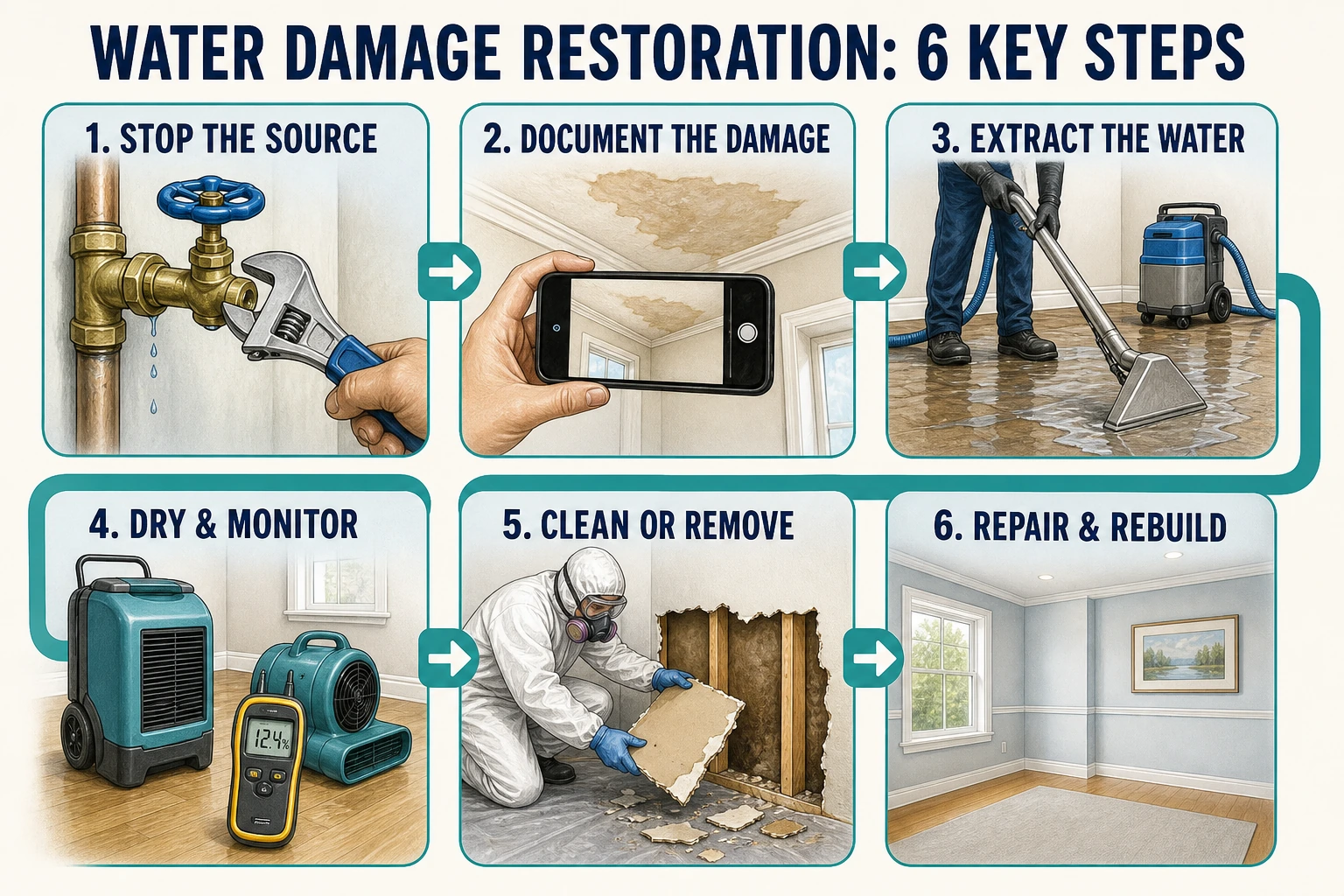
A good restoration plan is more than placing a few fans. The exact order changes with the building and water source, but a complete project generally follows these stages:
- Assessment and source control. The team identifies hazards, affected rooms, the source, and likely hidden migration.
- Moisture mapping and documentation. Meters, photos, and room-by-room notes establish the initial condition.
- Extraction. Standing water is removed with equipment selected for the surface and contamination level.
- Selective removal. Unsalvageable porous materials may be removed so concealed cavities can dry.
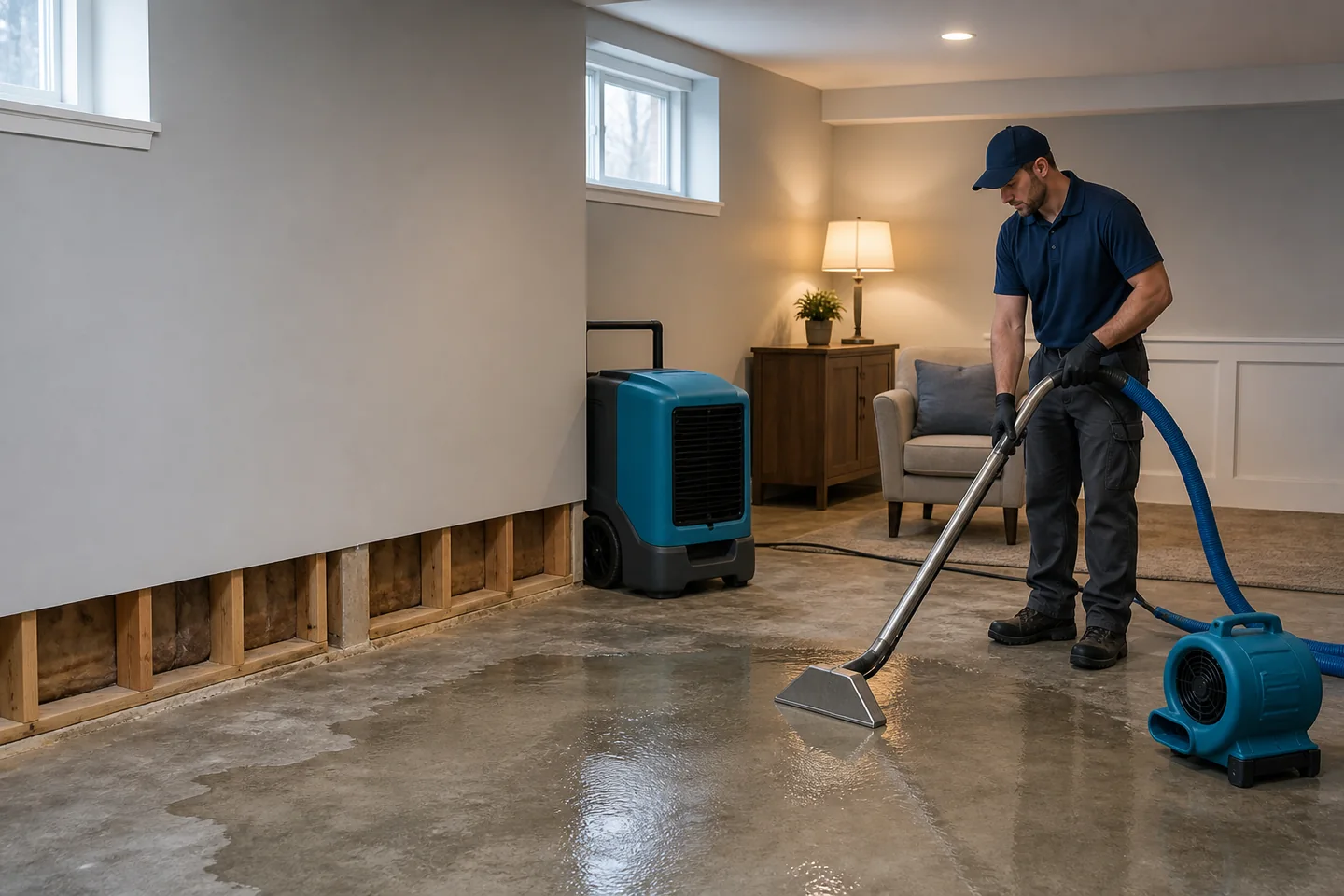
- Drying and dehumidification. Air movers and dehumidifiers dry materials while the crew monitors progress.
- Cleaning or remediation. Affected surfaces and contents are cleaned, and contaminated or mold-affected areas receive the controls appropriate to the scope.
- Repair and verification. Dry materials are rebuilt, finishes are restored, and the project file records what was completed.
Ask what drying target the company will use and how completion will be documented. Moisture can remain behind baseboards, beneath flooring, and inside wall cavities.
Mold after water damage: what homeowners should know
Mold needs moisture, so prevention begins by stopping the water and drying materials quickly. EPA recommends drying water-damaged areas and belongings within 24 to 48 hours when possible. That is a response window, not a guarantee that every item becomes moldy at 48 hours or that dry-looking surfaces are safe.
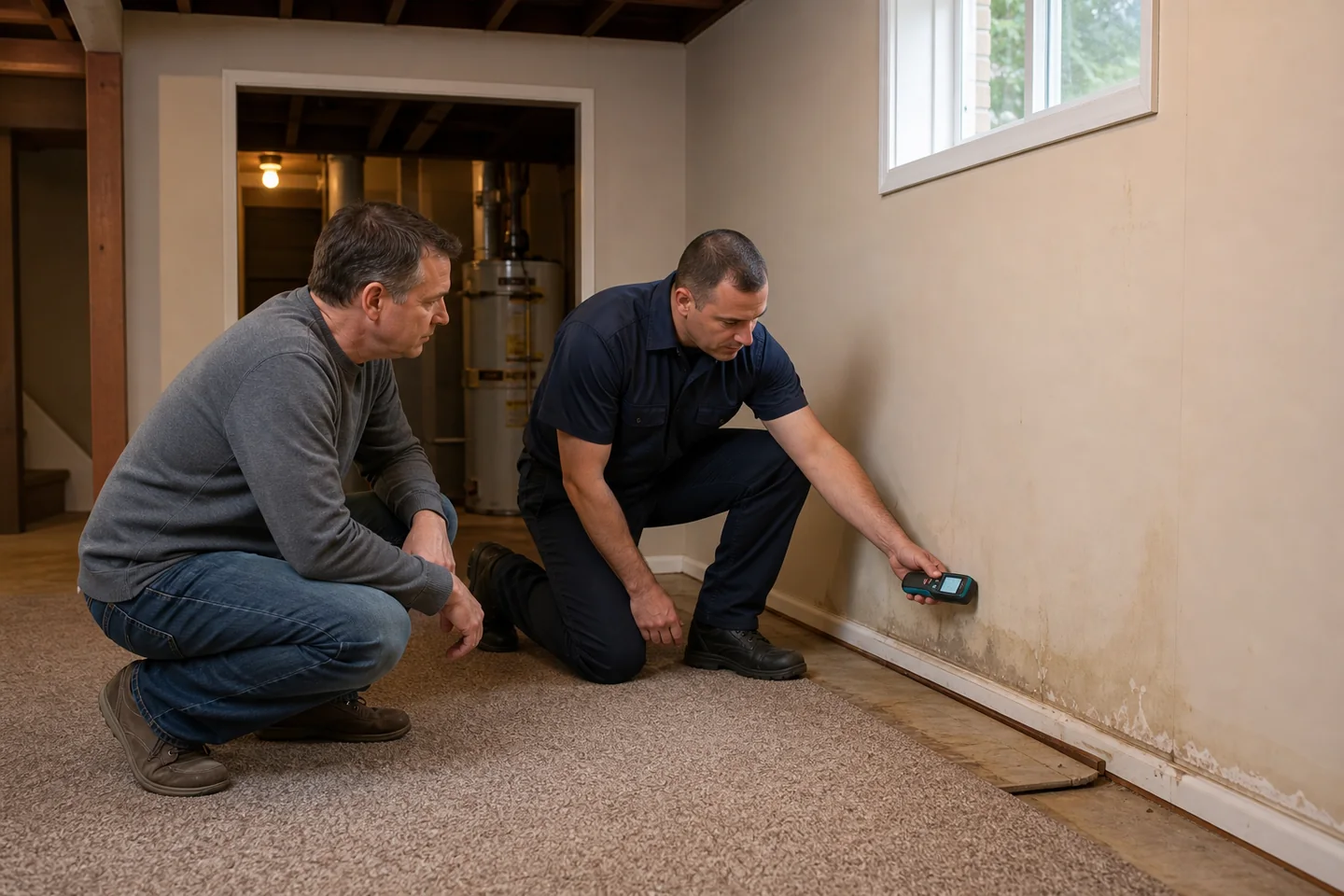
Look for musty odors, staining, soft drywall, swollen trim, and damp flooring or insulation. Mold can hide behind cabinets and walls or near HVAC returns. Do not run an HVAC system known or suspected to be contaminated.
EPA says homeowners can handle many moldy areas smaller than about 10 square feet by following its guidance. Seek professional help for larger or extensive areas, HVAC involvement, contaminated water, or occupant health concerns. Fix the moisture source before painting or closing the wall.
What drives the final restoration price?
Affected area: More rooms and square footage require more labor, equipment, and repairs.
Water source: Sewage and outside floodwater require stricter handling, cleaning, disposal, and protective measures than a quickly contained supply-line leak.
Materials: Drywall, insulation, carpet, wood, plaster, cabinets, and tile respond differently to saturation.
Time: Water that sits can migrate farther, damage finishes, increase odor, and create conditions favorable to microbial growth.
Access: Finished basements, crawl spaces, built-ins, multiple stories, and concealed cavities can make extraction and drying more complex.
Reconstruction: Emergency mitigation may stop at dry, clean building materials. Replacing finishes and fixtures can become a separate construction project.
Emergency conditions: After-hours response, winter weather, and major storms may affect availability.
Will homeowners insurance cover water damage?
Coverage depends on the policy and cause. A sudden pipe or appliance loss may be treated differently from repeated seepage, neglected maintenance, outside flooding, or sewer backup. Deductibles, limits, endorsements, exclusions, and notice requirements can all affect a claim.
Most homeowners policies do not cover flood damage, according to the National Flood Insurance Program and the your state Department of Insurance. Flood insurance is generally separate. Water or sewer backup may also require an endorsement, and mold-related coverage can be limited. Do not rely on a contractor's coverage prediction; the insurer and policy documents control the claim decision.
| Insurance note: This article provides general information, not an interpretation of your policy or legal advice. Contact your insurer or licensed insurance professional for guidance about your specific loss, coverage, duties, deadlines, deductible, and repair authorization. |
|---|
A practical insurance documentation checklist
- Contact the insurer promptly and ask what steps, records, and approvals are required.
- Photograph and video the source, water line, affected rooms, materials, and belongings before removal when it is safe to do so.
- Record when the loss was discovered, what happened, and how additional damage was limited.
- Keep plumber, roofer, electrician, restoration, equipment, hotel, and emergency-service invoices and receipts.
- Request moisture readings, equipment logs, photos, work authorization, estimates, and change orders.
- Inventory damaged belongings. Keep requested samples, but not contaminated material in occupied areas merely for proof.
- Do not delay reasonable emergency measures needed to protect people or prevent additional damage while waiting for a coverage decision.
How to compare water restoration companies
In an emergency, speed matters—but a fast arrival should still lead to a clear scope. Ask each company to explain:
- Experience with the specific water source, including sewage, flooding, mold, or older-home materials
- How the affected area will be measured, mapped, contained, dried, monitored, and documented
- Which materials can be cleaned and saved, which should be removed, and why
- Whether the estimate covers mitigation only or also includes mold work and reconstruction
- Equipment, monitoring, disposal, contents, storage, permits, and after-hours fees
- Who communicates with the homeowner and insurer and who approves changes to the scope
- Insurance, training, references, workmanship warranty, and the process for correcting incomplete drying
Do not sign an assignment or financing document you do not understand. Identify the company, read the work authorization, keep copies, and require written approval for added work when circumstances allow.
Frequently asked questions
How quickly should water damage be addressed?
Immediately for safety and source control, then as quickly as practical for extraction and drying. EPA recommends drying water-damaged areas and items within 24 to 48 hours when possible to help prevent mold growth.
Can I stay in my home during restoration?
It depends on safety, contamination, affected rooms, equipment, and occupant health needs. Ask the restorer and insurer about safe access and temporary living arrangements.
Are fans enough to dry a wet basement?
Not always. Saturated materials may also need extraction, removal, dehumidification, and moisture monitoring. Do not use fans when water may be contaminated or mold could spread.
Does bleach kill all mold in a water-damaged home?
Bleach is not a substitute for source correction, cleaning, and complete drying. Never mix bleach with ammonia or other cleaners. Follow EPA and CDC guidance and product labels.
Is outside flooding covered by homeowners insurance?
Most homeowners insurance does not cover flood damage. A separate flood policy may apply. The policy definition, water origin, limits, and exclusions control.
What is the difference between mitigation and reconstruction?
Mitigation limits additional damage through extraction, removal, drying, and cleaning. Reconstruction restores removed or damaged finishes and building components. Some companies provide both; others stop after mitigation.
Should I get more than one estimate?
Two or three comparable written estimates can help with non-emergency reconstruction. During active intrusion, prioritize safe source control and mitigation, then confirm the scope before work expands.
Move quickly, but make the scope clear
A calm, organized response makes the loss easier to manage: make the area safe, stop the source, document the condition, extract water, dry and verify materials, clean or remediate, then rebuild. The estimate should show where emergency restoration ends and permanent repair begins.
Tell the restorer the source, time discovered, affected rooms, possible contamination, safety concerns, and claim status. Those details help the company send the right equipment and let you compare scopes that include the same work.
Sources
HomeYou: Water Damage Restoration Cost Guide 2026
U.S. EPA: How Do I Get Rid of Mold?
U.S. EPA: Mold Cleanup in Your Home
CDC: Safety Guidelines for Reentering a Flooded Home
CDC: Homeowner's and Renter's Guide to Mold Cleanup After Disasters
Your state Department of Insurance: Disaster Preparation and Recovery
National Flood Insurance Program: Flood Insurance Eligibility and Coverage Basics
IICRC: Professional Water Damage Restoration Standard Overview