Basement Flooded? What Homeowners Should Do in the First 24 Hours
2026 basement flood restoration: $2,191-$7,845 | National average: about $4,357
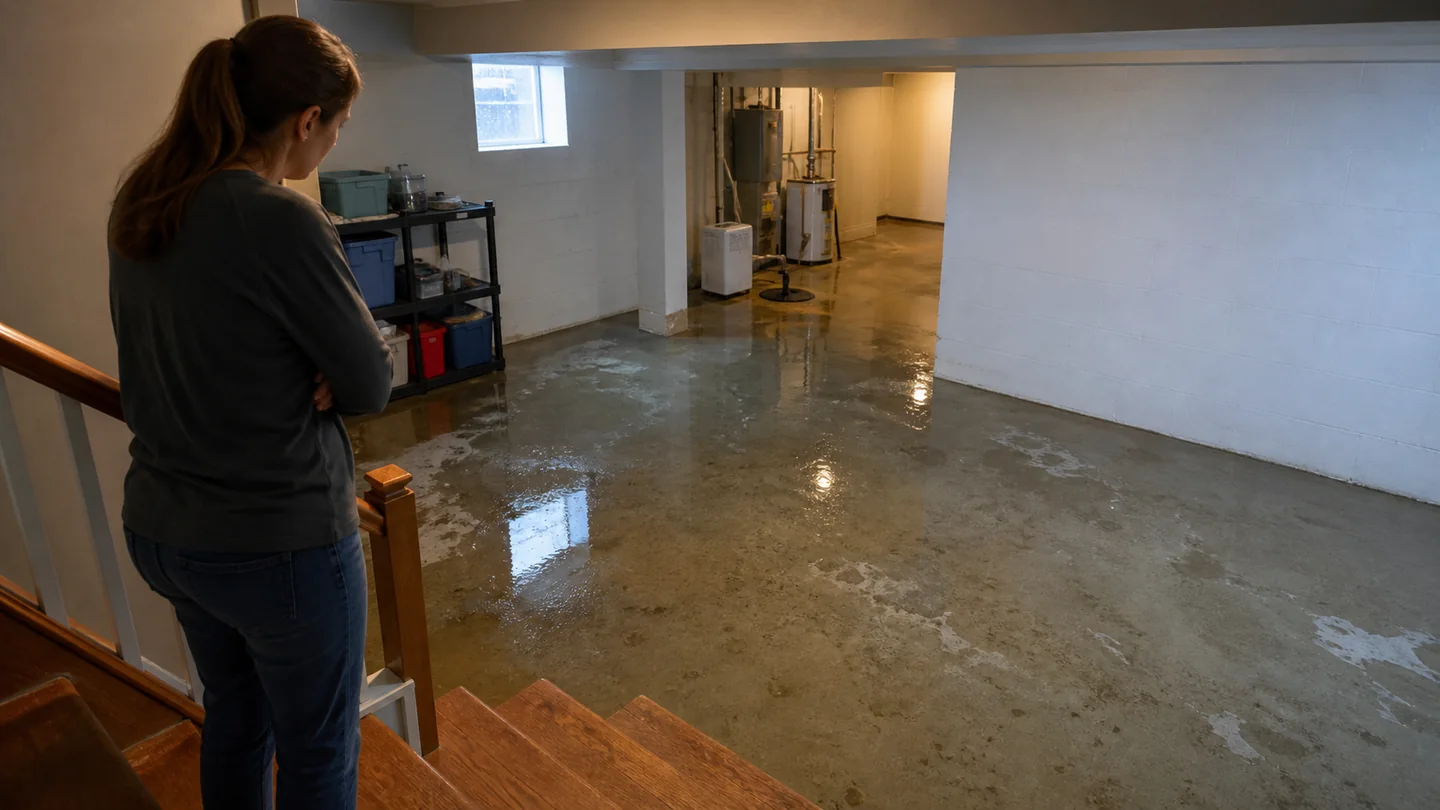
Finding water in the basement can turn an ordinary day into a scramble. In your area, the cause might be a burst pipe during a your local area cold snap, a failed sump pump after heavy rain in your local area, snowmelt entering a your local area foundation, or a sewer backup in your local area or Warren. The right first move is not grabbing a shop vacuum. It is deciding whether the space is safe to enter.
This first-24-hours plan puts safety first, then covers source control, documentation, belongings, extraction, drying, current planning costs, and the professionals who may need to be involved.
If your basement is flooding right now
- Do not step into standing water if electricity may still be on. Turn off the main power only from a dry location. If reaching the panel requires entering water, call the utility, fire department, or a qualified electrician.
- If you smell gas, hear hissing, or suspect a damaged fuel line, leave immediately. Do not touch switches, use a phone inside, or create a spark. Call the gas utility or emergency services from a safe location.
- Keep children, pets, older adults, and people with asthma or weakened immune systems away from the affected area.
- Treat sewage, stormwater, and water from an unknown source as contaminated. Avoid skin contact and do not use household fans that could spread contaminated droplets or visible mold.
- Leave if fast-moving water, a sagging ceiling, foundation movement, damaged stairs, or another structural hazard is present. Call emergency services when anyone is in immediate danger.
| Safety comes before cleanup Never turn electrical power on or off, or operate an electric tool, while standing in water. Fuel-powered pumps and generators belong outdoors at least 20 feet from doors, windows, and vents - never in a basement, garage, porch, or other enclosed or partly enclosed area. |
|---|
How much does flooded basement cleanup cost in 2026?
HomeYou reports a 2026 national range of $2,191 to $7,845 for basement flood restoration, averaging about $4,357. Its broader water-damage restoration range is $1,390 to $6,392, with an average near $3,864. These are planning figures, not fixed your area prices.
| Service | 2026 planning range | What the figure generally represents |
|---|---|---|
| Leak inspection | $118-$490 | Locating the source and assessing the affected area |
| Residential water extraction | $1,191-$3,551 | Removing standing water after a leak or flood |
| Structural drying and dehumidification | $877-$3,562 | Drying framing, drywall, subfloors, and other materials |
| Basement flood restoration | $2,191-$7,845 | Extraction, drying, cleanup, and minor repairs |
| Sewage cleanup and removal | $2,085-$9,843 | Specialized removal, cleaning, and odor control |
| Mold removal | $1,135-$15,239 | Containment and remediation; scope varies widely |
| Basement waterproofing | $2,711-$8,232 | Corrective work intended to reduce future intrusion |
Ask what each estimate includes. Extraction and drying, source repair, contaminated-material disposal, electrical inspection, mold work, and reconstruction may appear on separate scopes. Finished basements usually cost more because more materials and belongings are affected.
The first 24 hours: a practical timeline
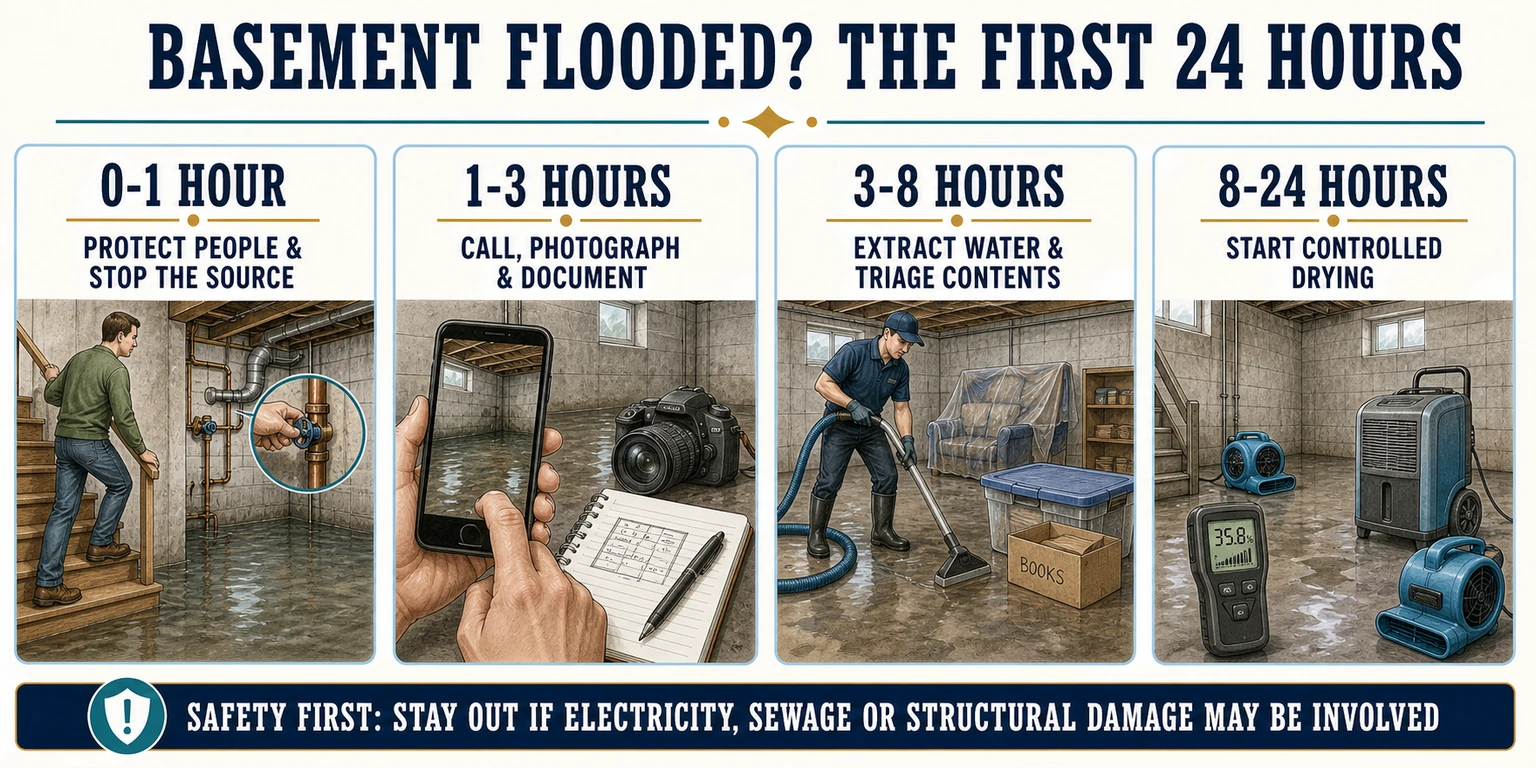
First 0-1 hour: protect people and stop the source
From a dry location, identify what is happening. If a supply pipe, water heater, appliance line, or fixture is releasing water, close the nearest shutoff or the home's main water valve only when it is safe and you know how. A plumber addresses the failed pipe or fixture; a restoration crew handles extraction, drying, and damaged materials. For an active sewer backup, stop using sinks, toilets, showers, dishwashers, and washing machines and contact the appropriate plumbing or sewer professional.
A sump pump that has lost power, jammed, or been overwhelmed may need emergency pump-out and repair. Water entering at several wall-floor joints during a storm points to drainage or groundwater pressure rather than an interior plumbing leak. Do not assume the source from appearance alone, and do not wade through water to investigate.
Hours 1-3: call, photograph, and make a record
Once the area can be viewed safely, take wide photos of each affected room and close-ups of the water line, source, damaged materials, and individual belongings. Record the date and approximate time you discovered the loss. Photograph model and serial numbers on appliances when accessible, and make a simple room-by-room inventory.
Contact the insurer promptly if the loss may become a claim. Ask about emergency mitigation, the deductible, documentation, temporary storage, and approval before discarding property. Coverage depends on the policy and cause. Follow the insurer's instructions, but never delay a safety-critical response while waiting for an adjuster.
Hours 3-8: extract water and triage contents
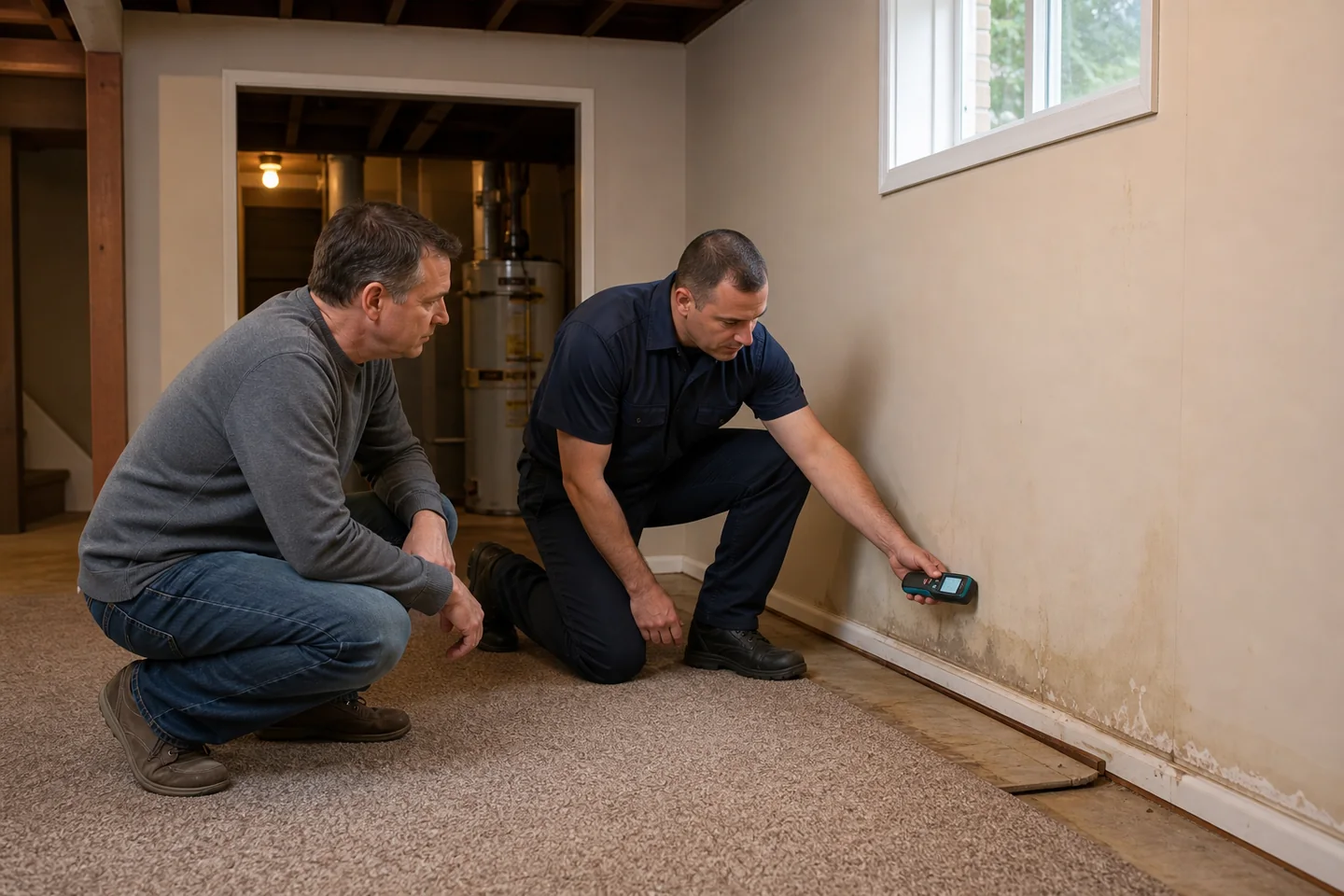
Water can travel under floors, behind baseboards, into drywall, beneath bottom plates, and through insulation. Restoration technicians may use pumps, extraction tools, moisture meters, and thermal imaging to map the wet area and decide what can be dried in place.
Move dry, lightweight valuables from areas that are safe to access. Place documents and photographs in clean containers and ask a restoration specialist about recovery if they are wet. Do not carry waterlogged furniture up stairs, disturb household chemicals, or handle sewage-soaked carpet and padding without the appropriate protective equipment and disposal plan.
Hours 8-24: establish a drying plan
The EPA recommends drying a flooded home and its contents as quickly as possible, ideally within 24 to 48 hours. That target does not mean every material will be fully dry in two days. It means standing water and unsalvageable wet materials should be addressed promptly and controlled drying should be underway.
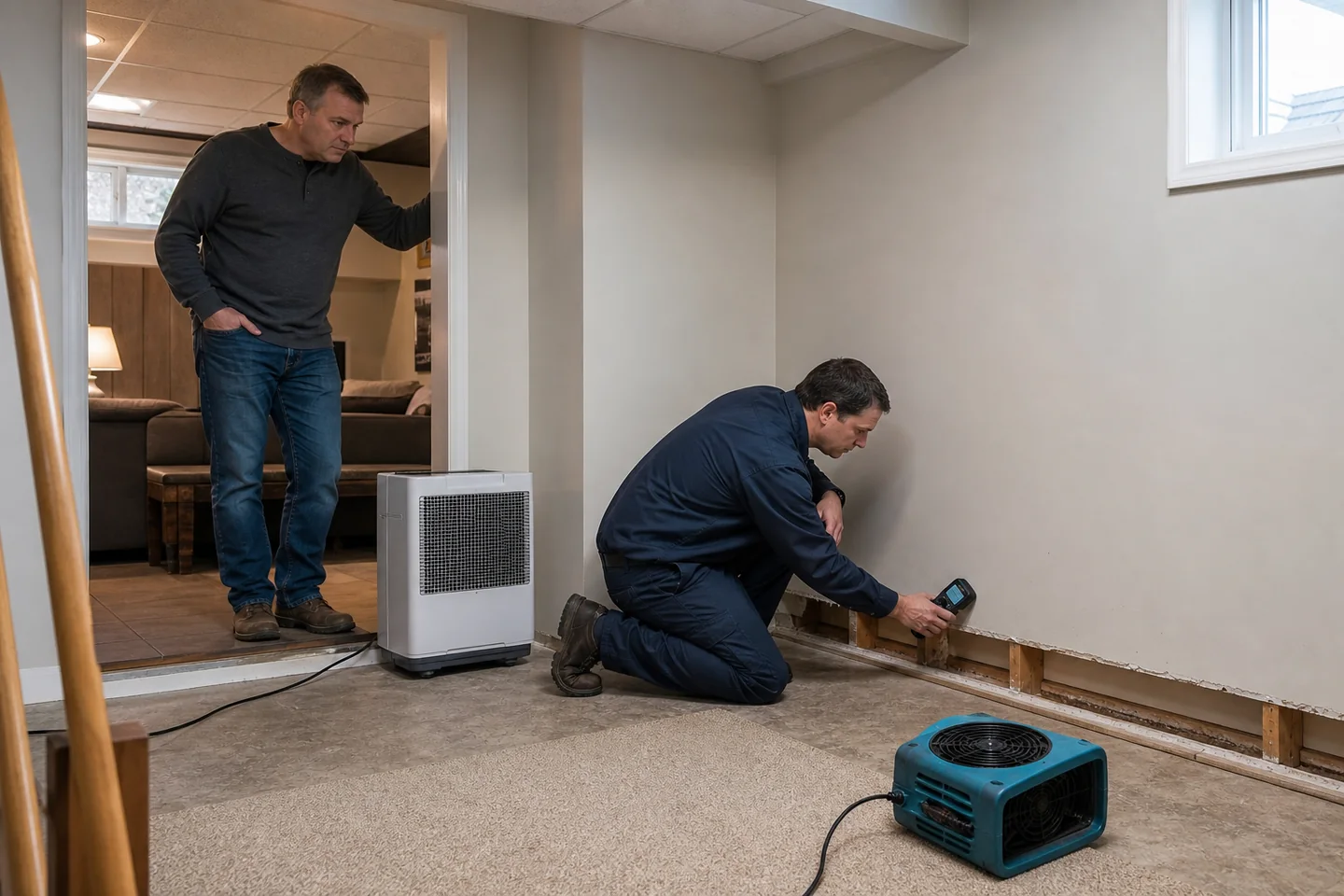
A professional plan may include removing baseboards, opening selected wall cavities, taking up saturated carpet and pad, isolating contaminated areas, setting dehumidifiers and air movers, and checking moisture daily. Electricity must first be declared safe. If visible mold is already present, the EPA cautions against using fans before the mold is cleaned because airflow may spread it. Do not operate a flooded HVAC system until it has been inspected and cleaned as needed.
What kind of water is in the basement?
The source changes the risk and cleanup method. A recent supply-line break is different from a floor-drain backup or stormwater. Even initially clean water becomes more contaminated as it contacts materials, dirt, chemicals, or sewage.
- Known clean source: a recent supply-line or fixture leak may be lower risk, but electrical hazards and hidden moisture still matter.
- Used household water: discharge from washing machines, dishwashers, or some fixtures may contain detergents, food, or microorganisms and requires more cautious handling.
- Sewage, stormwater, or unknown water: assume contamination. Keep people out and use trained professionals with suitable protective equipment, containment, cleaning, and disposal procedures.
Do not rely on color or smell to declare water safe. Tell every contractor where the water came from, how long it has been present, and whether it contacted fuel, pesticides, paint, cleaners, or other chemicals.
What can usually be saved?
Salvage decisions depend on contamination, exposure time, material, condition, sentimental value, and whether the item can be cleaned and dried completely. Hard, nonporous items are generally easier to clean than absorbent materials. Solid wood may be salvageable after controlled drying, while swollen particleboard often is not.
Sewage-contaminated carpet, pad, insulation, and gypsum board commonly require removal. Deeply porous belongings can be difficult to sanitize. Document claim-related property and confirm the insurer's disposal process unless leaving it creates an immediate hazard.
What professional water mitigation should include
- A written description of the source, water category or contamination concerns, and affected rooms
- Moisture readings that extend beyond the visible water line, including walls, subfloors, framing, and cavities
- Extraction and a clear decision about which finishes will be removed, cleaned, or dried in place
- Containment, protective equipment, cleaning, and disposal steps appropriate to the water source
- A drying-equipment plan with placement, power requirements, monitoring frequency, and target completion criteria
- Separate pricing for emergency mitigation, source repair, mold work, contents handling, and reconstruction
A room that looks dry may still hold moisture behind finishes. Ask how acceptable dryness will be verified before new drywall, paint, flooring, or insulation is installed.
Insurance documentation checklist
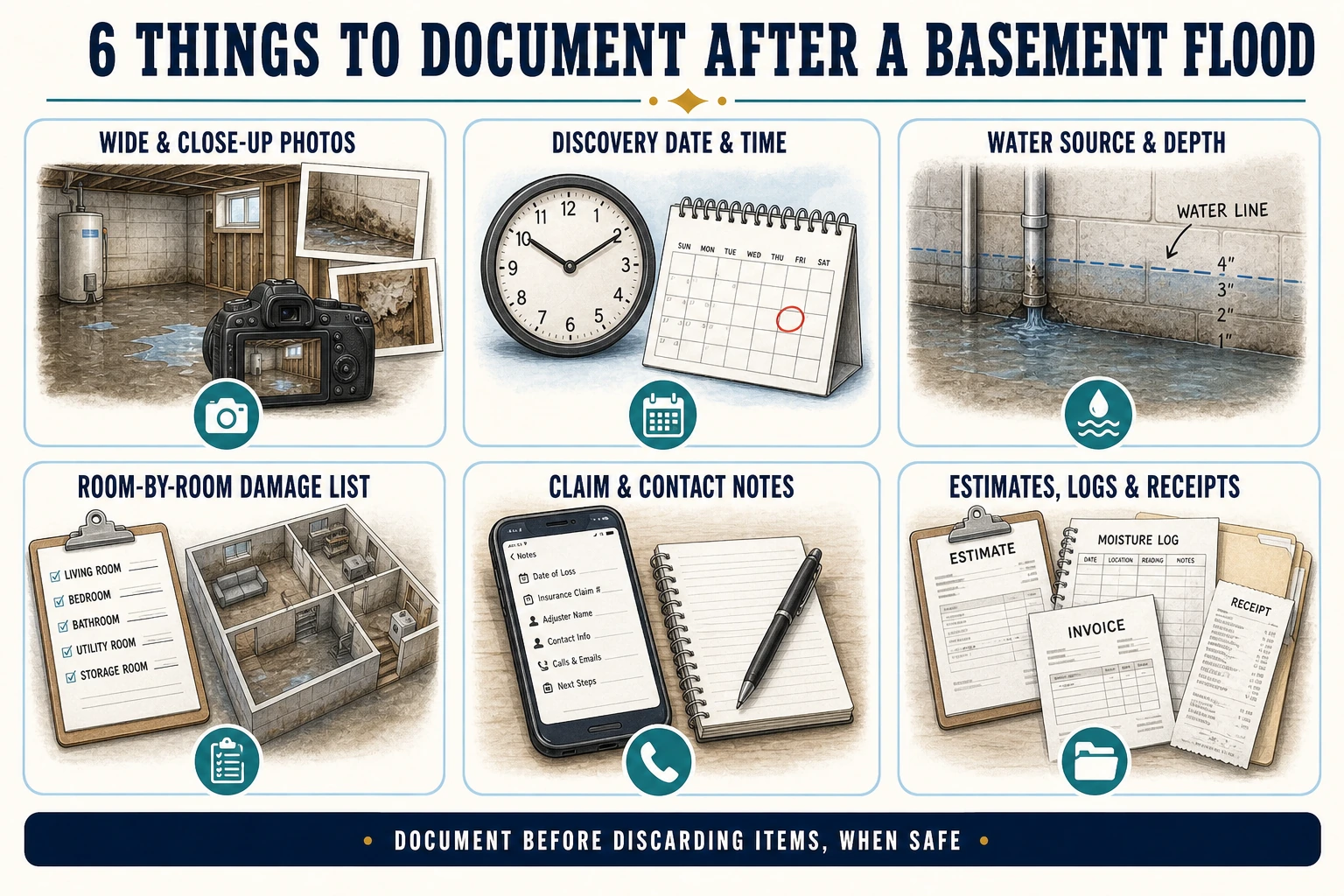
- Wide and close-up photos or video taken before cleanup, when safe
- The discovery date and time, suspected source, water depth, and areas affected
- A room-by-room list of damaged belongings, with brands, model numbers, age, and receipts when available
- Emergency calls, claim number, adjuster instructions, and the names of everyone contacted
- Mitigation estimates, work authorizations, moisture logs, contractor reports, invoices, and disposal records
- Photos of removed materials and damaged property before disposal, plus written insurer approval when requested
Standard homeowners insurance generally does not cover external flooding, which usually requires separate flood coverage. Pipe breaks, sump or sewer backups, seepage, and long-term leaks may be treated differently. Ask the insurer to relate its decision to the documented cause.
Prevent the next basement flood
After the basement is dry, correct the source instead of covering stains and hoping for a better storm. Plumbing failures may call for pipe, valve, appliance-line, or water-heater repair. A sump system may need service, a high-water alarm, a correctly sized replacement, or battery or water-powered backup suited to the house.
For stormwater and snowmelt, inspect gutters, downspouts, grading, window wells, cracks, and drainage paths. Repeated sewer backups may require a licensed plumber and local sewer authority to evaluate the private lateral, public system, and whether a code-compliant backwater device is appropriate.
Frequently asked questions
Can I enter a flooded basement if the water is shallow?
Depth does not determine electrical safety. If power may be on, wiring or appliances are wet, the source is contaminated, or access is unstable, stay out. Shut power off only from a dry location and use qualified help.
Should I call a plumber or a restoration company first?
Call the trade that controls the immediate problem. A plumber stops a pipe, fixture, sump, or sewer source; a restoration contractor extracts water and dries the structure. Serious losses often need both, and electrical or structural professionals may also be required.
Can I use a shop vacuum?
Only after the electrical system is safe and only for a small, known, uncontaminated loss within the equipment's instructions. Do not run electrical equipment while standing in water or use an ordinary dry vacuum for liquids.
How quickly can mold start after a basement flood?
The EPA advises drying within 24 to 48 hours and says to assume mold growth when a flooded home and belongings could not be dried in that period. Temperature, material, contamination, and humidity affect what actually develops.
Do wet drywall and carpet always need to be removed?
Not always, but contamination and saturation matter. Sewage-affected porous materials commonly require removal. For a recent clean-water loss, a professional may be able to dry some materials in place after moisture testing.
Will homeowners insurance pay for basement flood cleanup?
It depends on the cause, policy, exclusions, endorsements, deductible, and maintenance history. Standard homeowners coverage generally excludes external flooding, while sudden interior water damage may be treated differently. Contact the insurer promptly.
How long does professional drying take?
Many projects require several days of controlled drying and monitoring, but there is no universal timeline. Water depth, material layers, temperature, humidity, contamination, and access all affect the schedule.
Make the first day count
A flooded basement is easier to manage when the priorities stay in order: keep people out of danger, stop the source when safe, document conditions, begin appropriate extraction, and verify drying before rebuilding. Fast action matters, but unsafe action can turn property damage into an emergency.
homes face different water paths from neighborhood to neighborhood, so the solution should match the source. An itemized assessment can separate the urgent work from the repairs and prevention steps that follow.
Sources
HomeYou: Water Damage Restoration Cost Guide 2026
U.S. EPA: Text Version of the Flooded Home
U.S. EPA: Flood Cleanup - Protect Indoor Air and Your Health
CDC: Safety Guidelines for Reentering Your Flooded Home
Consumer Financial Protection Bureau: Get Prepared Before a Disaster