Does Homeowners Insurance Cover Water Damage? A Plain-English Guide
What may be covered, what often needs extra coverage, and what to document before damage spreads
A pipe breaks upstairs. Water runs through the ceiling and soaks the flooring below. Will homeowners insurance pay? Maybe—and that is not a dodge. Coverage usually turns on what caused the water, how suddenly it happened, what your policy excludes, and which parts of the loss you are claiming.
Water volume does not settle the question. A small backup may be excluded, while extensive damage from a sudden plumbing failure may be covered. Your deductible, limits, endorsements, and policy language apply.
The short answer: some water damage may be covered, but not every kind
Homeowners insurance often covers sudden and accidental water that comes from inside the home, such as a burst pipe or an appliance supply line that unexpectedly fails. It may also cover resulting damage after wind or hail creates an opening in the roof. But the failed pipe, worn appliance, or old roof itself may be treated differently from the damage it caused.
Standard homeowners insurance generally does not cover outside floodwater. Sewer or drain backup, sump-pump overflow, repeated seepage, groundwater, and mold may be excluded or limited unless you bought an endorsement or separate policy. There are exceptions and gray areas, so use those as questions to ask—not as a prediction of your claim result.
| A necessary coverage note This article is general education, not legal or insurance advice. Your policy, endorsements, deductible, limits, loss facts, and insurer's investigation control the outcome. Ask your insurer or a licensed your state insurance professional to explain your specific coverage in writing. |
|---|
Start with the cause, not the room that got wet
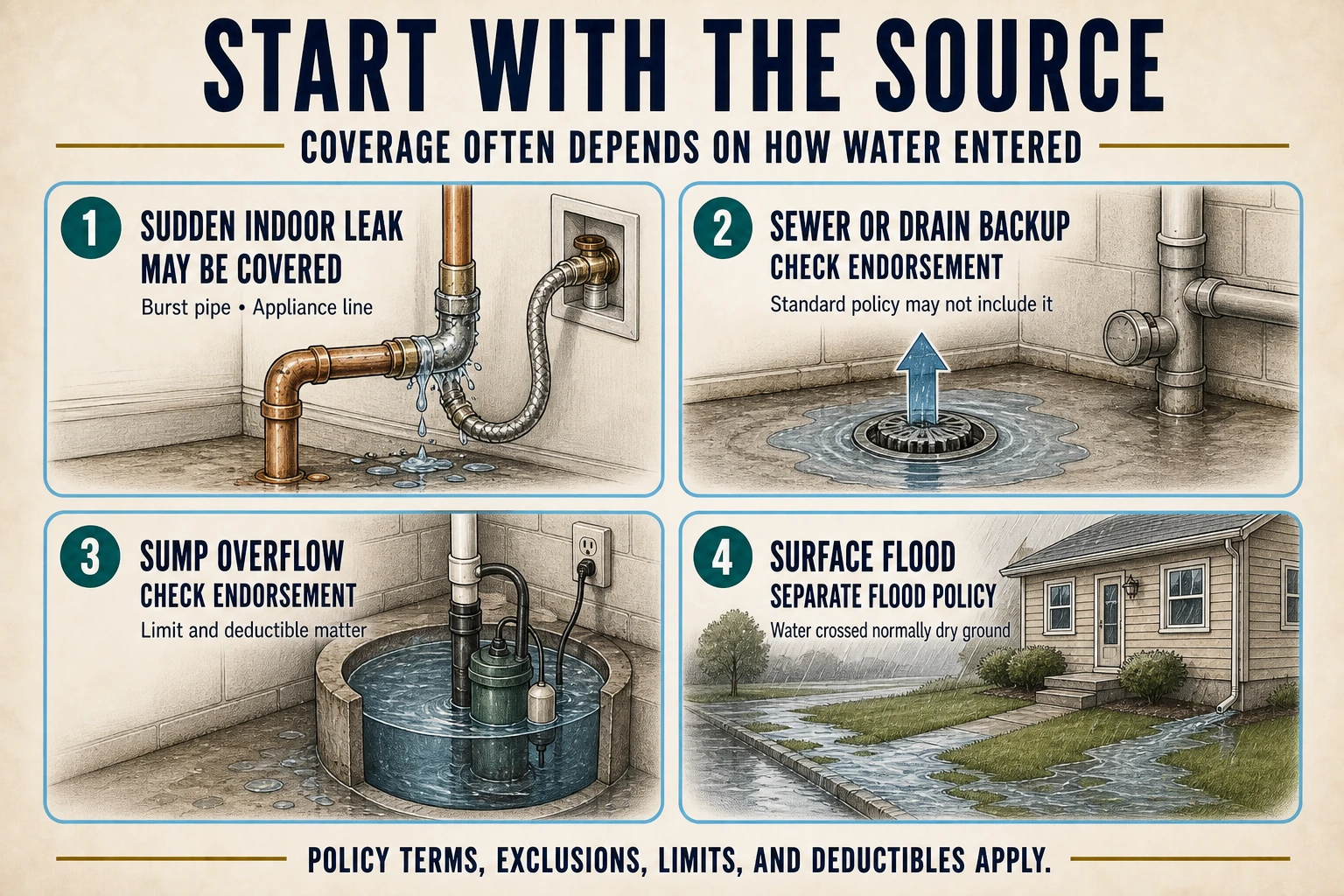
Here is the thing: insurance adjusts causes of loss, not just wet drywall. Before asking whether a basement, kitchen, or attic is covered, identify how the water arrived.
| Water event | The usual coverage question | What to verify in your policy |
|---|---|---|
| Burst or frozen pipe | Was the discharge sudden and accidental, and were reasonable steps taken to maintain heat or shut off water? | Plumbing-discharge coverage, vacancy conditions, deductible, and payment for the failed pipe versus resulting damage |
| Water heater or appliance line | Did a hose, valve, tank, or connection fail unexpectedly, or had it been leaking for a while? | Resulting-water coverage, equipment exclusions, wear and tear, and access or tear-out provisions |
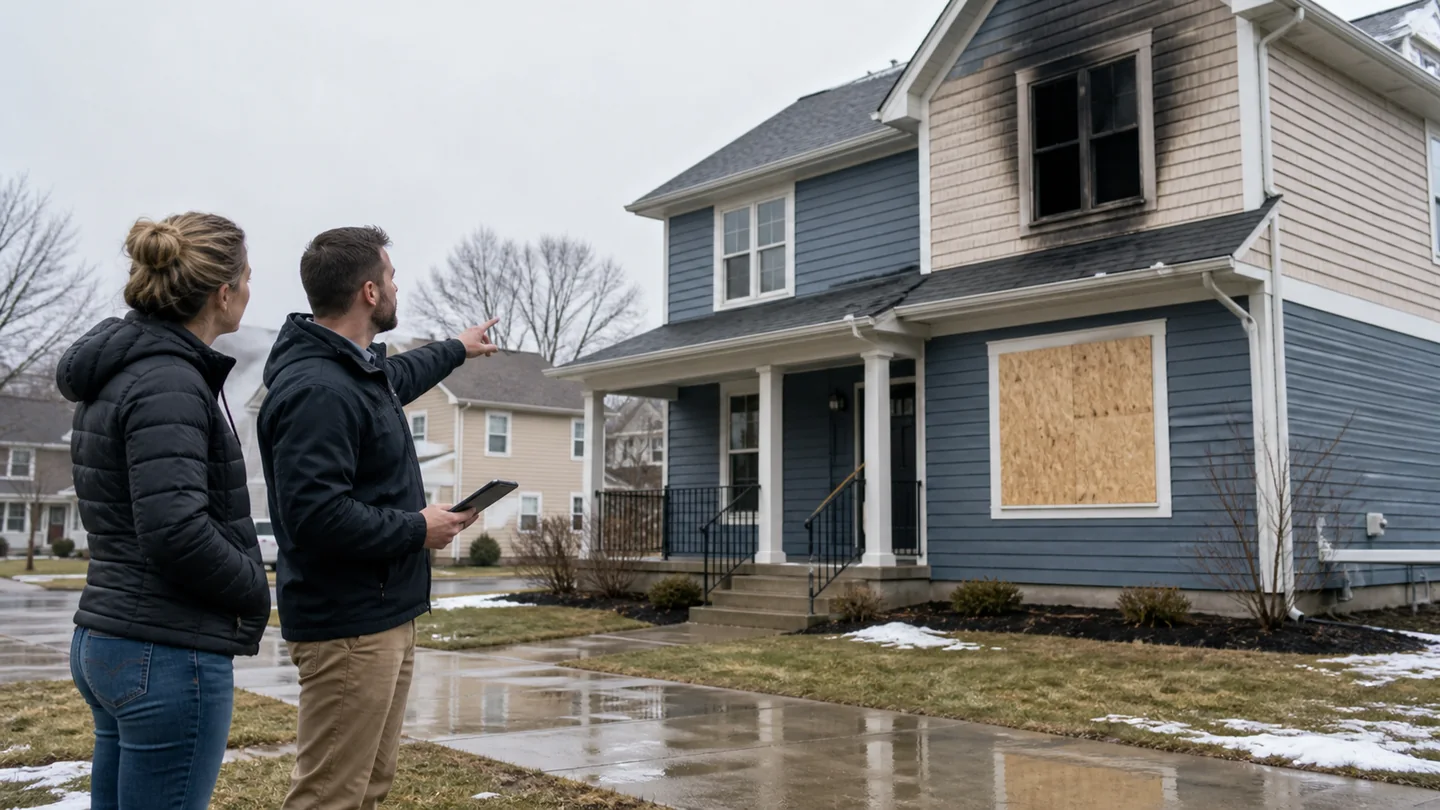
| Rain after wind or hail | Did a covered event first create an opening that allowed rain inside? | Wind or hail deductible, roof exclusions, proof of the opening, and interior-damage coverage |
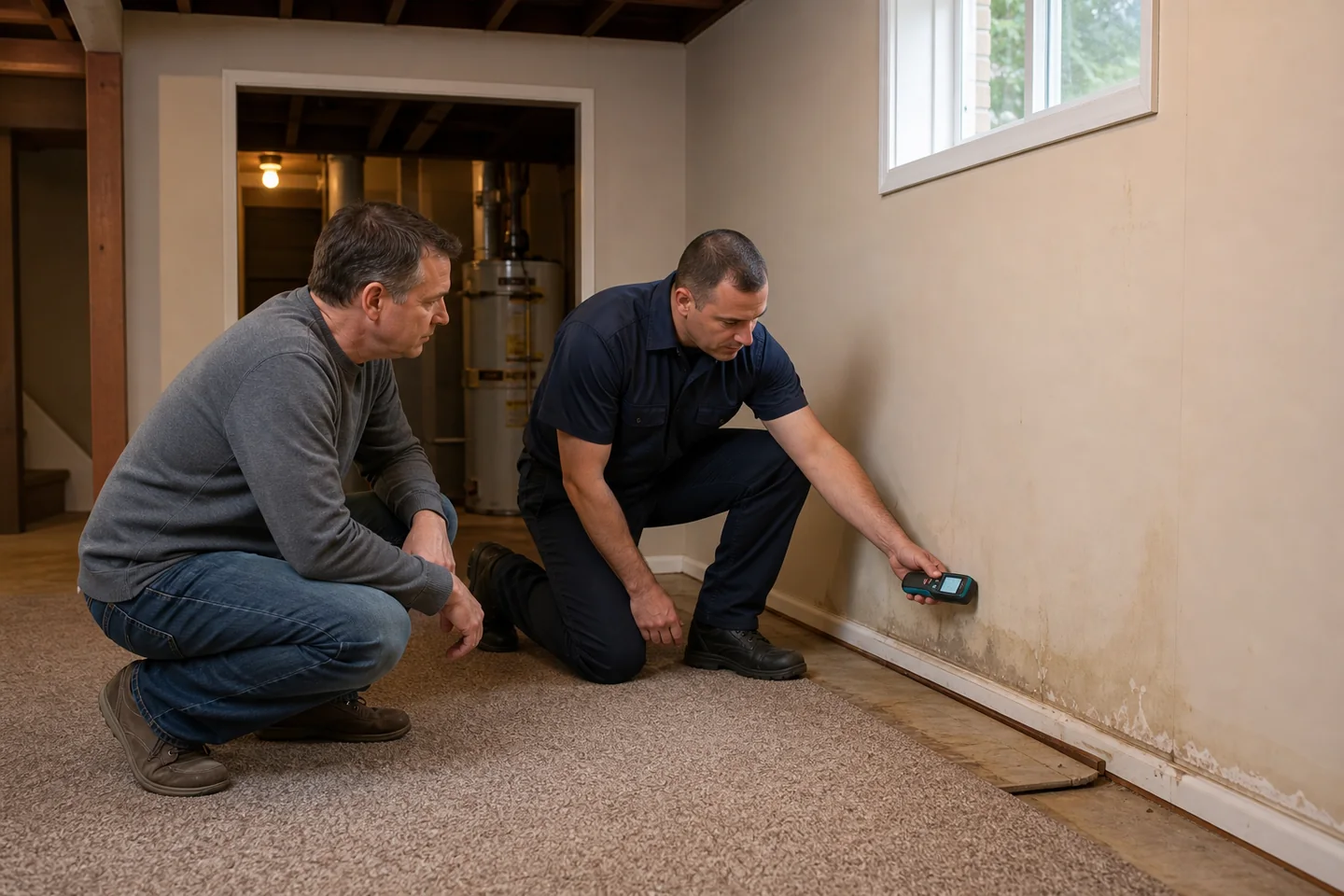
| Slow or repeated leak | Does the evidence show long-term seepage, deterioration, or delayed maintenance? | Repeated-seepage exclusions, hidden-water endorsements, mold limits, and notice duties |
| Sewer or drain backup | Did water reverse through a drain or sewer line? | A water-backup endorsement, its limit, deductible, and exclusions |
| Sump-pump overflow or failure | Did the sump system fail, lose power, or become overwhelmed? | Whether backup or sump-overflow coverage was added and what limit applies |
| Surface water or rising floodwater | Did water cross normally dry ground before entering? | Separate flood insurance, waiting periods, building and contents coverage, and basement limitations |
| Groundwater or foundation seepage | Did water move through soil, a foundation, or below-grade wall? | Water-below-the-surface exclusions and any available endorsements |
A burst pipe may be covered—but the whole bill is not automatic
The National Association of Insurance Commissioners says homeowners policies generally cover sudden and accidental water discharge from plumbing. A frozen pipe may fit that description if you took reasonable steps to maintain heat or shut off the water while the property was vacant.
That does not necessarily mean the insurer pays to replace the worn pipe, failed valve, or old water heater. A policy may cover opening the wall and repairing wet drywall, flooring, insulation, or cabinets while excluding the defective part that caused the loss. Ask the adjuster to separate source repair, access, drying, demolition, and reconstruction in the estimate.
Flood, backup, and seepage sound similar—but insurance treats them differently
If heavy rain fills a street, yard, creek, or low area and that water enters your home, you are usually dealing with flood coverage, not a standard homeowners claim. FEMA says most homeowners policies do not cover flood damage. Flood insurance is available through the National Flood Insurance Program in participating communities and from some private insurers.
A sewer backup is different. Water may come up through a floor drain even when no river reaches the property. Many homeowners policies offer water-backup coverage as an optional endorsement. Under an NFIP flood policy, sewer backup is covered only when it is directly caused by a covered flood.
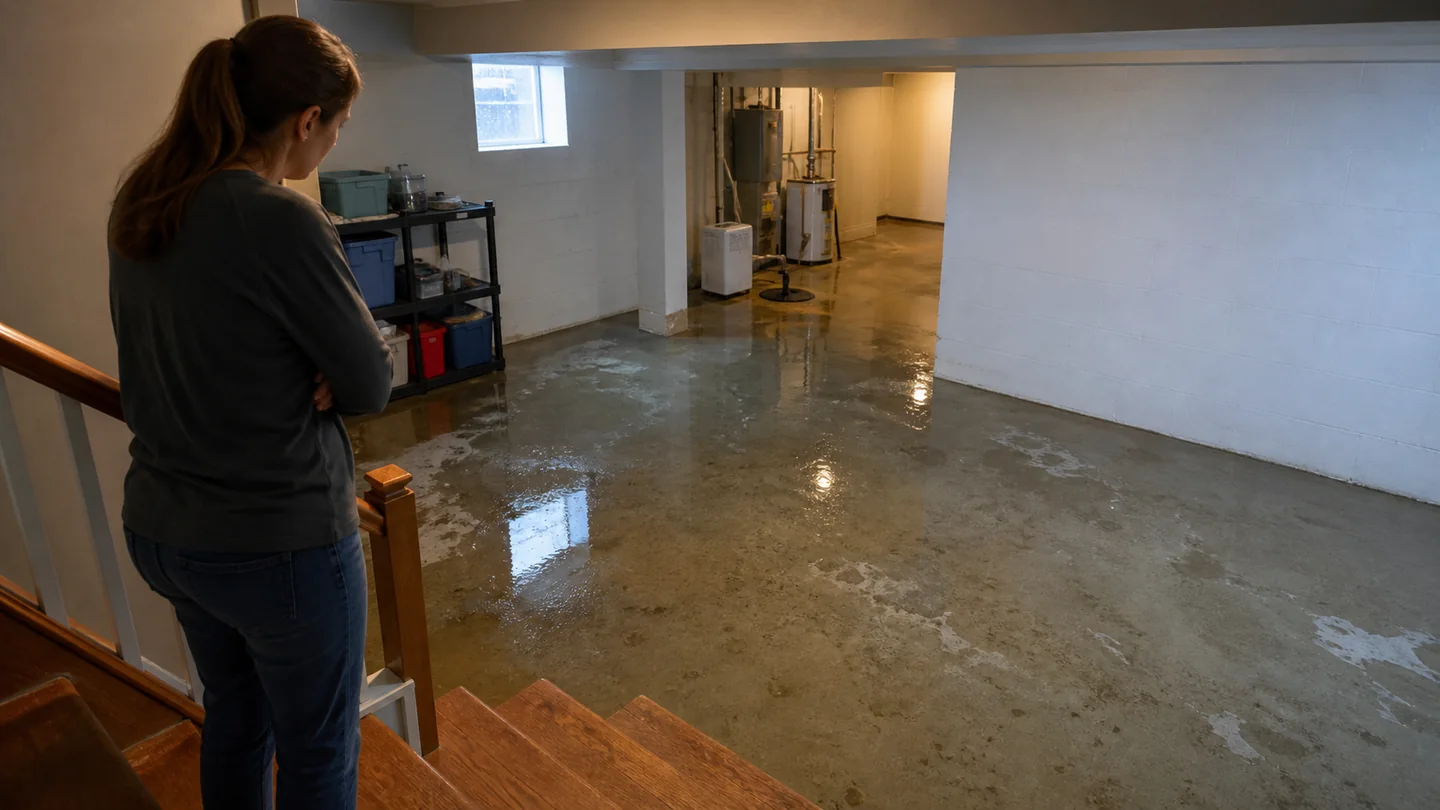
Groundwater seeping through a foundation is another category. So is a sump pump that stops during a power outage. The basement looks wet in every scenario, but the policy pathway can change with the water's route. Document the entry point before cleanup removes the clues.
Covered water damage is not the same as a free repair
Even when the cause is covered, several policy features affect what you receive.
- Your deductible is the amount you pay before covered claim payments begin. A separate wind, hail, or water-related deductible may apply if the policy says so.
- Dwelling coverage may address damaged walls, floors, cabinets, and other building components. Personal-property coverage may address belongings. Loss-of-use coverage may help with additional living expenses when a covered loss makes the home unfit to occupy, subject to policy terms.
- A sublimit can cap payment for a specific category such as water backup, mold, or certain valuables even when your overall dwelling limit is much higher.
- Actual cash value generally subtracts depreciation. Replacement-cost coverage is designed around the cost to replace with like kind and quality, but some depreciation may be held back until repairs or replacement are documented.
- If you have a mortgage, the lender or servicer may appear on the claim check and may release repair funds in stages.
The better question is not simply, 'Is water covered?' Ask which coverage applies, what limit and deductible attach to it, and how each payment line was calculated.
What to do in the first few hours
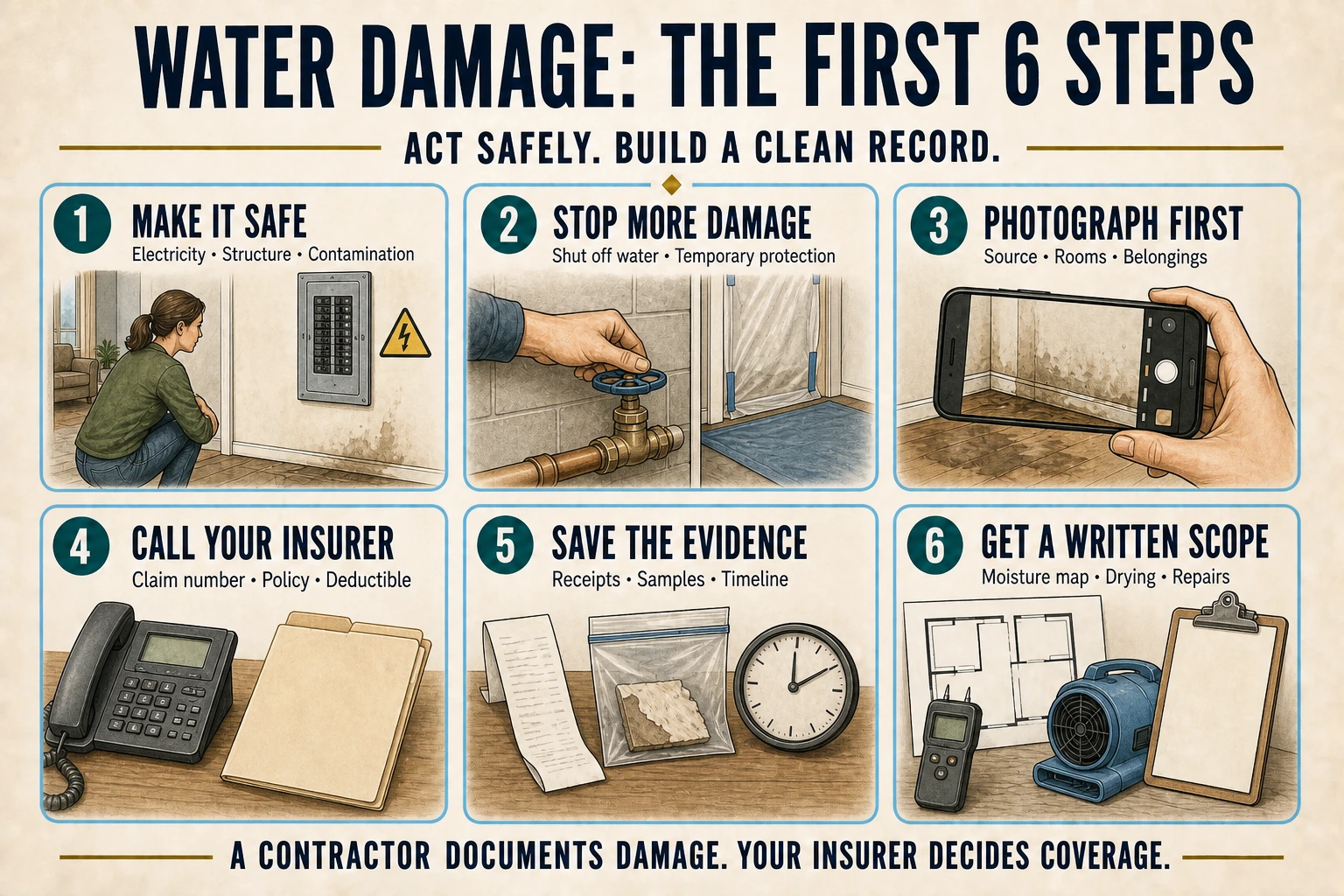
1. Make the home safe
Stay away from standing water near electrical service, outlets, appliances, or a sagging ceiling. Shut off the water only if you can do it safely. Call emergency services or the appropriate utility if there is an electrical, gas, structural, or contamination hazard.
2. Stop additional damage
Your policy may require you to protect the property from further harm. That can mean emergency water extraction, a temporary roof cover, moving dry belongings, or arranging professional drying. Do not wait for days with active water in the home merely because an adjuster has not arrived.
3. Photograph before the scene changes
Take wide photos of every affected room and close-ups of the apparent source, water line, stained surfaces, damaged belongings, and model or serial numbers. Record video while explaining where water traveled. Photograph emergency repairs before and after the work.
4. Notify the insurer promptly
Ask for a claim number, a full policy copy, and the expected inspection process. Confirm the deductible and ask specifically about water backup, sump overflow, hidden seepage, mold, ordinance or law, contents, and additional living expenses. Keep a log of names, dates, calls, emails, and decisions.
5. Save evidence and receipts
Keep receipts for emergency work, supplies, temporary lodging, meals above your normal cost, and other loss-related expenses. Do not discard damaged materials or belongings until the insurer has had a reasonable chance to inspect them, unless health or safety requires removal. If something must go, photograph it thoroughly and save a representative sample when practical.
6. Get a line-by-line restoration scope
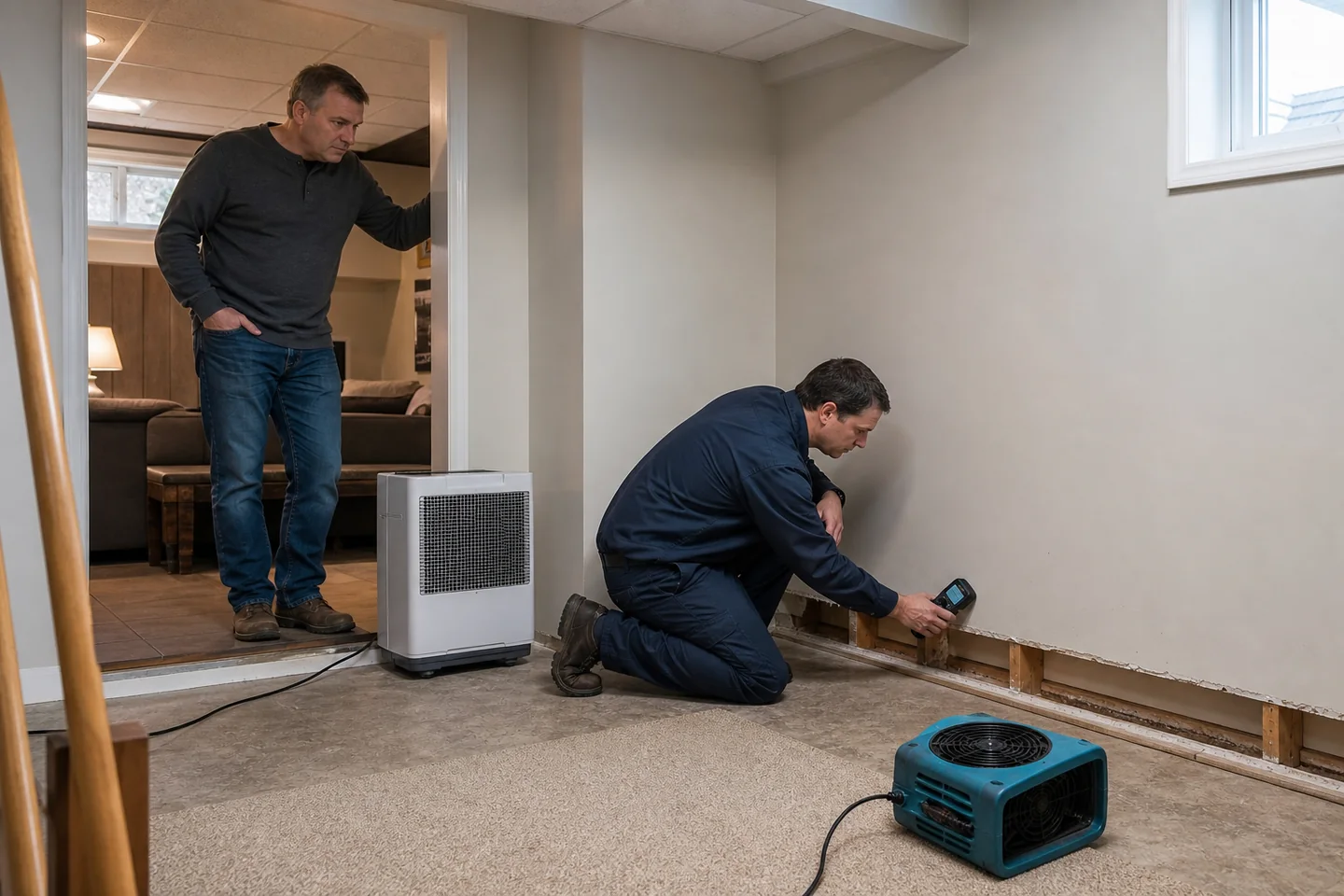
A useful estimate identifies affected rooms and materials, moisture readings, demolition boundaries, drying equipment, equipment days, cleaning, disposal, reconstruction, and taxes or permit costs. A single lump sum is hard for you, the adjuster, and the contractor to compare.
Before you sign an emergency restoration authorization
Emergency crews sometimes arrive while you are tired, worried, and watching water spread. Fast help matters. So does understanding the contract.
- Are you authorizing emergency stabilization only, or demolition and complete reconstruction too?
- What are the labor rates, equipment rates per day, material charges, disposal costs, and after-hours fees?
- Who approves work that was not in the initial authorization?
- Will you receive moisture maps, daily drying records, photographs, and a final dry-standard report?
- Does the agreement make you responsible for amounts the insurer does not pay? Most do in some form, so ask for a plain-English explanation.
- Will the company communicate with your insurer without claiming it can guarantee coverage or control the settlement?
A restoration contractor can explain the physical damage and price the work. The contractor should not tell you that a claim is definitely covered, inflate the scope to match a limit, or make the deductible disappear. Those are reasons to slow down.
Should you file a claim or pay out of pocket?
It depends. Compare a credible estimate of the potentially covered damage with your deductible, but do not make the decision from visible damage alone. Water can move behind cabinets, under flooring, or into insulation. First establish the source and reasonable scope.
Claims can affect future pricing or renewal decisions, and reporting rules vary. If the damage appears close to your deductible, ask the insurer or licensed agent how a coverage question, loss notice, and formal claim are recorded. At the same time, do not miss a policy's prompt-notice requirement while trying to avoid opening a claim.
If the loss is clearly small, safely contained, and well documented, paying directly may be reasonable. If water is widespread, contaminated, structurally significant, or still moving, protecting the home and reporting promptly matters more than guessing at the final total.
Why water-damage claims get disputed
| Point of disagreement | What the insurer may examine | Documentation that can help |
|---|---|---|
| Sudden event or long-term leak | Staining, rot, corrosion, prior repairs, utility records, and when symptoms first appeared | Dated photos, plumber's findings, prior inspection records, and a clear timeline |
| Flood or water backup | Where the water entered and whether it crossed the ground or reversed through a drain | Exterior and interior video, weather context, drain conditions, and source diagnosis |
| Maintenance or covered damage | Condition of the failed component and whether reasonable care could have prevented the loss | Maintenance records, temperature history, occupancy details, and professional cause report |
| Drying and demolition scope | Which materials were actually wet, contaminated, damaged, or salvageable | Moisture maps, readings, photos, equipment logs, and written demolition reasoning |
| Repair pricing | Quantities, labor, material grade, taxes, permits, overhead, and local availability | Itemized contractor estimates, measurements, product details, and change orders |
| Mold or microbial growth | Cause, timing, policy limit, exclusion, and whether growth resulted from a covered loss | Prompt notice, moisture records, photographs, testing rationale, and remediation scope |
If the claim is denied or the estimate seems too low
A denial is not the moment to argue from memory. Ask for the decision in writing and for the exact policy language the insurer relied on. Then compare the insurer's cause finding, measurements, quantities, materials, and exclusions with your documentation and contractor estimate.
Ask what evidence could change the decision and whether a reinspection or internal review is available. Send focused evidence: source reports, moisture logs, room measurements, photographs, contents inventory, receipts, and itemized estimates. Keep the conversation factual and in writing.
If you still cannot resolve the issue, the your state Department of Insurance accepts consumer complaints and supporting documents and lists a consumer hotline at 800-686-1526. Its complaint form warns that submitted materials may be public records. For a substantial dispute, you can also speak with a licensed your state insurance professional or attorney about your specific situation. Verify an agent's or agency's license through the department's online locator.
Questions to ask before giving a restoration company your contact information
- Do you provide an on-site assessment, or is the first number only a phone estimate?
- Will you document the apparent source without promising that insurance will cover it?
- Will I receive photographs, moisture readings, a room-by-room scope, and an itemized estimate?
- Which work is urgent today, and which work can wait until the insurer inspects?
- What materials do you propose removing, and why can they not be dried or cleaned in place?
- What are the equipment, labor, disposal, cleaning, and reconstruction rates?
- How are changes approved, and who is responsible if the insurer pays less than the invoice?
- Do you carry appropriate liability and workers' compensation coverage, and can I verify it?
- Will I receive the final drying documentation and warranties at closeout?
Frequently asked questions
Does homeowners insurance cover a burst pipe in your state?
It may. Sudden and accidental plumbing discharge is commonly covered, subject to the policy. Coverage can be affected by vacancy, failure to maintain heat, neglect, exclusions, and the distinction between the failed pipe and resulting damage.
What if my water heater or washing-machine hose leaks?
An unexpected discharge may be covered, while the worn hose, failed tank, or long-term leakage may not be. Save the failed part if practical and ask the plumber to document the apparent cause.
Does insurance cover a roof leak?
Not every roof leak. Interior damage may be covered if wind, hail, or another covered event created an opening. Leakage caused by age, deterioration, faulty maintenance, or an excluded event may be handled differently.
Is sewer backup included in a standard policy?
Do not assume it is. Water backup is commonly offered as an optional endorsement with its own limit and deductible. Check your declarations and endorsements, then ask the insurer to confirm in writing.
Does homeowners insurance cover sump-pump failure?
Not necessarily. Sump overflow or failure is often addressed through optional water-backup or sump coverage. The wording, cause, limit, and deductible matter.
Does homeowners insurance cover basement flooding after heavy rain?
Outside surface water or rising water is generally flood-policy territory. A backup through a drain, groundwater seepage, and rain entering through storm damage can each be treated differently, so document the route.
Can I start cleanup before the adjuster arrives?
You generally should take reasonable steps to stop further damage, especially when water is active. Photograph first when safe, keep samples and receipts, avoid unnecessary permanent demolition, and follow the insurer's instructions.
Will insurance cover mold after water damage?
Possibly, but many policies exclude mold or apply a separate limit. Coverage may depend on whether the mold resulted from a covered water event and whether you acted promptly to limit further damage.
The practical next step
First stop the water and protect the home. Then build a clean record: cause findings, photographs, moisture readings, damaged items, emergency invoices, and an itemized repair scope. That record helps whether you file a claim, pay directly, or need to challenge a scope difference later.
You do not need a contractor to tell you what your policy means. You need one who can show what happened to the building, explain what work is urgent, price it clearly, and leave the coverage decision where it belongs—with the insurer under your policy.
Official sources
Coverage language and consumer guidance were reviewed in August 2026. These resources explain general insurance concepts; they do not replace your own policy or a claim decision.
NAIC: A Consumer's Guide to Home Insurance
NAIC: Homeowners Insurance Shopping Tool
FEMA FloodSmart: Who Can Buy Flood Insurance?
FEMA FloodSmart: What Is a Flood?
Consumer Financial Protection Bureau: What to Do After a Disaster
Consumer Financial Protection Bureau: How Home Insurance Companies Pay Claims
Your state Department of Insurance: Consumer Complaint Form
Your state Department of Insurance: Agent and Agency Locator
U.S. Environmental Protection Agency: Mold Cleanup in Your Home