Vinyl vs. Fiberglass vs. Wood Windows: What Works Best?
A practical comparison of cold-weather performance, maintenance, appearance, durability, installation, and cost

If you're comparing replacement windows, you'll hear three familiar pitches. Vinyl is the affordable, low-maintenance choice. Fiberglass is the strong, stable upgrade. Wood is the beautiful classic. All three statements can be true, but none tells you whether the window will perform well in your house.
Your area adds real pressure: freezing winters, humid summers, wind-driven rain, lake-effect weather, and older openings that may not be square. Frame material matters. So do the glass package, weatherstripping, hardware, installation method, and the condition of the wall around the window.
Here's how to compare the options without assuming the most expensive frame is automatically the best one.
The short answer: the best material depends on what you're trying to protect
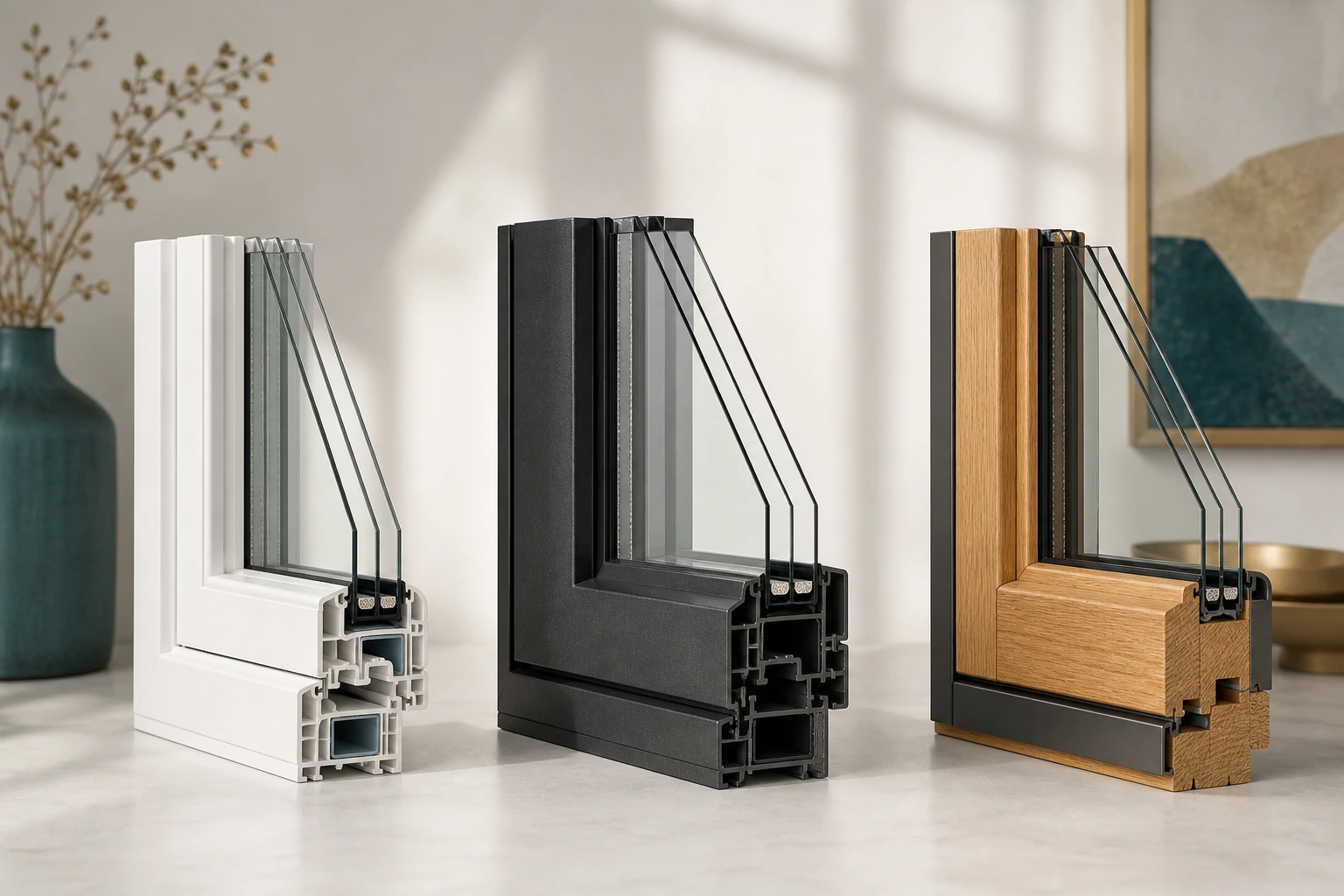
For many homes, a well-built vinyl window offers the strongest balance of price, energy performance, and low maintenance. Fiberglass makes sense when you want a slimmer, stronger, dimensionally stable frame and are willing to pay more. Wood is compelling when authentic interior appearance, historic character, custom sizes, or long-term repairability matters enough to justify maintenance.
The word “well-built” is doing a lot of work there. A premium vinyl unit can outperform a poorly configured fiberglass or wood window. Compare the whole-window NFRC label, not just the frame material or a salesperson's center-of-glass number.
| Priority | Often strongest choice | Why |
|---|---|---|
| Lower upfront cost | Vinyl | Broad availability and efficient manufacturing |
| Minimal finish maintenance | Vinyl or fiberglass | No exposed wood finish to repaint or reseal |
| Dimensional stability | Fiberglass | Stiff frame material handles temperature change well |
| Traditional interior appearance | Wood | Real grain, stain, paint, profiles, and historic character |
| Future refinishing | Wood | Can often be sanded, repaired, painted, or stained |
| Large or dark-frame configurations | Often fiberglass | Strength and stability can help, but model limits still apply |
First, separate frame material from window performance
A window is a system. The frame is only one part. Double or triple glazing, low-emissivity coatings, gas fills, spacers, sash design, weatherstripping, locks, and installation all influence comfort and energy use.
The U.S. Department of Energy recommends comparing overall window properties on the NFRC label. NFRC independently rates U-factor, solar heat gain coefficient, visible transmittance, air leakage, and condensation performance. That lets you compare complete products instead of marketing adjectives.
U-factor: how readily heat passes through
Lower is better for insulation. In your area, winter comfort usually makes U-factor the first rating to check. ENERGY STAR's current Northern-zone guidance generally points shoppers toward a U-factor of 0.22 or lower, with alternative combinations allowed under its equivalent-performance path. Confirm your county and the exact current criteria with the ENERGY STAR climate-zone tool.
SHGC: how much solar heat enters
Solar heat gain coefficient, or SHGC, runs from 0 to 1. A lower number blocks more solar heat. That's useful for hot, unshaded exposures, but winter sun can also be helpful in a heating-dominated climate. Orientation, shade, room use, and glass area matter; the lowest SHGC isn't automatically best for every side of a home.
Air leakage: the rating people feel
A low U-factor won't make a loose sash feel comfortable on a windy January night. Look at tested air leakage where available, then ask how the opening will be insulated and air-sealed. Casement and awning windows often seal more tightly than sliding or double-hung designs because the sash presses against the weatherstripping when locked.
Vinyl windows: practical value, with a wide quality range
Vinyl frames are made from PVC and don't need painting. The Department of Energy notes their good moisture resistance, and insulated cavities can improve thermal performance. That combination fits homeowners who want dependable performance without adding exterior finish maintenance.
Where vinyl works well
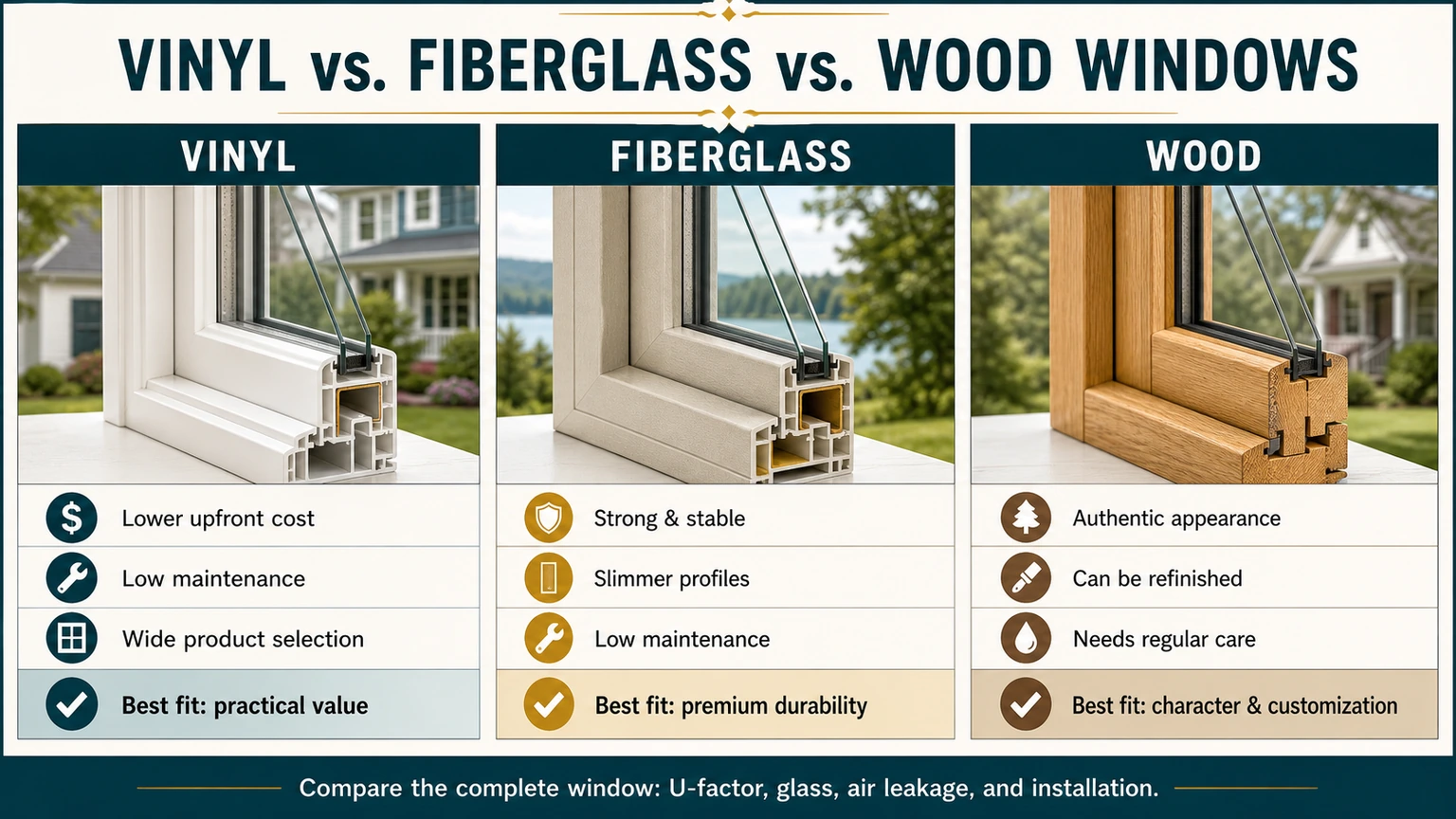
Vinyl is especially attractive for standard openings, budget-conscious whole-house replacement, rental properties, upper floors that are difficult to repaint, and rooms exposed to normal household humidity. Product selection is broad, so it is usually easier to obtain multiple comparable bids.
A good vinyl window can have reinforced meeting rails, multiple internal chambers, quality weatherstripping, sturdy locks, welded corners, and an efficient glass package. Don't judge it solely by whether the frame is foam-filled; the NFRC U-factor captures the complete tested unit.
Where vinyl gives homeowners pause
Entry-level frames may feel bulky, flex more, use lighter hardware, or offer limited exterior colors. Dark finishes can be restricted by model and exposure because heat absorption raises surface temperature. Large units may need reinforcement, which can affect both structure and thermal behavior.
Vinyl isn't normally refinished like wood. If the surface is damaged or you dislike the color later, your options may be limited. Ask whether the finish is integral, laminated, co-extruded, or factory applied, and what the warranty says about fading and heat-related distortion.
Fiberglass windows: strong, slim, and usually more expensive
Fiberglass frames use glass fibers within a resin matrix. The Department of Energy describes them as dimensionally stable, and their cavities can be insulated. The material's stiffness can support narrower sightlines or larger openings, depending on the exact product.
Where fiberglass earns its premium
Fiberglass is worth a close look for homeowners who want low maintenance but prefer a painted appearance, slimmer profiles, large glass areas, dark exterior colors, or added dimensional stability through your area's temperature swings. Some lines offer fiberglass outside with a real-wood interior.
It can also be a sensible middle ground when you like wood's appearance but don't want exposed exterior wood. Just check which surfaces are actually fiberglass, wood, or another composite; “fiberglass window” can describe different constructions.
Where fiberglass may not pay off
The product and installer pool is narrower than vinyl in many markets, and the initial quote is commonly higher. Color, grille, hardware, and replacement-part choices depend heavily on the manufacturer. Paying more for the frame does not excuse a mediocre glass package or installation.
Ask to see the actual corner construction, finish, sash operation, and screen. Some fiberglass frames are paintable; others use a factory finish with specific care rules. Understand which one you're buying.
Wood windows: hard to beat visually, harder to ignore
Wood frames insulate relatively well and offer real grain, traditional profiles, custom shapes, and the ability to paint or stain the interior. That matters in older your local area neighborhoods, architecturally detailed homes, and rooms where the windows are a major design element.
Clad wood changes the maintenance equation
Many modern wood windows protect the exterior with aluminum, vinyl, or fiberglass cladding while leaving wood visible inside. This reduces direct weather exposure, but it doesn't eliminate the need to inspect joints, finishes, sills, glazing, and surrounding trim. Water that gets behind cladding can still damage wood.
Wood asks for ownership, not just admiration
Exposed wood needs periodic finish maintenance, especially where rain, snow, condensation, or poor drainage keeps it wet. Peeling paint, open joints, soft sill areas, and failed exterior sealant should be handled before decay spreads.
On the other hand, wood can often be repaired and refinished in ways vinyl cannot. That long-term serviceability may matter if you intend to maintain the house for decades or preserve original proportions.
How the three materials handle seasonal weather
| Weather concern | Material comparison | What matters in the quote |
|---|---|---|
| Winter heat loss | All three can perform well with the right complete window | NFRC U-factor, glass package, air leakage, and installation |
| Temperature swings | Fiberglass is notably stable; quality and reinforcement matter for vinyl | Size limits, reinforcement, finish restrictions, and warranty |
| Rain and humidity | Vinyl and fiberglass resist moisture; wood needs protected finishes | Flashing, sill pan, drainage, cladding joints, and exterior seal |
| Condensation | Mostly a whole-window and indoor-humidity issue | Interior glass temperature, spacer, installation, ventilation, and humidity |
| Sun exposure | Finish formulation and color matter for every material | UV warranty, dark-color restrictions, orientation, and shade |
| Freeze-thaw exposure | Drainage and installation are critical regardless of frame | No trapped water, sound sill, correct flashing, and compatible sealants |
A cold window isn't automatically a bad window
Interior condensation appears when warm, moist indoor air meets a cold surface. A better window can raise the interior glass temperature and reduce the risk, but indoor humidity, curtains, blinds, airflow, and severe outdoor cold still matter.
Condensation between sealed panes is different. It usually points to an insulating-glass seal failure. Water staining at the wall or sill may indicate exterior leakage, flashing trouble, or interior condensation. Those are different diagnoses with different repairs.
Installation can erase the advantage of a better frame
A high-performance window installed into a wet, uninsulated, or poorly flashed opening can still leak air and water. The installer should determine whether you're getting an insert replacement or a full-frame replacement and explain what happens to the existing sill, jambs, flashing, and exterior trim.
Insert replacement
An insert fits inside the existing frame. It can preserve interior trim, reduce disruption, and cost less, but it makes the glass area smaller and leaves the old frame in place. It only makes sense when that frame is sound, square enough, and properly integrated with the wall.
Full-frame replacement
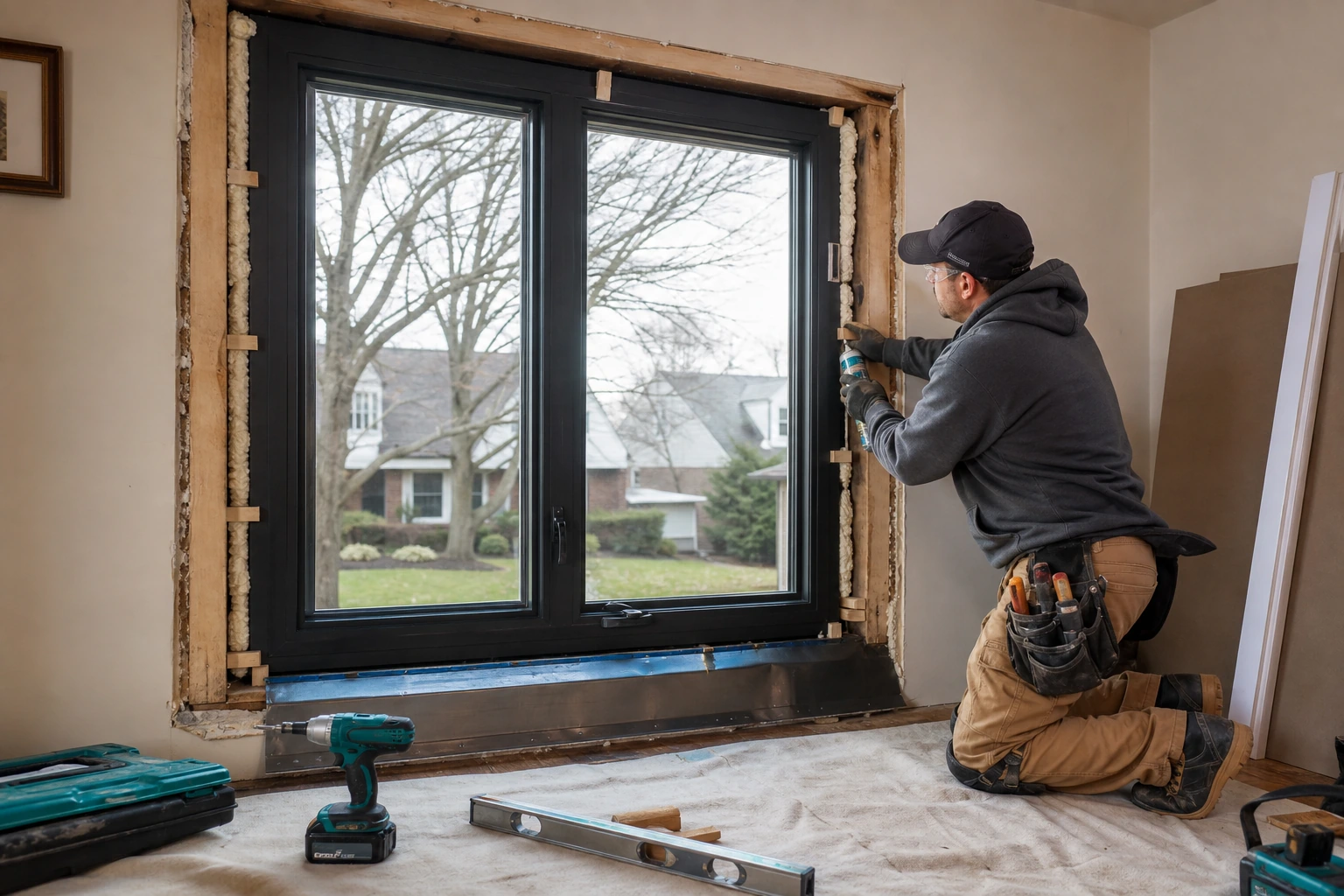
A full-frame project removes the old unit to the rough opening. It exposes more of the wall connection, allowing damaged wood, insulation gaps, and flashing details to be addressed. It usually costs more and disturbs more trim or siding, but it may be the honest solution for a failing opening.
| The installation question that changes everything Ask the contractor to explain where the water-control layer, air seal, insulation, and exterior drainage plane connect. “We foam and caulk it” is not a complete flashing plan. |
|---|
What do vinyl, fiberglass, and wood windows cost?
Published national prices are broad because window size, style, glass, grids, color, access, trim, installation method, and repairs can outweigh the frame material. Angi's 2026 guide lists individual replacement windows across materials at roughly $300 to $2,500, with a broad project average around $7,348. Its material-only planning ranges place vinyl generally below fiberglass and premium wood configurations.
Treat those figures as context, not your area quotes. A small fixed window and a large triple-pane casement are not comparable. Neither are a clean insert installation and a full-frame job that replaces a rotten sill and exterior trim.
| Cost layer | Lower-cost scenario | Higher-cost scenario |
|---|---|---|
| Frame | Standard white vinyl | Fiberglass or wood with premium exterior finish |
| Glass | Double-pane, standard low-e | Triple-pane, specialty coatings, laminated or tempered glass |
| Operation | Fixed or common single-hung size | Large casement, bay, bow, specialty shape, or egress unit |
| Installation | Sound opening and straightforward insert | Full-frame removal, flashing, insulation, trim, and repairs |
| Appearance | Standard color and grille pattern | Custom stain, divided-light detail, historic profile, or dark finish |
| Site conditions | Easy first-floor access | Upper-story access, masonry, lead-safe work, or deteriorated framing |
How to compare quotes without getting distracted by brand names
Ask every bidder to price the same sizes, operating styles, glass package, color, grids, screens, installation method, interior finish, exterior trim, disposal, permits, and repairs. Otherwise, the lowest number may simply include less work.
Get the exact series and NFRC values for each configured window. Ratings can change within one product line when size, glass, grids, or operating style changes. A brochure's best number may not be the number for your double-hung bedroom window.
Which material fits your house?
Choose vinyl when...
You want a practical whole-house replacement, modest maintenance, broad product choice, and a controlled budget. Spend enough to get sturdy construction, good weatherstripping, appropriate reinforcement, and the glass performance you need.
Choose fiberglass when...
You value dimensional stability, slimmer profiles, large openings, low maintenance, or darker finish options and the premium fits your budget. Verify the precise materials and finish on both the interior and exterior.
Choose wood when...
Authentic interior appearance, historic proportions, custom detailing, or future refinishing outweighs the maintenance commitment. Clad exteriors can reduce exposure, but you should still plan for inspection and upkeep.
Keep the windows you have when...
Not every uncomfortable room needs replacement windows. Serviceable wood windows may benefit from repair, weatherstripping, sash adjustment, interior or exterior storms, and targeted air sealing. If the glass seal has failed, sash or insulated-glass replacement may be available without replacing the frame.
Questions to ask before giving a window company your information
- What exact manufacturer, product line, frame construction, and finish are you quoting?
- What are the whole-window NFRC U-factor, SHGC, air-leakage, visible-transmittance, and condensation ratings?
- Does this exact configuration meet current ENERGY STAR criteria for my county?
- Is the glass double- or triple-pane, and which low-e coating, gas fill, spacer, and safety glass are included?
- Is this an insert or full-frame installation, and why is that appropriate for each opening?
- How will you inspect for rot, water damage, and old insulation before installing the new unit?
- How are the sill, flashing, drainage plane, perimeter air seal, insulation, and exterior trim handled?
- What visible glass area will I lose compared with the existing window?
- Which labor, finish, glass, hardware, seal-failure, and transfer warranties apply?
- What is excluded for trim, paint, disposal, access, permits, masonry, and hidden damage?
Frequently asked questions
Are fiberglass windows always more energy efficient than vinyl?
No. Fiberglass can provide a strong, stable frame, but complete-window performance depends on the exact frame design, glass, spacer, sash, seals, and size. Compare NFRC U-factors.
Are wood windows warmer than vinyl?
Both can perform well. The Department of Energy notes that vinyl, wood, and fiberglass all provide greater thermal resistance than basic metal frames. The tested complete-window rating is more useful than the material alone.
Will vinyl windows warp in seasonal weather?
Quality, size, reinforcement, color, sun exposure, and installation matter. Ask about the manufacturer's size and dark-color limits rather than assuming every vinyl frame behaves the same.
Do fiberglass windows need painting?
Some have durable factory finishes; some interiors or exteriors can be painted under specific instructions. Confirm the finish and maintenance requirements for the exact line.
Are clad wood windows maintenance-free?
No. Cladding reduces exterior finish work, but joints, sills, interior wood, sealant, drainage, and surrounding trim still need inspection.
Is triple-pane glass worth it?
It can improve U-factor, interior glass temperature, and comfort, especially in exposed rooms. Weight, cost, visible light, glass area, and the actual performance improvement should be compared.
Which frame lasts the longest?
There is no trustworthy universal lifespan. Product quality, installation, exposure, hardware, insulated-glass seals, maintenance, and repair availability all affect service life.
Should I replace every window at once?
Not necessarily. Phasing can make sense when budgets are tight or only certain elevations are failing. Keep product availability, finish matching, mobilization costs, and future price changes in mind.
The practical next step
Start with the rooms that are uncomfortable, damaged, difficult to operate, or exposed to the harshest weather. Decide whether appearance, maintenance, glass area, or initial cost is the priority. Then compare at least two complete window specifications, not just three material names.
For many homes, quality vinyl will be the value choice, fiberglass the low-maintenance premium, and wood the design-and-repairability choice. The right answer is the product whose tested performance and installation scope fit your house.
Sources and cost methodology
Energy and cost sources were reviewed in August 2026. ENERGY STAR and NFRC criteria should be confirmed for the exact product, configuration, county, and purchase date. Published cost figures are national planning references, not your area bids.
U.S. Department of Energy: Window Types and Technologies
ENERGY STAR: High-Performing Windows and Buying Guidance
ENERGY STAR: Climate Zone Finder
ENERGY STAR: Residential Window Version 7 Criteria
NFRC: Residential Product Certification and Ratings
Efficient Windows Collaborative: Non-Metal Frame Types
U.S. Department of Energy: Purchasing Efficient Windows