7 Signs Your Windows Need Replacing Before Another Winter
2026 national planning range: $565-$1,883 for a typical window replacement
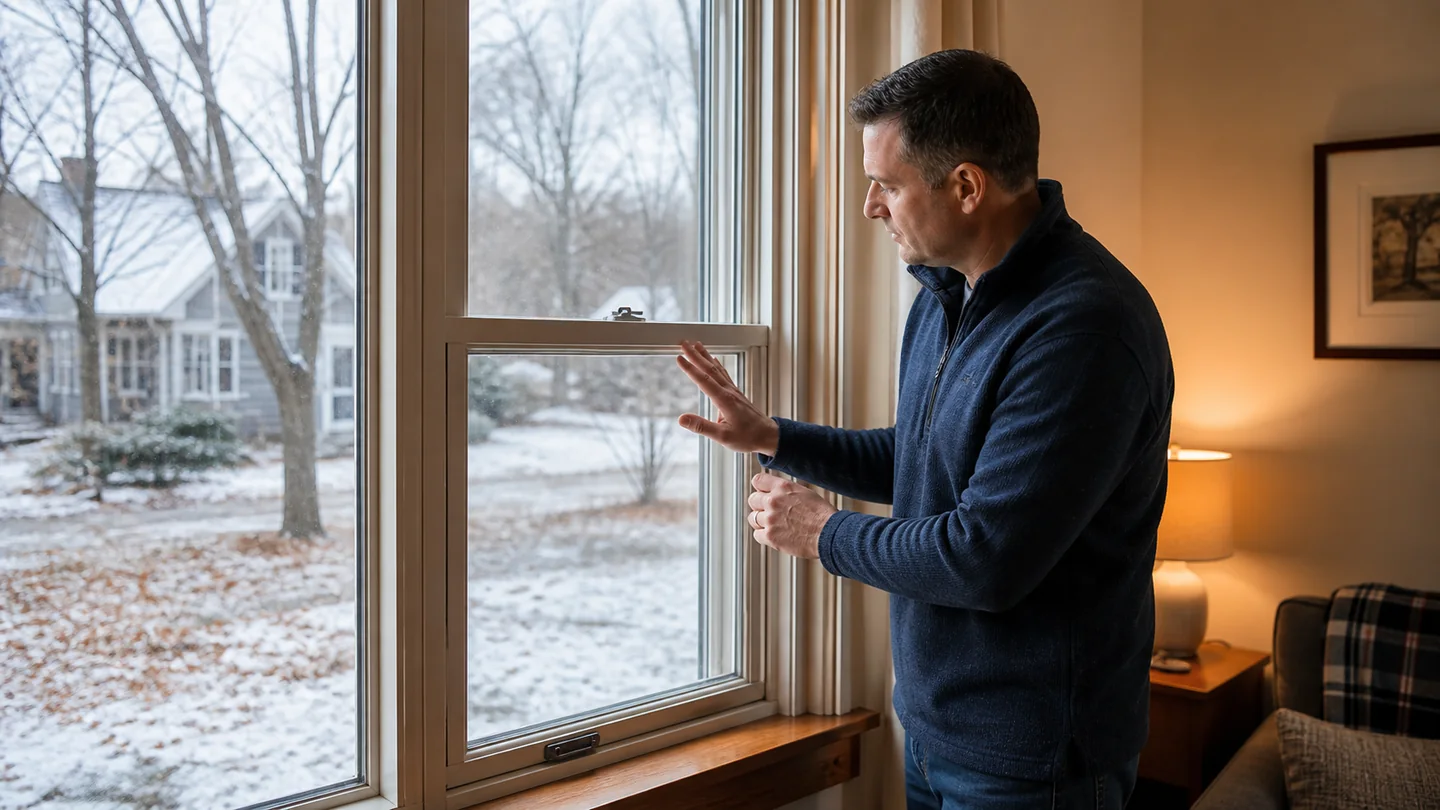
If last winter left you avoiding one cold room, wiping fog from the same windows, or fighting a sash that wouldn't close, it's reasonable to wonder whether replacement should happen before the next freeze. You don't need to be ready to buy to start getting useful answers.
One minor symptom may only need attention. Several symptoms in the same window—or a problem that returns after a basic fix—usually justify a closer look. These seven signs will help you understand when window replacement becomes the practical next step for a home.
Start with the symptoms, not just the age
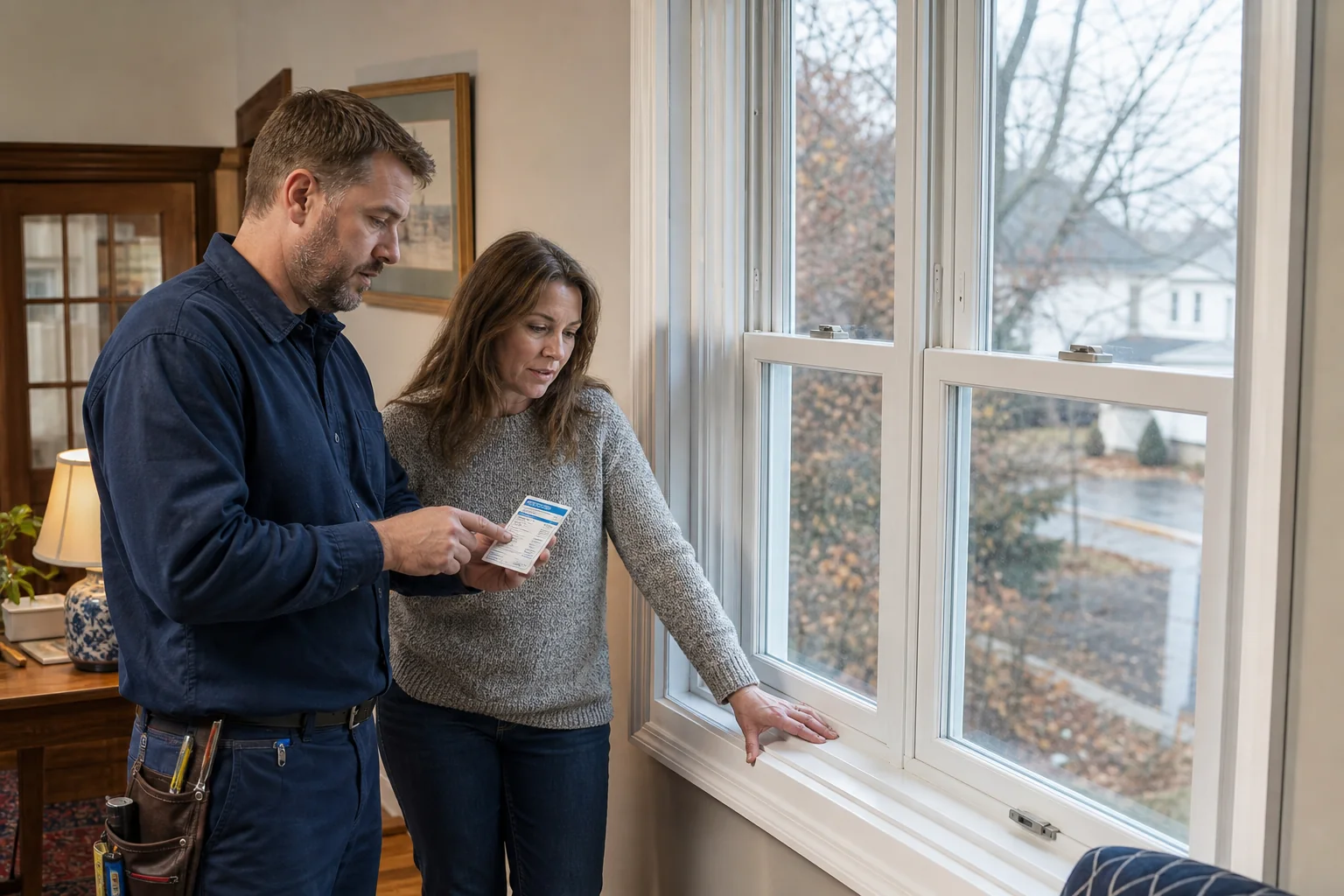
A quick check can save time. Close and lock the window fully, look for flattened weatherstripping, and note gaps around the trim. Also pay attention to when the problem appears: during strong wind, heavy rain, or everyday cold weather.
Age matters, but performance matters more. A window that still opens, locks, stays dry, and seals well may have useful life left. A window with recurring drafts, failed glass, or frame damage is giving you a stronger reason to price replacement.
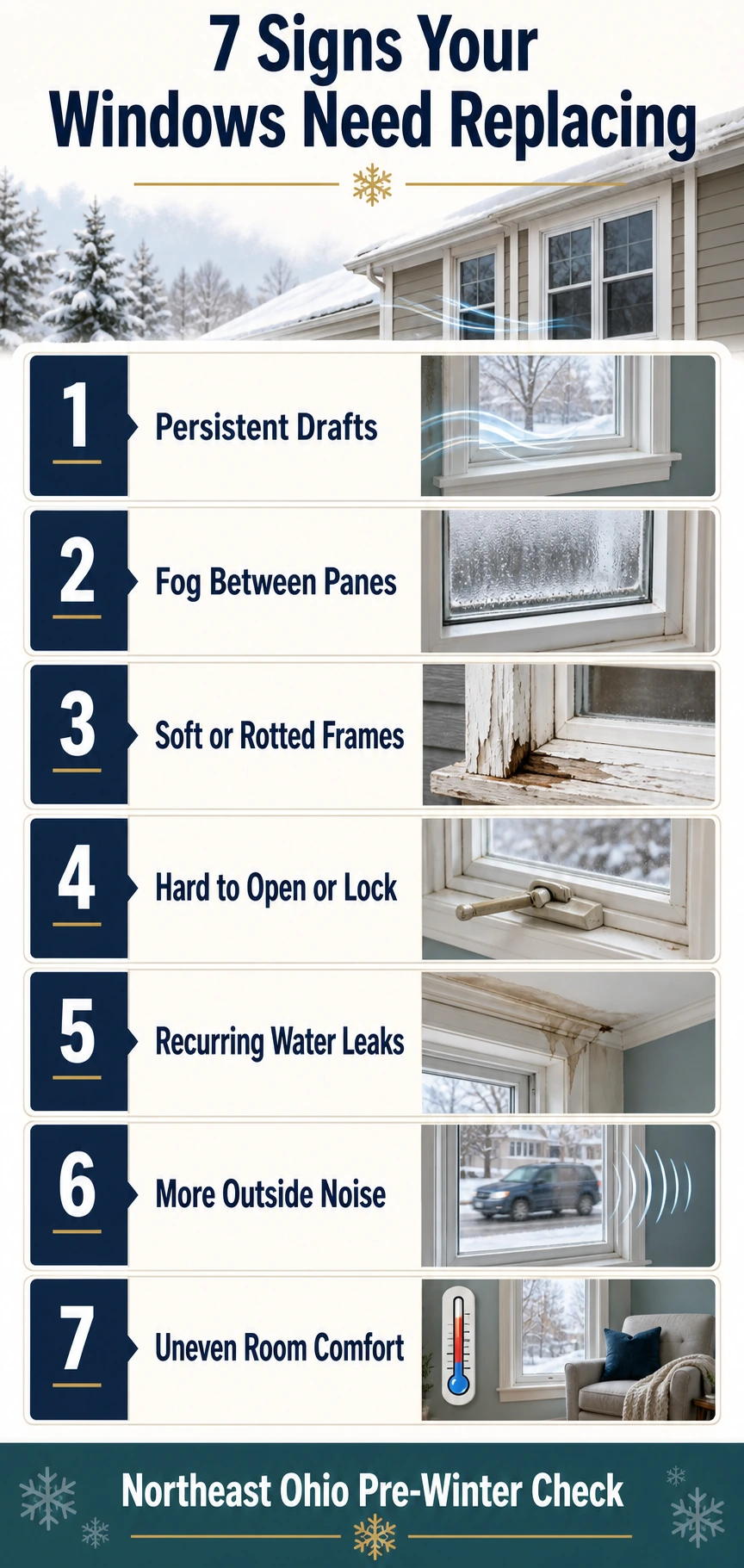
1. The draft comes back after the obvious fixes
You feel cold air at the edge of a closed sash, the curtains move on a windy day, or the floor near the window stays noticeably colder. Drafts are one of the clearest signs that something isn't sealing, but they don't automatically prove the entire unit has failed.
Clean the tracks, engage the lock, and check the weatherstripping first. A window that looks closed may still leak if it isn't latched, while gaps around the frame may be repairable behind the trim.
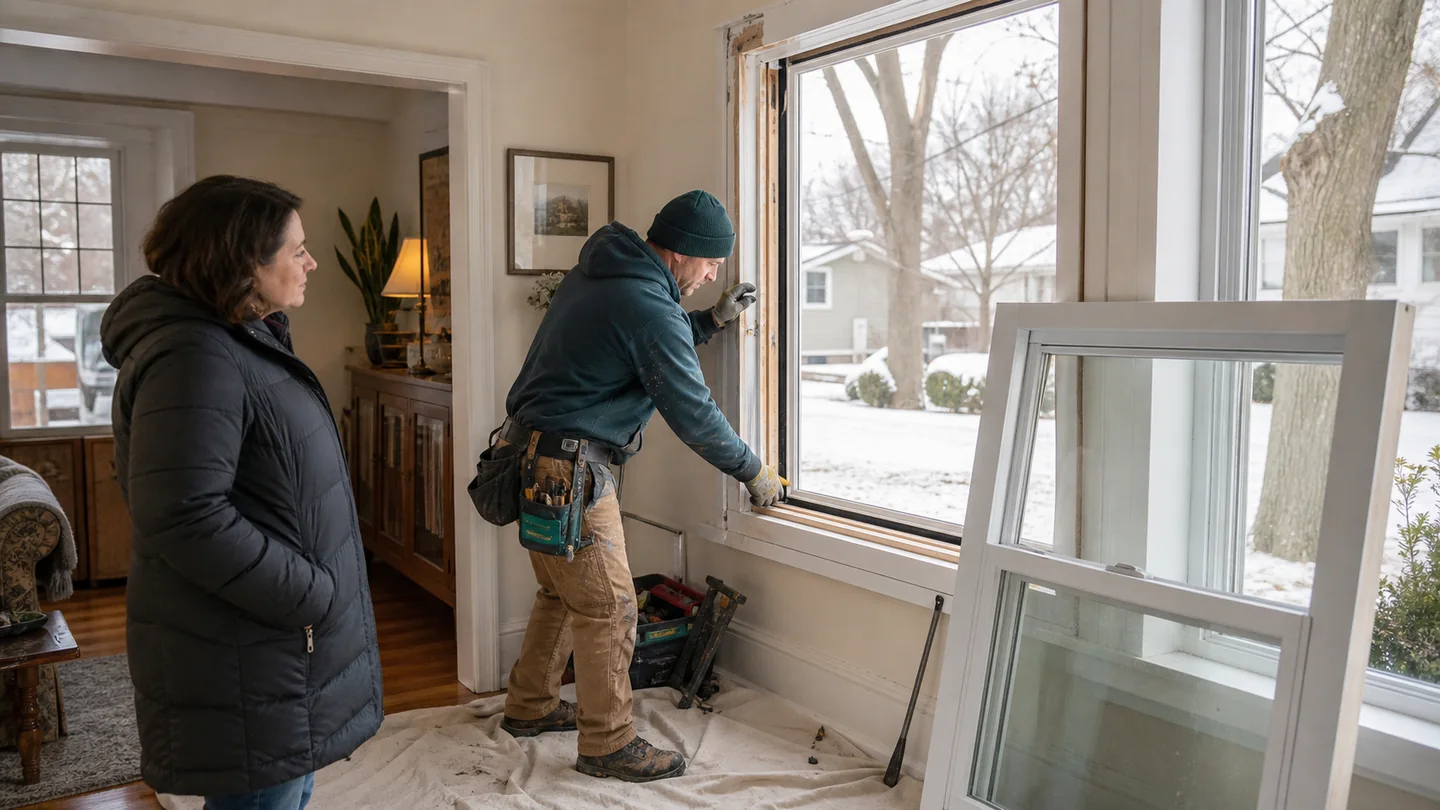
Replacement becomes the practical option when the sash or frame is warped, the rails no longer line up, or new weatherstripping can't create a consistent seal. If several same-age windows share the problem, pricing them together can also make planning easier.
2. There's fog or moisture trapped between the panes
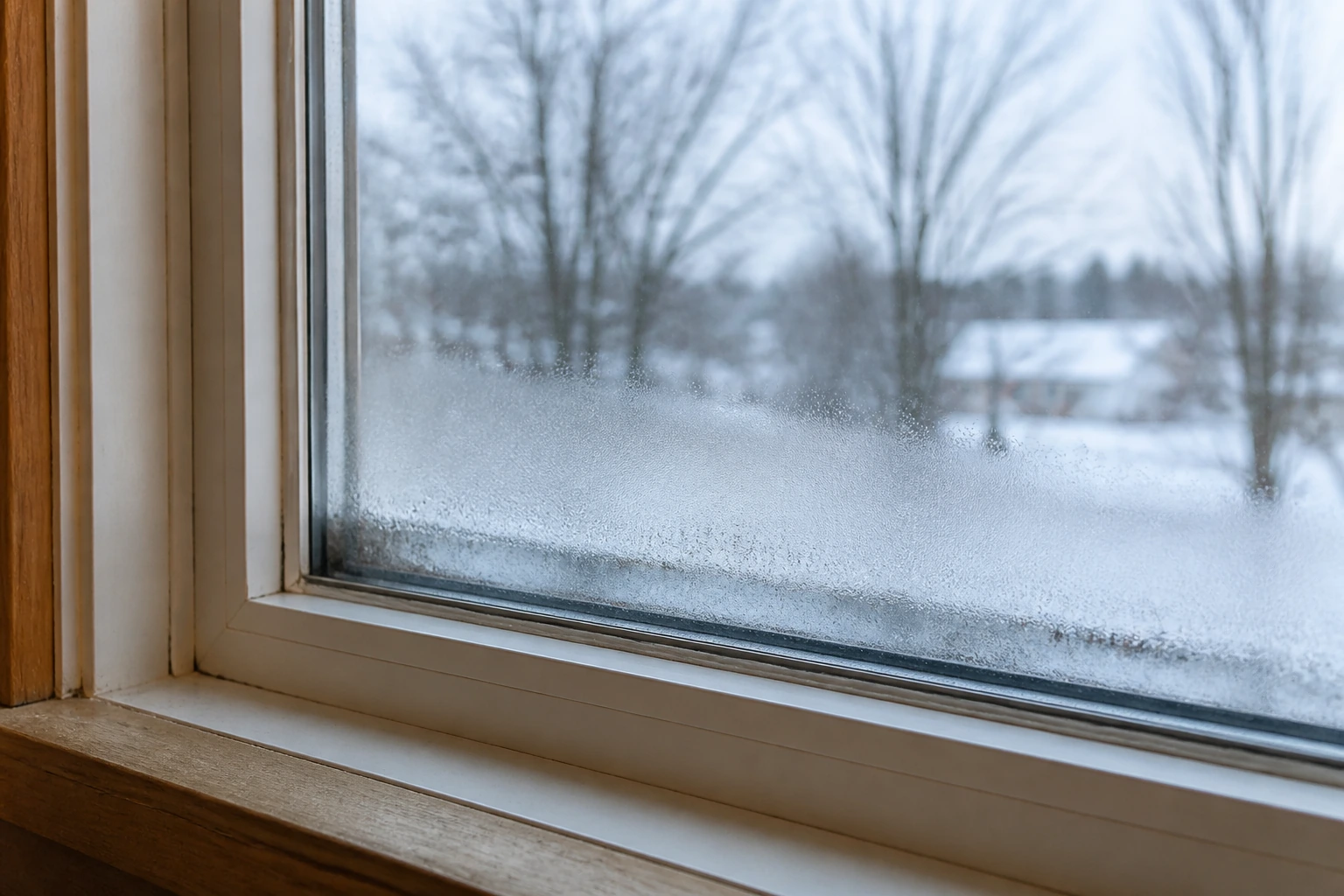
Condensation you can wipe off the room-side surface is one thing. Fog, droplets, or a milky film sealed between two panes is different. It usually means the seal around an insulated glass unit has failed and outside air and moisture have entered the space between the panes.
If the frame and sash are sound, replacing only the insulated glass unit may be possible. But if the sash is damaged, parts are unavailable, or several seals are failing, a complete replacement often gives you a more predictable result and a clearer warranty.
Be skeptical of cosmetic 'defogging' if you want to restore insulating performance. Ask whether the failed sealed unit is actually being replaced and what warranty covers the new glass.
3. The sill or frame feels soft, swollen, or rotten
Peeling paint alone isn't a verdict. Soft wood, crumbling corners, swelling, dark staining that returns, or a screwdriver sinking into the sill with little resistance is more serious. Those signs suggest repeated moisture exposure, and the visible damage may be smaller than what's behind the trim.
A tiny, dry area of surface damage may be repairable. Soft framing, recurring swelling, or decay extending toward the wall usually calls for full-frame replacement so the installer can expose and correct the opening instead of covering the problem.
Don't let anyone replace the visible window and ignore the leak path. If flashing, siding, masonry, or a gutter is directing water into the opening, a beautiful new unit can end up with the same damage.
4. The window is hard to open, close, lock, or keep open
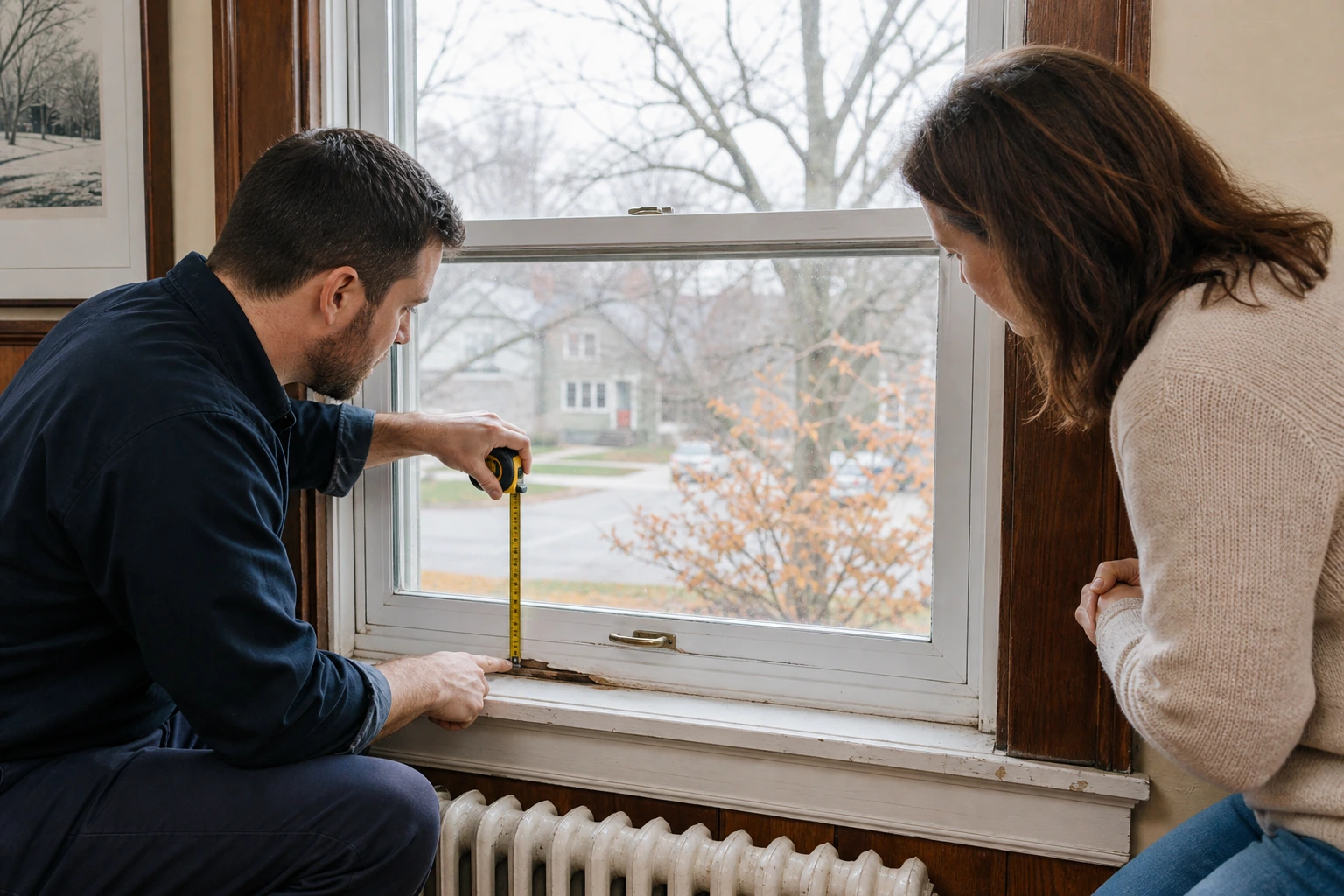
A window that slams shut, won't stay open, or needs two hands to lock can affect ventilation, security, and emergency escape. A bedroom window intended for emergency escape needs prompt attention.
Paint buildup, dirty tracks, loose hardware, or failed sash balances may be repairable. But a warped frame, rotted sash, broken welded corner, or recurring alignment problem often isn't. Here's the thing: forcing a stubborn window can damage hardware and glass, so stop if it binds or feels unsafe.
A simple hardware repair can work when the structure is sound and parts are available. When the unit is distorted, obsolete, or repeatedly difficult to operate, replacement usually offers a cleaner long-term fix.
5. Water keeps showing up around the opening
Water stains below a window, bubbling drywall, peeling trim, or damp carpet after a storm deserve prompt investigation. Yet the window itself may not be the source. Rain can enter above the opening and travel behind siding or trim before it becomes visible indoors.
A useful inspection follows the water path through flashing, sill slope, exterior joints, siding, gutters, and the wall around the opening. Caulking every seam can trap water instead of directing it outside.
Recurring leakage, frame deterioration, or hidden damage often makes full-frame replacement the sensible path because it exposes the opening for proper flashing and water management. The estimator should still confirm whether the source is the window, the surrounding exterior, or both.
6. Outside noise suddenly feels much more noticeable
Traffic, barking dogs, and wind noise don't prove a window is failing, but a noticeable change can point to loose weatherstripping, a sash that no longer closes tightly, or a failed glass seal. Older single-pane windows also provide less sound control than many modern insulated units.
Don't buy a window based on a vague promise that it will 'soundproof' the room. Glass thickness, pane spacing, laminated glass, frame design, air sealing, walls, and vents all affect noise. Ask for a product designed for that purpose and an installation plan that seals the opening.
A loose seal may need weatherstripping, but persistent noise alongside drafts or poor operation strengthens the case for replacement. A better glass package can noticeably improve the room, although no ordinary residential window makes it silent.
7. One room stays uncomfortable—and the window evidence agrees
A bedroom that never warms up can make old windows look guilty. They may contribute, but missing insulation, weak duct airflow, attic leaks, or a closed damper can create similar symptoms.
Look for a cluster: drafts at the sash, cold glass, failed seals, frame gaps, and a temperature difference that follows the weather. An energy audit or infrared inspection can separate window leaks from wall, attic, or HVAC problems.
High utility bills alone don't identify the cause. But when higher heating use appears alongside drafts, failed seals, and uneven comfort, replacement deserves serious consideration. New windows can improve comfort and reduce heat transfer; actual savings depend on the product, installation, fuel costs, and the rest of the house.
When a small repair is enough—and when replacement makes more sense
| What you notice | A repair may be enough | Replacement becomes more likely |
|---|---|---|
| Draft at the sash | Lock adjustment, cleaning, or new weatherstripping restores the seal | Sash or frame is warped and won't seal consistently |
| Moisture on glass | Condensation is on the indoor surface and improves with humidity control | Fog is trapped between panes or sealed units are failing repeatedly |
| Wood damage | Decay is small, dry, and the water source can be corrected | Rot is widespread or reaches the frame and rough opening |
| Hard operation | Balances, hinges, locks, or paint buildup can be serviced | The unit is distorted, structurally damaged, or parts are unavailable |
| Leak after rain | Flashing, siding, gutter, or exterior joint is the source | The frame and surrounding opening must be removed to repair hidden damage |
| Cold room | Air sealing, insulation, or HVAC correction solves the main problem | Window defects appear with verified air leakage and poor glass performance |
What window replacement may cost in 2026
HomeYou's 2026 national guide puts a typical window replacement near $1,092, with a range of $565 to $1,883. It lists pocket or insert installation at $827 to $2,398 and full-frame replacement at $1,192 to $3,261. These are planning references, not your area quotes.
Why the spread? A standard vinyl insert in a sound frame is a different job from a custom unit requiring sill repair, new trim, and second-story access. Glass, color, disposal, permits, lead-safe work, and interior finishing also affect price.
Ask each contractor to separate the product from installation and extra work. The estimate should name the installation type, included trim, hidden-damage pricing, and painting responsibility. Otherwise, two prices may describe different projects.
Pocket insert or full-frame? The frame decides
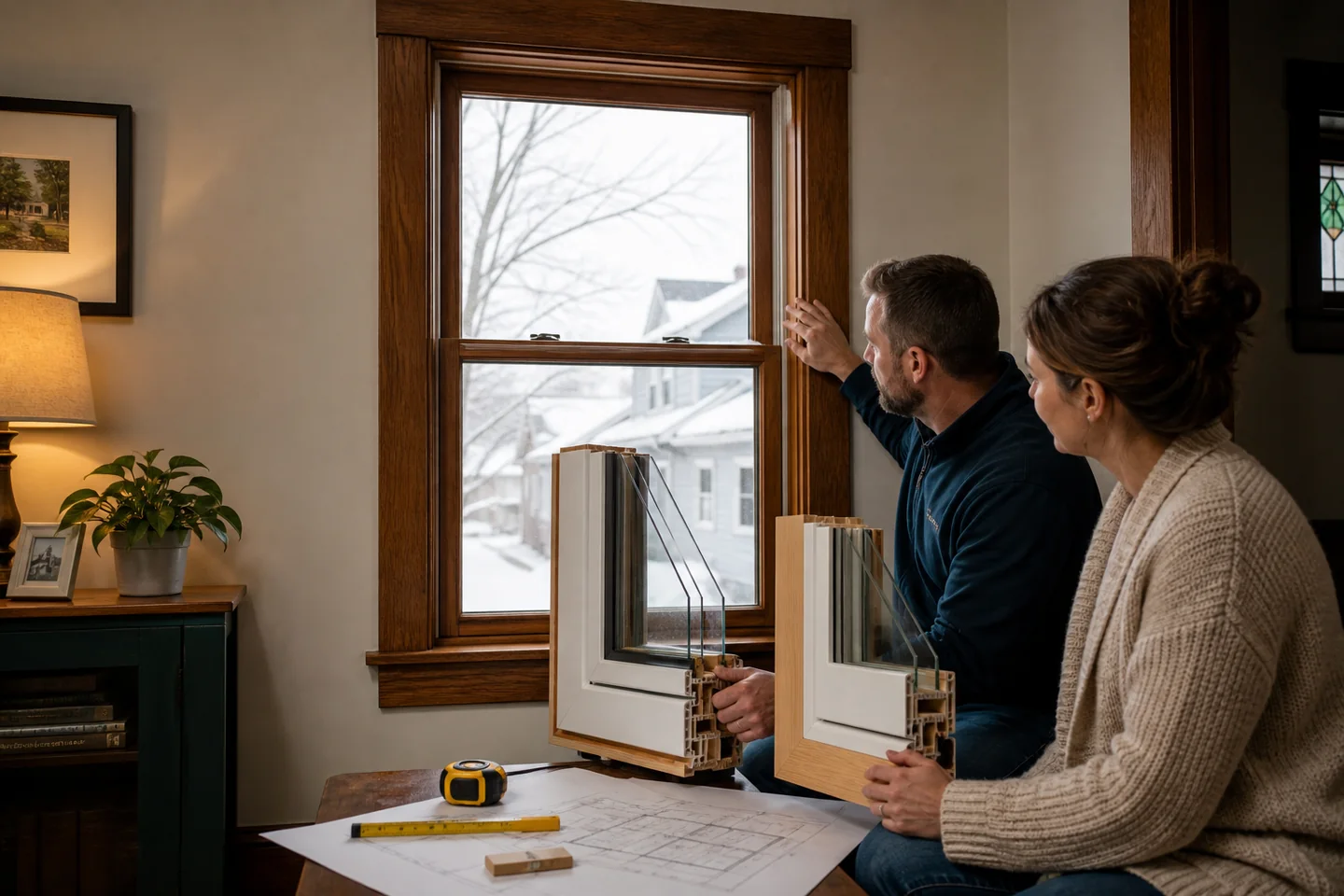
A pocket or insert window fits inside the existing frame. It creates less disruption and may cost less, but it slightly reduces the glass opening and requires a square, dry, sound frame.
Full-frame replacement exposes the rough opening, insulation, flashing, and hidden damage. It costs more, but it's often the honest choice for rot, recurring leaks, poor original installation, or a major style change.
So what should you actually do? Ask the estimator to show you why the existing frame can—or can't—be reused. 'Full-frame is better' and 'inserts are always fine' are both incomplete answers.
How to compare windows without getting buried in jargon
Look for the National Fenestration Rating Council label on the exact product. U-factor describes heat transfer; lower is better. Solar heat gain coefficient, or SHGC, describes incoming solar heat. Air leakage measures air passing through the product. On condensation-resistance ratings, higher is better.
ENERGY STAR certification narrows the field because products meet climate-zone criteria and use independently certified ratings. It doesn't guarantee good installation. A high-performing unit in a wet or unsealed opening can disappoint.
Ask for the exact model, glass package, ratings, frame material, hardware, screens, and warranty. The seller should connect those details to your comfort, maintenance, sound, appearance, and budget goals.
Seven questions to ask before requesting or accepting a quote
- Which problems can be repaired, and what evidence makes you recommend replacement?
- Is the quote for a pocket insert or a full-frame installation, and why?
- What exact product and NFRC performance ratings are included?
- How will you flash, insulate, air-seal, and finish each opening?
- How are hidden rot, masonry repair, permits, disposal, and painting priced?
- For a pre-1978 home, will the work follow EPA lead-safe requirements?
- What do the product and labor warranties cover, exclude, and require from me?
For most pre-1978 housing, EPA rules cover paid window replacement that disturbs painted surfaces unless affected components have been properly determined lead-free. Ask whether the firm is lead-safe certified and how it will contain dust and clean the work area.
Frequently asked questions
Can drafty windows be fixed without replacing them?
Often, yes. Locks, weatherstripping, caulk joints, and gaps around the frame can be repaired. Replacement is more likely when the sash or frame is warped, rotten, or unable to hold a seal.
Does condensation mean my windows have failed?
Not always. Moisture on the indoor surface often points to indoor humidity meeting cold glass. Moisture trapped between panes usually indicates a failed insulated-glass seal. The location of the condensation matters.
Can I replace the glass instead of the whole window?
Sometimes. If an insulated glass unit has failed but the sash and frame are sound, glass-only replacement may be practical. Availability, warranty, sash condition, and cost determine whether it makes sense.
Should I replace every window at once?
Not necessarily. Prioritize unsafe, leaking, rotten, or failed units and phase the rest. Whole-house replacement may simplify ordering, but it isn't the only option.
How much does window replacement cost?
HomeYou's 2026 national planning range is $565 to $1,883 for a typical replacement, with wider ranges for pocket and full-frame work. Local quotes depend on size, material, glass, access, frame condition, trim, and repairs.
What is the difference between insert and full-frame replacement?
An insert fits inside a sound existing frame. Full-frame work removes the old frame and exposes the rough opening. Inserts are less disruptive; full-frame installation is better suited to rot, leaks, damaged frames, or major design changes.
How far before winter should I start?
Start before cold weather if possible. Custom orders, lead-safe planning, and hidden repairs take time. Winter replacement is possible, but scheduling options may be tighter.
When it makes sense to get an estimate
You don't need to wait for a window to stop working completely. Trapped fog, persistent drafts, soft frames, recurring water intrusion, unsafe operation, or several symptoms at once are enough reason to understand your options before winter makes the problem harder to ignore.
A useful estimate explains what failed, whether insert or full-frame installation fits, how the opening will stay dry and airtight, which product ratings meet your goals, and what the warranty actually covers. That gives you a real scope and price to compare without assuming you've already decided to buy.
Sources
HomeYou: Window Replacement Cost Breakdown for 2026
ENERGY STAR: Residential Windows, Doors, and Skylights
NFRC: Window Energy Performance Ratings
U.S. Department of Energy: Window Types and Technologies
U.S. Department of Energy: Air Sealing Your Home
U.S. EPA: Controlling Moisture in Your Home
U.S. EPA: Renovation, Repair and Painting Program for Consumers