Best Energy-Efficient Windows: Glass, Frames, and Ratings Explained
2026 national planning range: $565-$1,355 for a typical window installation
If you've started shopping for energy-efficient windows, you've probably heard the same promises: triple pane is best, one frame material beats every other, and a premium glass package will pay for itself. Some of that may point you in the right direction. None of it is enough to choose a window for your home.
Here's the useful answer: the best window for a your area house is a well-installed unit with verified whole-window ratings suited to your county, your sun exposure, and the way you use the room. The glass matters. The frame matters. The installation may matter even more than the sales presentation suggests.
The short answer: shop the label before the brochure
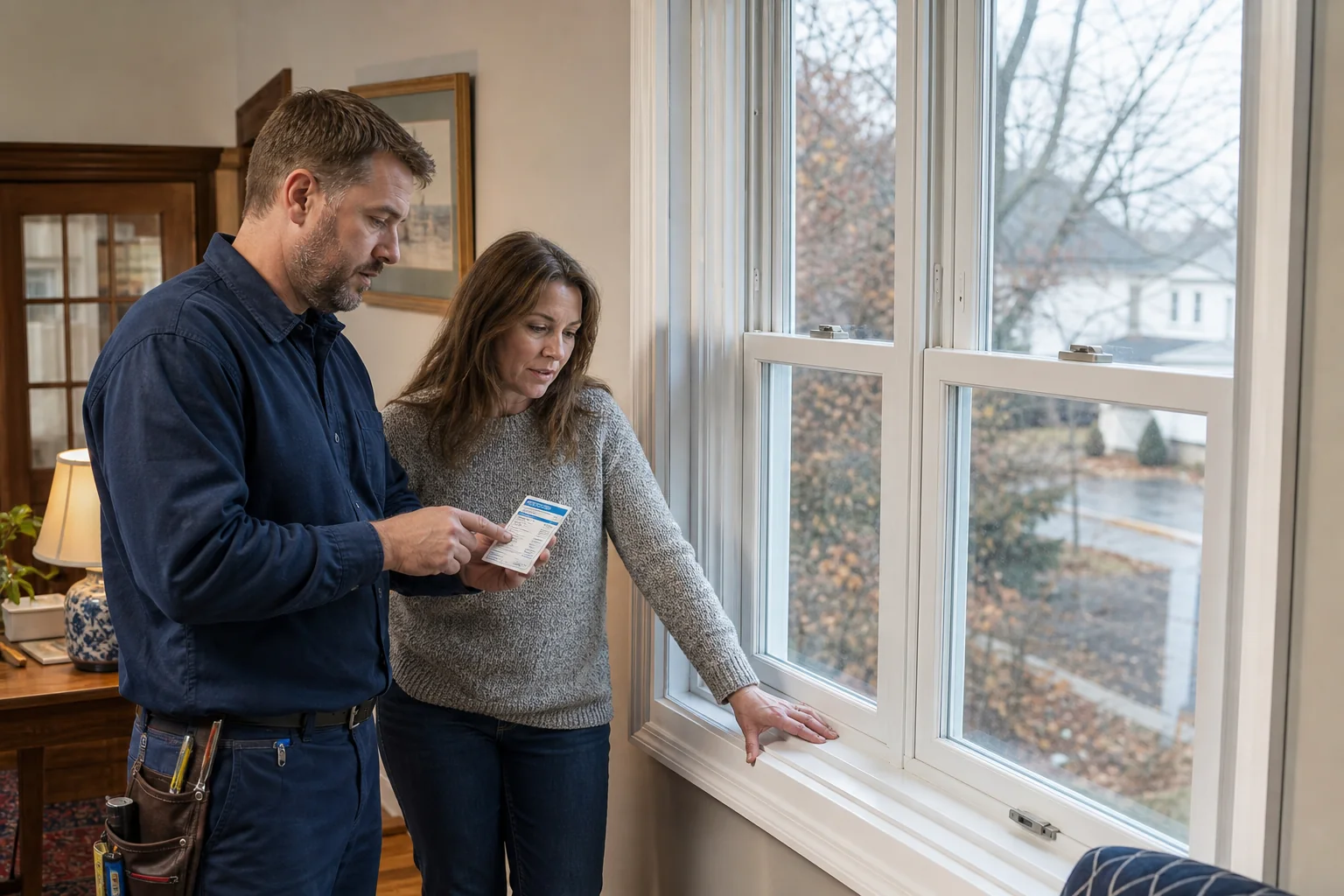
A window can have low-e glass, argon gas, and a foam-filled frame and still perform differently from another window with a similar feature list. The National Fenestration Rating Council, or NFRC, rates the complete product using standardized methods. That gives you a more useful comparison than counting panes or repeating marketing terms.
ENERGY STAR uses NFRC-certified ratings to identify products that meet efficiency criteria for specific climate zones. Because the label is climate-specific, check your county in the ENERGY STAR Climate Zone Finder rather than assuming every your state address needs the same product package.
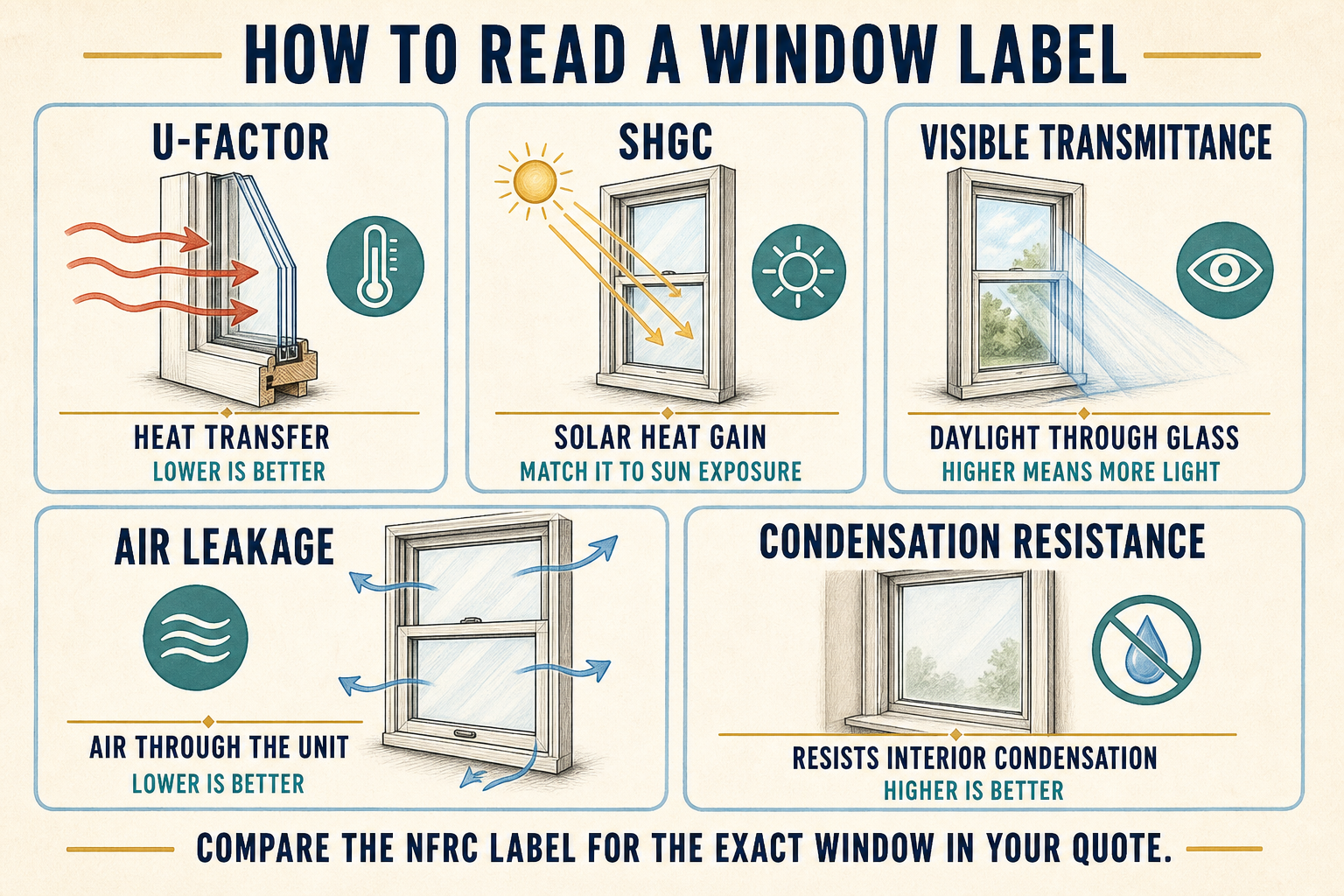
Five window ratings, translated into normal language
| NFRC rating | What it tells you | How to read it |
|---|---|---|
| U-factor | How readily heat moves through the complete window | Lower is better for keeping indoor heat from escaping |
| Solar heat gain coefficient | How much solar heat passes through the window | Lower blocks more solar heat; higher allows more winter sun |
| Visible transmittance | How much visible daylight passes through | Higher generally means more natural light |
| Air leakage | How much air passes through the manufactured unit during testing | Lower means less rated air leakage |
| Condensation resistance | How well the product resists indoor condensation under test conditions | Higher indicates better resistance; indoor humidity still matters |
U-factor is usually the first number to compare in a heating-heavy climate because it describes heat transfer through the whole unit. Don't confuse it with a center-of-glass R-value. The frame, sash, glass edge, spacers, and operating design all affect the NFRC whole-product result.
Solar heat gain coefficient, usually shortened to SHGC, needs more nuance. A lower number can reduce unwanted summer heat, especially on sunny west-facing glass. A higher number can admit more winter solar warmth. The best balance depends on orientation, shade, comfort problems, and the ENERGY STAR criteria for your location.
Double pane or triple pane? Don't decide by pane count alone
Double-pane windows are the standard starting point for many replacements. Two panes create a sealed insulating glass unit, often paired with low-e coatings and an inert gas fill. A well-rated double-pane window can be a sensible fit for many homes.
Triple pane adds another layer of glass and another sealed space. It can improve U-factor and make the interior glass surface feel warmer during cold weather. It may also add cost and weight, and it doesn't guarantee that every triple-pane model outperforms every double-pane model in every rating.
So what should you actually do? Compare the NFRC labels for the exact double- and triple-pane configurations in your quote. Then ask what the upgrade changes in U-factor, visible light, price, sash weight, and warranty. If the difference is small, you can decide whether the comfort improvement is worth the added cost instead of buying by pane count.
Low-e coatings do more than make glass sound technical
Low-emissivity, or low-e, coatings are microscopically thin layers applied to glass to control radiant heat transfer. Different coatings can be designed for higher, moderate, or lower solar gain. That matters because a sunroom facing south doesn't have the same problem as a shaded bedroom facing north.
A coating that reduces summer heat may also reduce some visible light or winter solar gain. Not necessarily enough to bother you, but enough that you should compare SHGC and visible transmittance rather than accepting 'low-e' as the complete specification.
Ask whether every elevation is getting the same glass package. Using one package throughout the house simplifies ordering, while changing the glass by orientation may solve glare or overheating more precisely. Either approach can be reasonable if someone explains the tradeoff.
Argon, krypton, and warm-edge spacers: useful, but not magic
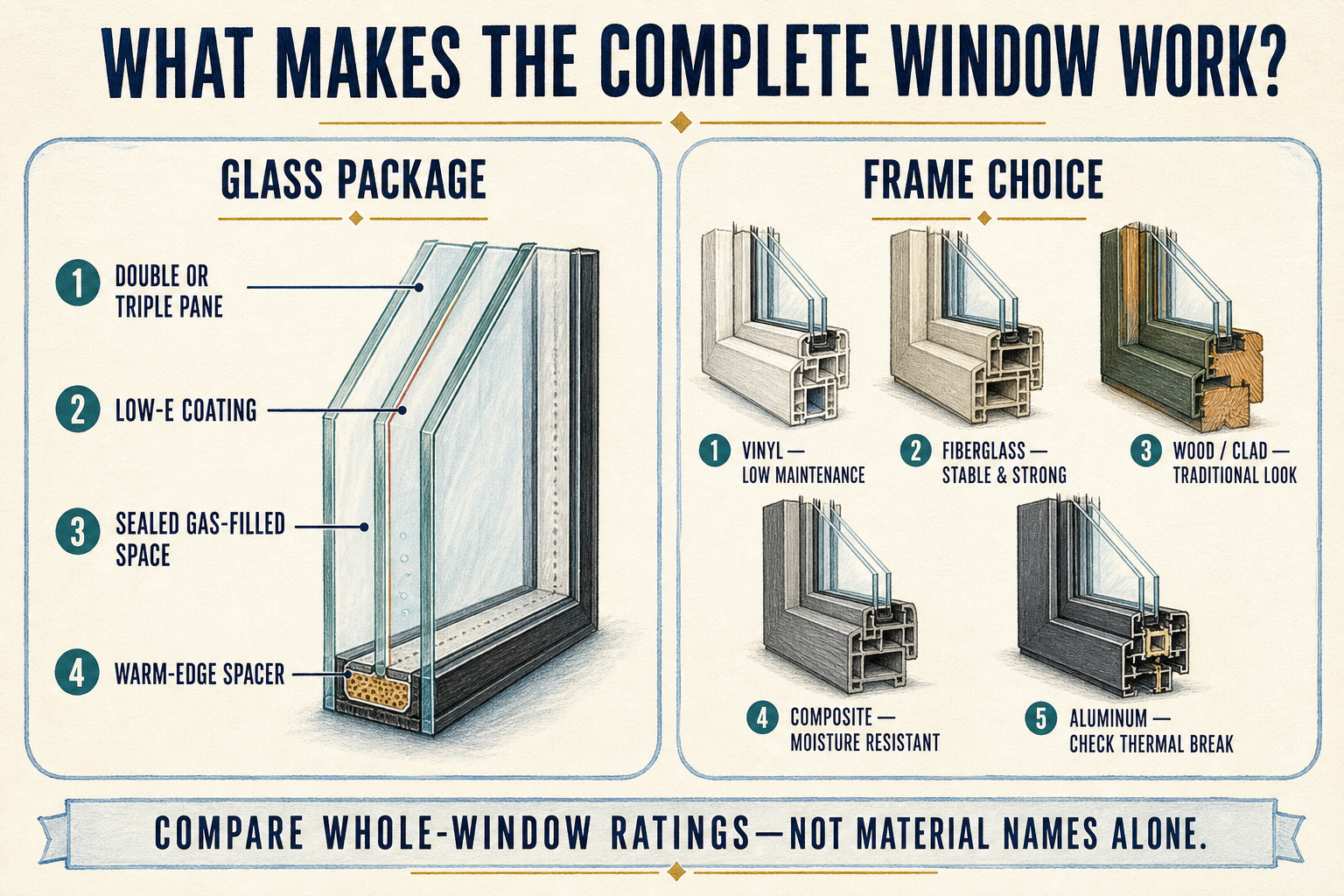
The space between panes may be filled with argon or krypton instead of ordinary air. The U.S. Department of Energy describes both as clear, odorless, non-toxic inert gases used to reduce heat transfer. Argon is common and works well in typical insulated-glass spacing; krypton can perform better in thinner spaces but usually costs more.
The spacer keeps the panes separated and helps seal the glass unit. A warm-edge spacer is designed to reduce heat transfer near the perimeter and can improve edge-of-glass temperatures. You don't need to become a spacer engineer. You do need to compare the final whole-window rating and understand the glass warranty if the seal fails.
Fog trapped between panes is evidence that an insulated glass seal has failed. Gas-fill percentages aren't something you can check from the living room, so the manufacturer, certification record, and warranty matter more than a salesperson's dramatic demonstration.
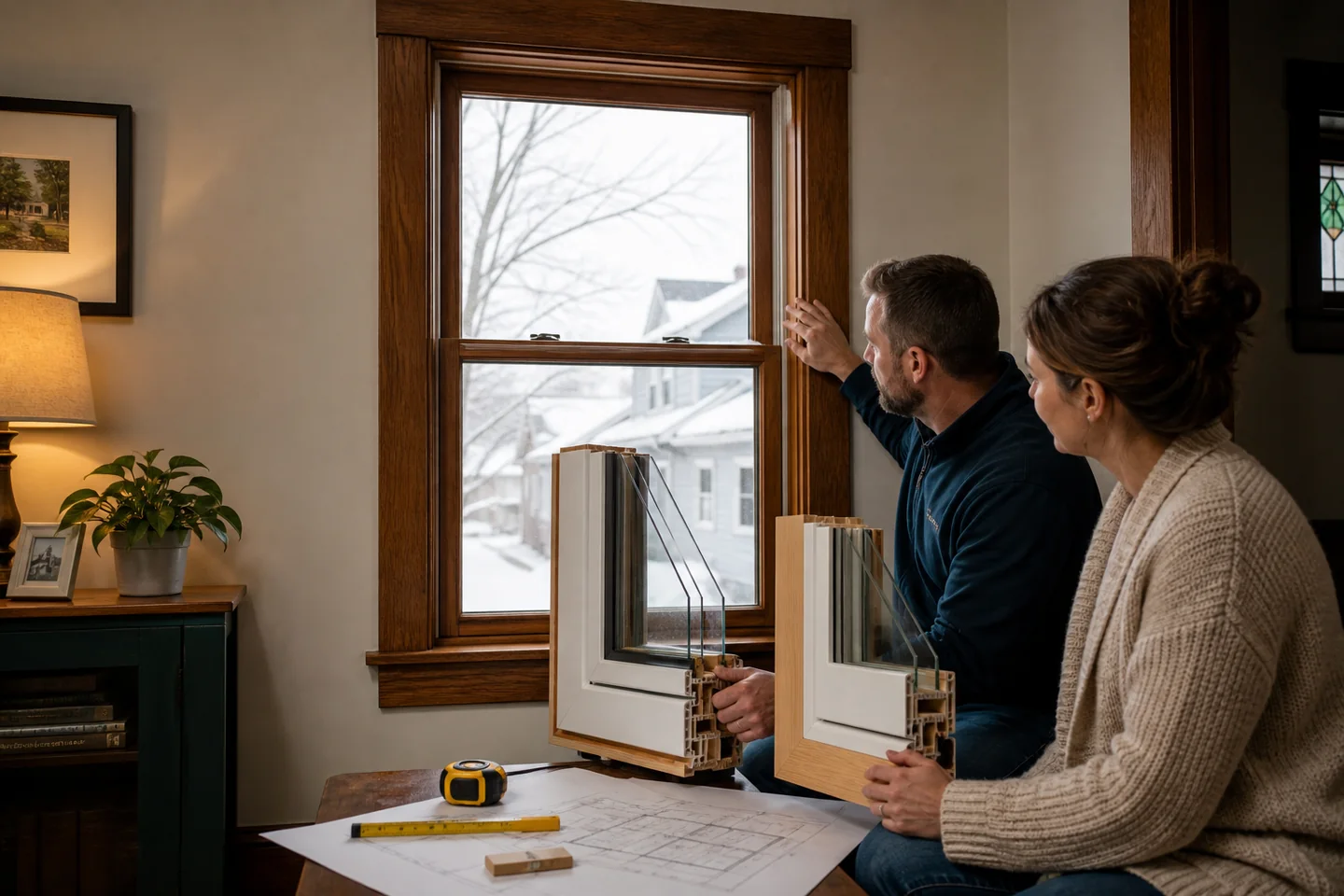
Which frame material makes sense in your area?
| Frame | Why homeowners consider it | What to examine before choosing |
|---|---|---|
| Vinyl | Low maintenance, moisture resistance, and many price levels | Frame construction, reinforcement, color limits, expansion, and exact ratings |
| Fiberglass | Dimensional stability, narrow profiles, and strong thermal options | Price, finish choices, insulated cavities, availability, and installer experience |
| Wood or clad wood | Traditional appearance, good insulation, and flexible interior finishes | Exterior cladding, maintenance, moisture exposure, finish warranty, and cost |
| Composite | Stable construction and resistance to moisture and decay | What the composite contains, repairability, finish choices, ratings, and warranty |
| Aluminum | Strength and slim profiles | Whether it has an effective thermal break and how the complete unit is rated |
Vinyl isn't automatically cheap, fiberglass isn't automatically premium, and wood isn't automatically inefficient. Product design varies within every category. A reinforced vinyl casement and an entry-level vinyl double-hung may share a material name but not the same structure, air leakage, hardware, glass area, or rating.
Window style changes performance more than most shoppers expect
Casement and awning windows close by pressing the sash against the weatherstripping, so they often have lower air leakage than sliding or hung designs. Fixed picture windows don't open and can be very airtight when installed properly. Double-hung windows remain popular because they're familiar, ventilate well, and can be easier to clean.
The most efficient operating style isn't automatically the best choice for every opening. Bedrooms may need emergency-escape dimensions. Kitchens need reachable hardware. A bathroom may need ventilation and privacy. A large picture window may improve the view but change summer comfort on a sunny wall.
Compare the same operating type when possible. A casement and a double-hung with similar glass packages can have different air-leakage and glass-area results because the sash and frame work differently.
Installation is where a good window can lose the argument
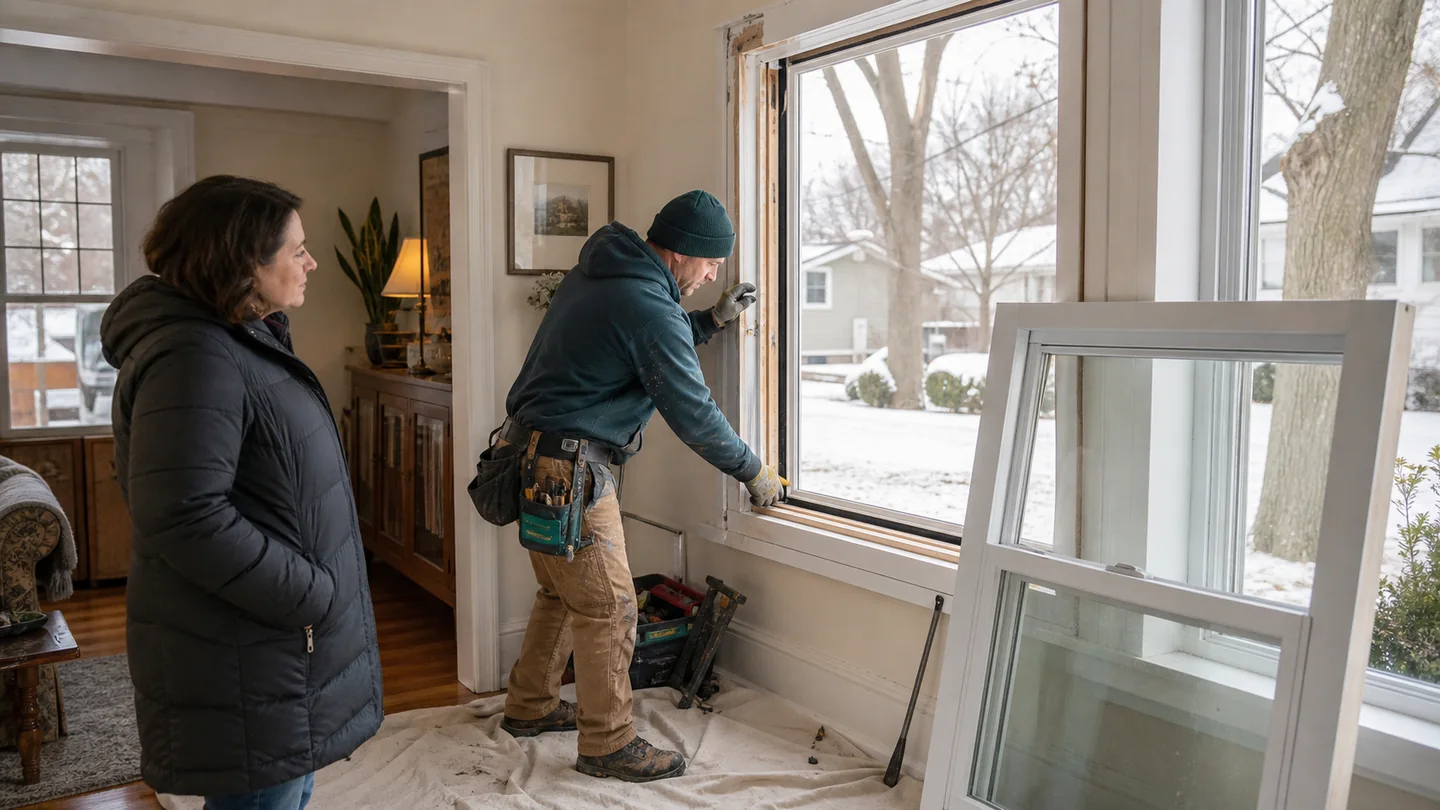
NFRC ratings describe the manufactured product, not the quality of installation. NFRC itself warns that a highly rated unit may underperform if it isn't installed well. The opening still needs water management, insulation, air sealing, square placement, working clearances, and finished interior and exterior transitions.
A pocket or insert window fits inside an existing frame. It can reduce disruption when that frame is square, dry, and structurally sound, but it also keeps the old frame and slightly reduces the glass opening. Full-frame replacement exposes the rough opening and makes more sense when there is rot, recurring water intrusion, failed flashing, or a major style change.
Here's the thing: an expensive glass package won't stop air moving around the outside of the frame. Ask how the installer will insulate and seal the rough opening, integrate exterior flashing, protect the sill, and handle any damage uncovered after removal.
How much do energy-efficient windows cost in 2026?
HomeYou's 2026 national window-installation guide gives a typical planning range of $565 to $1,355, with an average near $828. Angi's broader 2026 replacement data places individual windows between roughly $300 and $2,500 depending on frame material, glass, style, and installation complexity. These aren't your area quotes, and specialty windows can fall outside them.
The energy package is only one part of the total. Size, operating style, custom colors, grids, tempered or laminated glass, upper-story access, lead-safe work, trim, frame repairs, masonry, permits, disposal, and full-frame installation can all change the price.
Ask the estimator to price upgrades separately. Seeing the cost difference for triple pane, a better U-factor, laminated glass, full-frame work, or a different frame makes the decision much clearer than one bundled total.
Do you need to replace the windows at all?
Not every comfort problem requires new windows. Worn weatherstripping, loose locks, gaps around the frame, failed caulk, damaged hardware, or one failed insulated-glass unit may be repairable if the sash and frame remain sound. Interior condensation may also point to high indoor humidity rather than a failed window.
Replacement becomes more convincing when frames are rotten or warped, sealed glass units are failing across several windows, operation is unsafe, leaks keep returning, or the existing units can't hold a reliable seal. An assessment should separate repairable problems from product failure instead of treating age alone as the verdict.
Questions to ask before requesting or accepting a quote
- What exact manufacturer, series, operating style, and glass package are included?
- Can I see the NFRC ratings and ENERGY STAR climate-zone certification for that exact configuration?
- What changes if I choose double pane instead of triple pane, or a different low-e coating?
- Is this a pocket insert or full-frame installation, and why does the existing opening support that choice?
- How will the opening be flashed, insulated, air-sealed, trimmed, and protected from water?
- How are hidden rot, masonry work, lead-safe practices, permits, disposal, and painting priced?
- What do the glass, frame, finish, hardware, and labor warranties cover and exclude?
- Will I receive the NFRC labels, product records, care instructions, and warranty registration information?
Don't let a heat-lamp demonstration replace the label. A sample pane may show one property of the glass, but it doesn't give you the whole-window U-factor, air leakage, installation scope, or warranty for the actual unit being ordered.
Frequently asked questions
What U-factor is best for your area?
Lower U-factor means less heat transfer, but the correct ENERGY STAR threshold depends on your official climate zone. Use the county finder and compare exact NFRC labels rather than relying on one number quoted for all of your state.
Is triple pane worth it?
It depends. Triple pane may improve U-factor and cold-weather glass temperature, but it costs more and can reduce visible light depending on the package. Compare the exact ratings and upgrade price against a strong double-pane option.
Are vinyl windows energy efficient?
Many are, but material alone doesn't prove performance. Frame design, reinforcement, insulated cavities, glass package, weatherstripping, operating style, manufacturing quality, and installation all affect the result.
Does ENERGY STAR mean the window is the best available?
No. It means the product meets ENERGY STAR criteria for the climate zones shown on its label and has independently certified NFRC ratings. Other certified products may have stronger individual ratings or different comfort and design benefits.
Will new windows stop condensation?
They may improve interior glass temperature and condensation resistance, but indoor humidity, outdoor temperature, air circulation, shades, and installation also matter. Condensation between panes is different and usually indicates a failed glass seal.
Can I replace the glass without replacing the frame?
Sometimes. A failed insulated glass unit may be replaceable if the sash and frame are sound and the correct unit is available. Complete replacement makes more sense when the frame, sash, operation, or water management has also failed.
Should every window use the same glass package?
Not necessarily. One package simplifies the order, but different orientations may benefit from different solar-gain or glare control. Any variation should be intentional and documented on the product schedule.
What should you actually choose?
For many homes, the sensible shortlist starts with climate-appropriate ENERGY STAR certification, a low whole-window U-factor, an SHGC matched to sun exposure, verified air-leakage performance, low-e insulated glass, a durable frame, and an installation method that fits the condition of the opening.
From there, choose double or triple pane, frame material, operating style, and glass options based on comfort, maintenance, appearance, noise, budget, and how long you expect to own the home. You don't need the most expensive window. You need the exact product and installation scope that solve the problems you actually have.
Sources
ENERGY STAR: Residential Windows, Doors, and Skylights
ENERGY STAR: Windows, Doors, and Skylights Climate Zone Finder
ENERGY STAR: What Makes It ENERGY STAR?
National Fenestration Rating Council: Residential Product Certification
National Fenestration Rating Council: Window Ratings and Labels
U.S. Department of Energy: Window Types and Technologies
U.S. Department of Energy: Window Installation
HomeYou: Window Installation Costs and Savings Tips (2026)
Angi: Window Replacement Cost (2026 Data)
your local municipality: Construction Permits
U.S. EPA: Renovation, Repair and Painting Program for Consumers