Sump Pumps and Basement Flooding: A Homeowner's Prevention Checklist
2026 national installation range: $800-$3,000 | Average: about $1,100
A sump pump is easy to ignore when the pit is dry. Then a hard your area rain arrives, snow melts over saturated ground, or the power goes out during a storm, and that small pump becomes the last working defense between groundwater and a finished basement.
The important catch is that a sump pump cannot prevent every kind of basement flooding. It can remove groundwater collected by a properly designed drainage system, but it will not repair negative grading, clear a blocked sewer, stop a burst pipe, or compensate for a discharge line that sends water back toward the foundation. Prevention starts by understanding the source and checking the entire system before severe weather reaches your local area, your local area, your local area, your local area, Warren, or a nearby community.
The quick answer: what should you check before the next storm?
- Test the primary pump through a complete on-and-off cycle using clean water and the procedure in its owner's manual.
- Confirm that the float moves freely, then inspect the check valve, pipe joints, and exterior discharge for leaks, blockage, freezing risk, or recirculation.
- Test the battery or water-powered backup separately from the primary pump, including its alarm and high-water float.
- Clear gutters and downspouts, correct obvious low spots near the foundation, and keep stored belongings off the basement floor.
| Safety first Do not touch a pump, cord, outlet, or electrical panel while standing in water. If the basement is wet and electricity may be involved, stay out and contact the utility, fire department, electrician, or restoration professional. Turn off power only from a dry, safe location. |
|---|
How much does sump pump installation cost in 2026?
Angi's 2026 national cost guide reports an average sump-pump installation cost of about $1,100, with many professional projects ranging from $800 to $3,000. A straightforward replacement in an existing pit is different from cutting a new basin into concrete, creating a drainage connection, routing a legal discharge, adding a dedicated electrical circuit, or installing a dual-pump system.
| Project or system | 2026 planning range | Typical cost drivers |
|---|---|---|
| Professional installation | $800-$3,000 | Pump type, pit, discharge, electrical work, and access |
| 1/3 HP system | $800-$1,200 | Capacity, lift height, piping, and existing conditions |
| 1/2 HP system | $1,000-$1,600 | Higher flow needs, head pressure, and discharge route |
| 3/4 HP or larger | $1,600-$2,500 | High inflow, long or elevated discharge, and controls |
| Dual pumps or multiple pits | $2,000-$4,000+ | Redundancy, basins, piping, backup power, and alarms |
| Replacement in existing pit | $645-$2,120 | Pump, check valve, pipe changes, access, and emergency timing |
These are national planning ranges, not guaranteed your area prices. Ask each contractor to identify the pump model, rated capacity at the actual lift, pit work, check valve, discharge piping, backup system, alarm, electrical requirements, permits, cleanup, warranty, and exclusions. A low quote may cover only the pump swap and leave the cause of the water problem untouched.
Why basements flood
Groundwater and saturated soil
Rain and melting snow saturate soil. Drain tile or an interior channel should direct groundwater into the pit, but a clogged, incomplete, or damaged drainage system may leave seepage that a larger pump cannot solve.
Surface water near the foundation
Short downspouts, overflowing gutters, low patios, and soil sloping toward the house concentrate runoff beside the basement. Correcting that path can reduce the load on the pump.
Sewer or drain backup
Water or sewage rising through a floor drain or fixture is not the same as groundwater entering a pit. A sump pump may not stop a sewer backup. A licensed plumber and local sewer authority should diagnose it before recommending a backwater valve or drain correction.
Plumbing, appliance, or foundation leaks
Water heaters, appliance hoses, supply lines, frozen pipes, wall cracks, and window wells can flood a basement independently of the sump system. Trace the entry point before buying a larger pump.
How a complete sump-pump system works
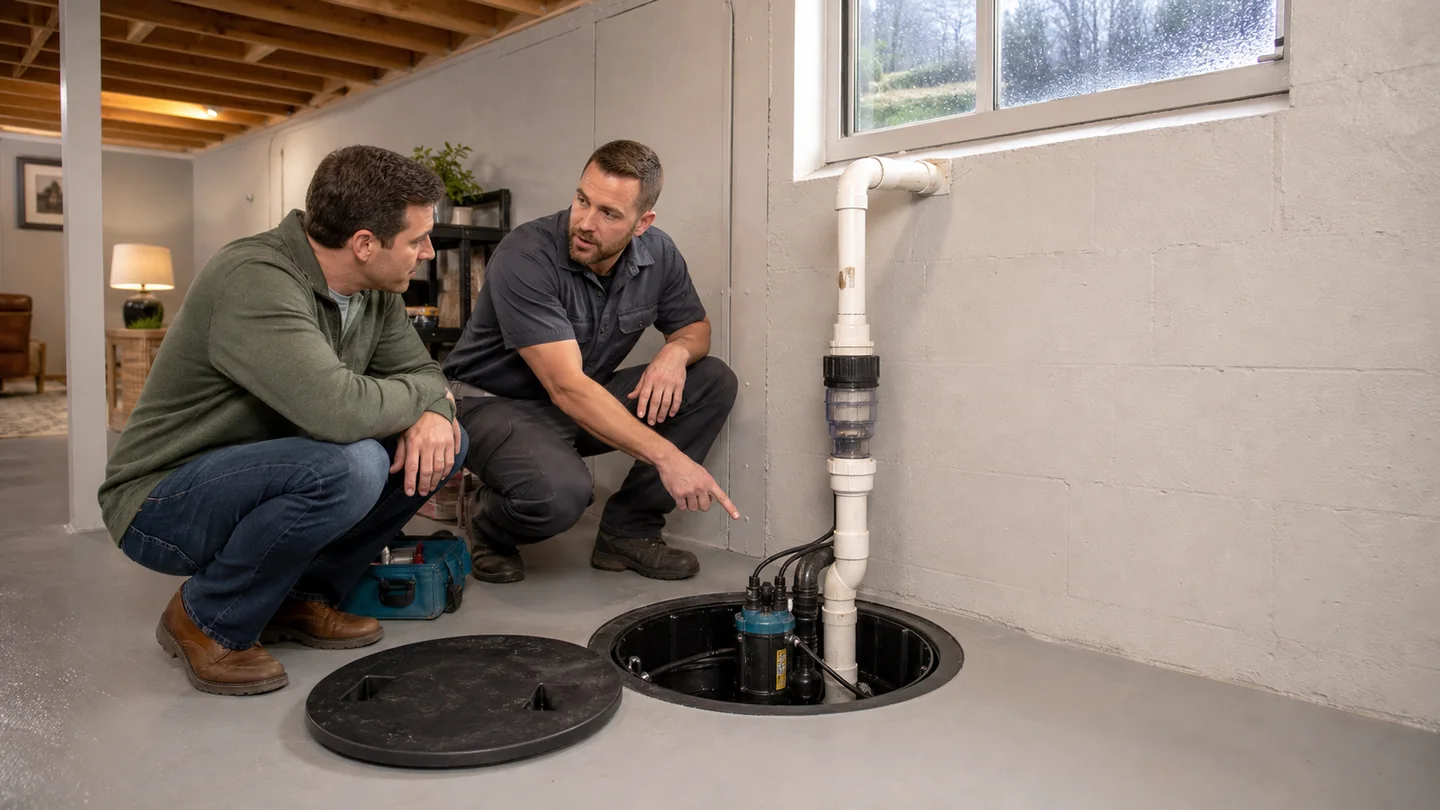
A reliable system is more than a motor in a hole. Drainage brings groundwater to a basin; the rising level lifts a float switch; the primary pump moves water through a discharge pipe; and a check valve limits water flowing back after shutdown. The line then releases water at an approved location away from the foundation.
- Covered basin: limits debris and open-pit hazards while leaving room for float movement and service.
- Primary pump: handles routine groundwater at the installation's actual lift and pipe resistance.
- Check valve: limits water flowing back into the basin after shutdown.
- Backup pump and alarm: provide a second response to an outage, primary failure, or high water.
- Discharge line: sends water to an approved outlet without returning it toward the foundation or neighboring property.
Primary and backup sump-pump options
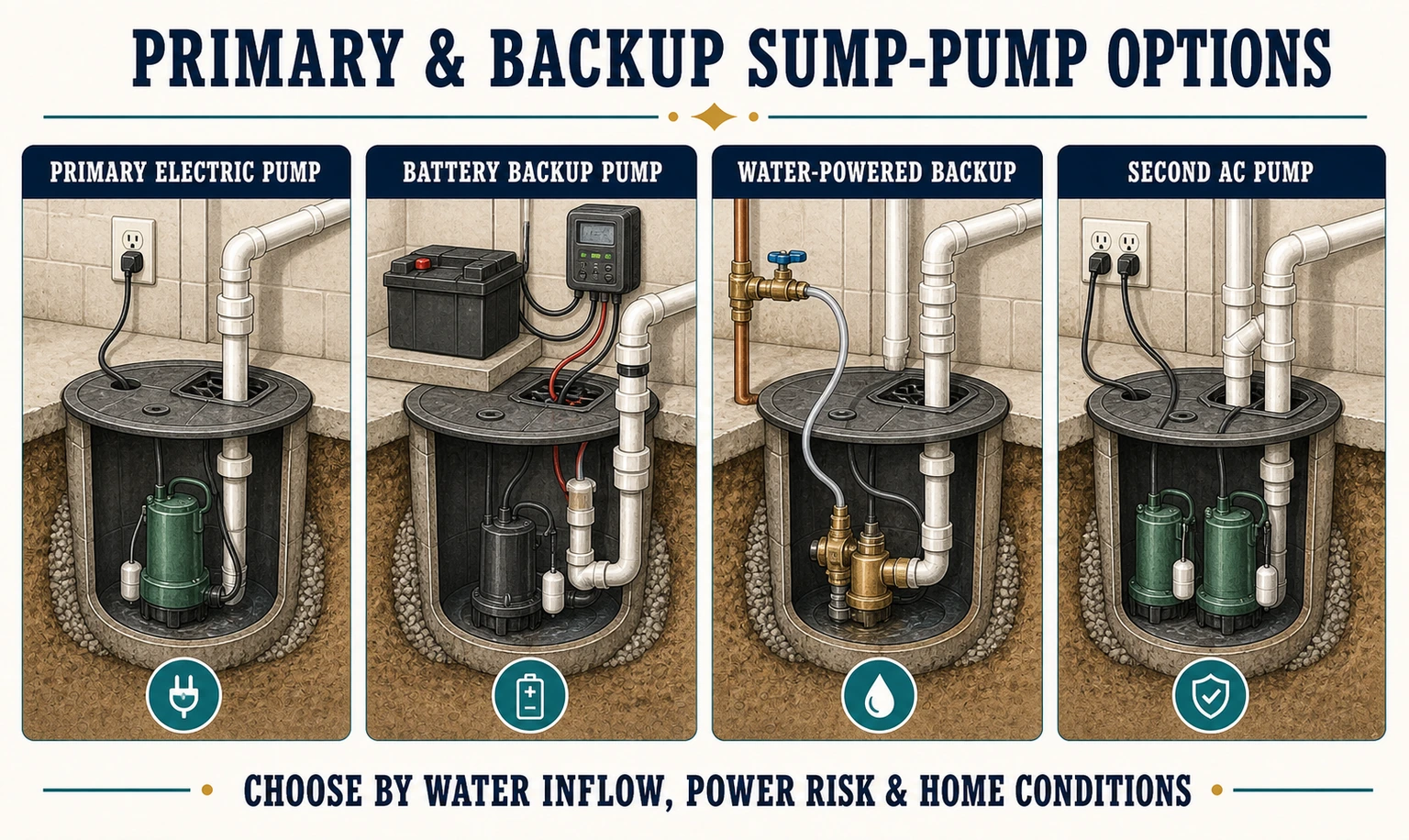
| System | Best role | Important limitations |
|---|---|---|
| Primary electric pump | Routine groundwater removal | Stops during outage; capacity depends on lift and piping |
| Battery backup pump | Outages and primary-pump failure | Battery health, runtime, charger, and test schedule matter |
| Water-powered backup | Long outages where allowed | Needs reliable municipal pressure; uses potable water; local approval matters |
| Second AC pump | High inflow or mechanical redundancy | Still needs power unless paired with another backup source |
FEMA recommends considering secondary pumps, battery backup, water sensors, and backflow protection. The right mix depends on the water source, outages, inflow, municipal rules, water pressure, electrical service, and consequences of failure.
Do not size a pump by horsepower alone
Horsepower alone does not show how much water a pump will move. Contractors should estimate inflow and use the manufacturer's performance curve at the total dynamic head: vertical rise plus pipe, elbow, valve, and fitting resistance. An undersized pump can fall behind; an oversized pump in a small basin may short-cycle. Ask for capacity at the home's actual conditions, not the maximum printed on the box.
Sump-pump prevention checklist
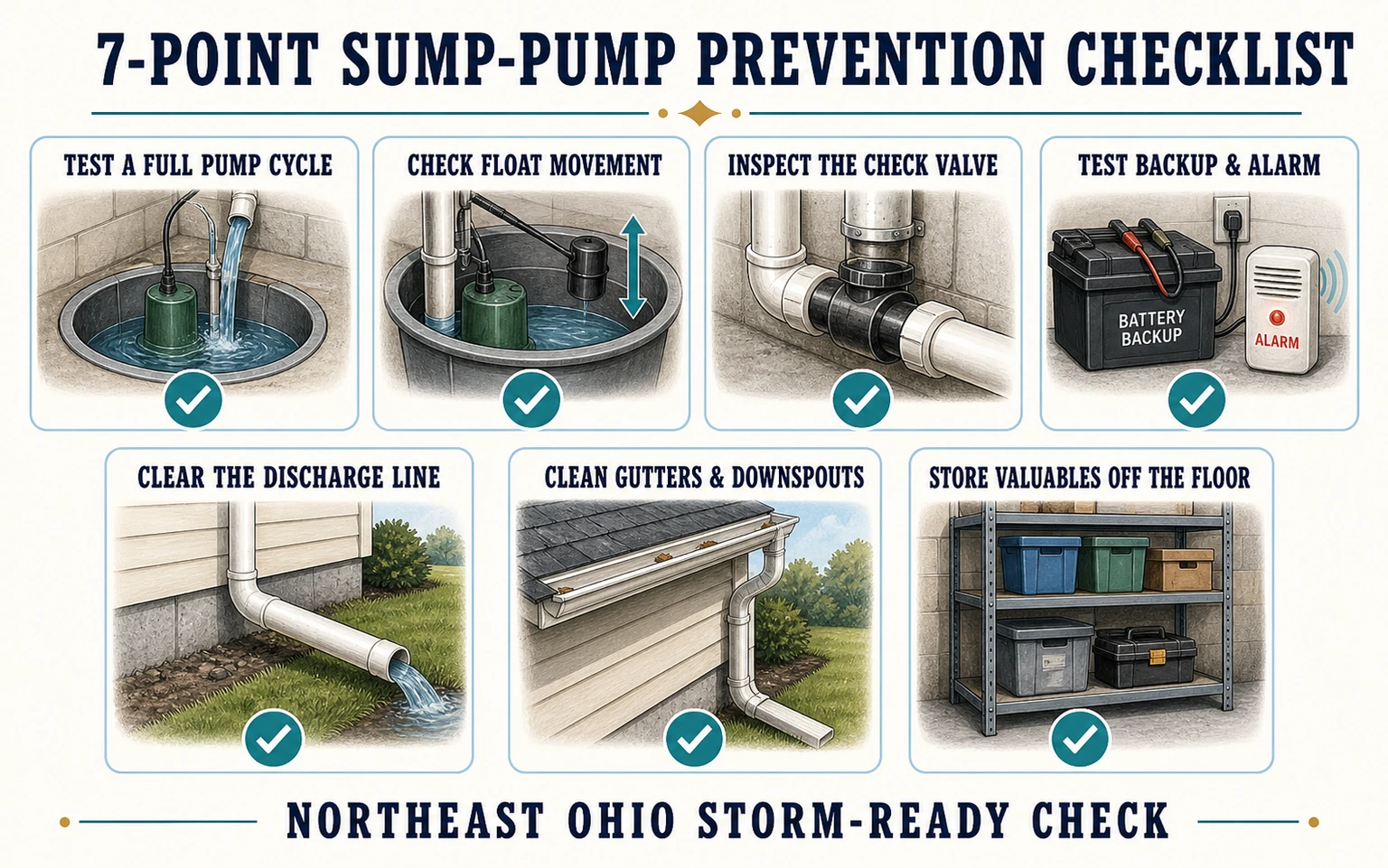
Every three months and before a major storm or thaw
- Follow the owner's manual and pour clean water into the basin until the primary pump starts, lowers the water, and shuts off through one full cycle.
- Listen for grinding, humming, rattling, short cycling, or a heavy bang, and watch that the float moves without obstruction.
- Look for pipe leaks and excessive water returning through the check valve.
- Check power, battery, charger, and fault indicators, then test the backup according to its manual.
Some manufacturers specify at least quarterly testing, while battery maintenance can be more frequent depending on battery type. The owner's manuals for the installed pump, controller, and battery are the controlling instructions.
Each spring and fall
- After disconnecting power and checking the manual, clean accessible basin debris and inspect the exterior discharge for damage, blockage, or freeze risk.
- Clean gutters and confirm that downspouts carry roof water away in a locally permitted manner.
- During rain, note ponding, overflowing window wells, settled soil, and runoff moving toward the home.
- Confirm that the pump, alarm, and backup have appropriate power and were not unplugged for another appliance.
Year-round habits
- Keep boxes, rugs, electronics, photographs, and valuables on shelving rather than directly on the basement floor.
- Do not send laundry water, water-softener discharge, chemicals, or debris into a clear-groundwater sump unless the manufacturer and local rules permit it.
- Record the model, installation and battery dates, warranty, service history, and investigate unusual operation promptly.
Warning signs that need professional attention
Call for inspection when the motor hums without moving water, the float sticks, the breaker trips, the alarm repeats, or the pit rises faster than the pump lowers it. Rust, leaks, vibration, unusual noise, freezing, and recirculation also matter. Age is only one factor; condition, duty cycle, and the consequences of failure should guide planned replacement.
What a sump pump cannot fix
A sump pump manages collected groundwater; it does not replace a drainage diagnosis. Water crossing a threshold, pouring through a window well, rising from a drain, or entering from plumbing needs a source-specific fix. FEMA also points to gutters, downspouts, water-resistant materials, elevated equipment, secondary pumps, alarms, and backflow devices as parts of basement resilience.
If the basement is already flooding
- Stay out when water may contact outlets, appliances, cords, the electrical panel, sewage, chemicals, or unstable materials.
- Do not operate an electric pump from a wet area or through an improvised extension cord. Contact emergency services or qualified professionals when electrical safety is uncertain.
- For deep flooding with saturated ground outside, seek guidance before rapid pumping; unequal pressure can damage walls or floors.
- Document conditions, contact the insurer, and begin safe extraction and drying. Treat sewer backup and outside floodwater as contaminated.
Insurance questions to ask before a loss
Homeowners and flood insurance address different causes. The NAIC says many homeowners policies provide limited or no sewer-backup or sump-overflow coverage without an endorsement, and external flood is typically excluded. NFIP basement coverage is limited: certain installed equipment may qualify when flood is the direct cause, while finished improvements and many belongings may not. Ask the agent to explain overflow, backup, seepage, flood, mold, contents, deductibles, and limits in writing.
How to compare sump-pump contractors
- What evidence identifies groundwater, surface runoff, sewer backup, or a plumbing leak as the cause?
- What pump capacity is required at this installation's actual lift and pipe resistance?
- Can the basin, drainage, check valve, discharge, outlet, and circuit be reused safely?
- Where will the water discharge, and does the route comply with local plumbing and stormwater rules?
- How are the primary pump, backup, alarm, electrical work, permits, cleanup, warranty, and maintenance priced?
Frequently asked questions
How often should I test my sump pump?
Follow the manufacturer. A practical baseline is every three months and before severe rain or thaw, testing the primary, backup, alarm, charger, and battery separately.
How do I test a sump pump safely?
Use clean water to trigger one complete cycle. Keep hands out while energized, never handle electrical parts from a wet surface, and follow the manual for float and backup tests.
Do I need a battery backup sump pump?
Consider one when storms cause outages, inflow is rapid, the basement is finished, or failure would damage important equipment. Match battery runtime and pump output to the risk.
Is a water-powered backup better than a battery system?
Not universally. Water-powered units need reliable pressure, use potable water, and may be restricted locally. Battery units have finite runtime and maintenance needs.
Why does my sump pump run constantly?
Possible causes include heavy inflow, a stuck float, failed check valve, undersizing, blocked discharge, or recirculation. Constant operation deserves inspection.
Can a sump pump stop sewer backup?
Usually not by itself. Groundwater sump systems and sanitary sewer systems perform different jobs. A licensed plumber and the local sewer authority should diagnose water rising through drains before recommending a backwater valve or other sewer correction.
Does insurance cover a failed sump pump?
It depends on the cause, policy, endorsements, deductible, and limits. Many policies limit sump overflow or water backup without an endorsement; external flood generally needs separate flood insurance.
A dry basement depends on the whole system
The best time to learn how a sump pump performs is before the pit rises. Test the pump and backup, keep the float clear, inspect the discharge, control roof and surface water, protect important belongings, and keep the service records where they are easy to find.
If water has entered before, start with the source rather than the equipment label. A qualified your area professional should be able to explain why the basement gets wet, how the recommended system is sized, what happens during an outage, where the water goes, and how every component will be tested.
Sources
FEMA: How Can Building Codes Reduce Basement Backup?
Your area Regional Sewer District: Regional Stormwater Management Program
your local municipality: Division of Water Pollution Control
Pentair: Sump Pump Information FAQ
Zoeller: Backup Sump Pump Maintenance Instructions
Angi: Sump Pump Installation Cost 2026
NAIC: A Consumer's Guide to Home Insurance
National Flood Insurance Program: Basement Flooding Coverage