Smoke Odor Removal After a House Fire: What Works, What Does Not, and What It Costs
How to remove the residue behind the smell, compare treatment methods, and understand a restoration estimate
A small fire can leave a surprisingly large odor problem. You may see damage in one room but smell smoke upstairs, inside closets, or whenever the furnace starts. Fragrance may help for an hour. Then the odor returns.
Here's the thing: smoke odor removal usually works when the residue causing the odor is removed or cleaned first. Air treatment can help with what remains, but it is not a substitute for cleaning soot, evaluating porous materials, and checking the HVAC system.
That does not mean every smoky room needs demolition. Scope depends on what burned, how far soot traveled, which materials absorbed it, and whether firefighting water created another problem.
The short answer: remove the source before treating the air
A defensible plan makes the property safe, documents the loss, removes soot, cleans surfaces and contents, addresses HVAC pathways, dries water damage, and then treats remaining odor. Sealing and repainting come after cleaning.
A HEPA air cleaner captures particles, but it does not scrub walls or remove every odor-causing gas. An odor treatment cannot make charred material clean. If a proposal relies on one machine, ask what residue remains.
Before cleanup: is the house safe to enter?
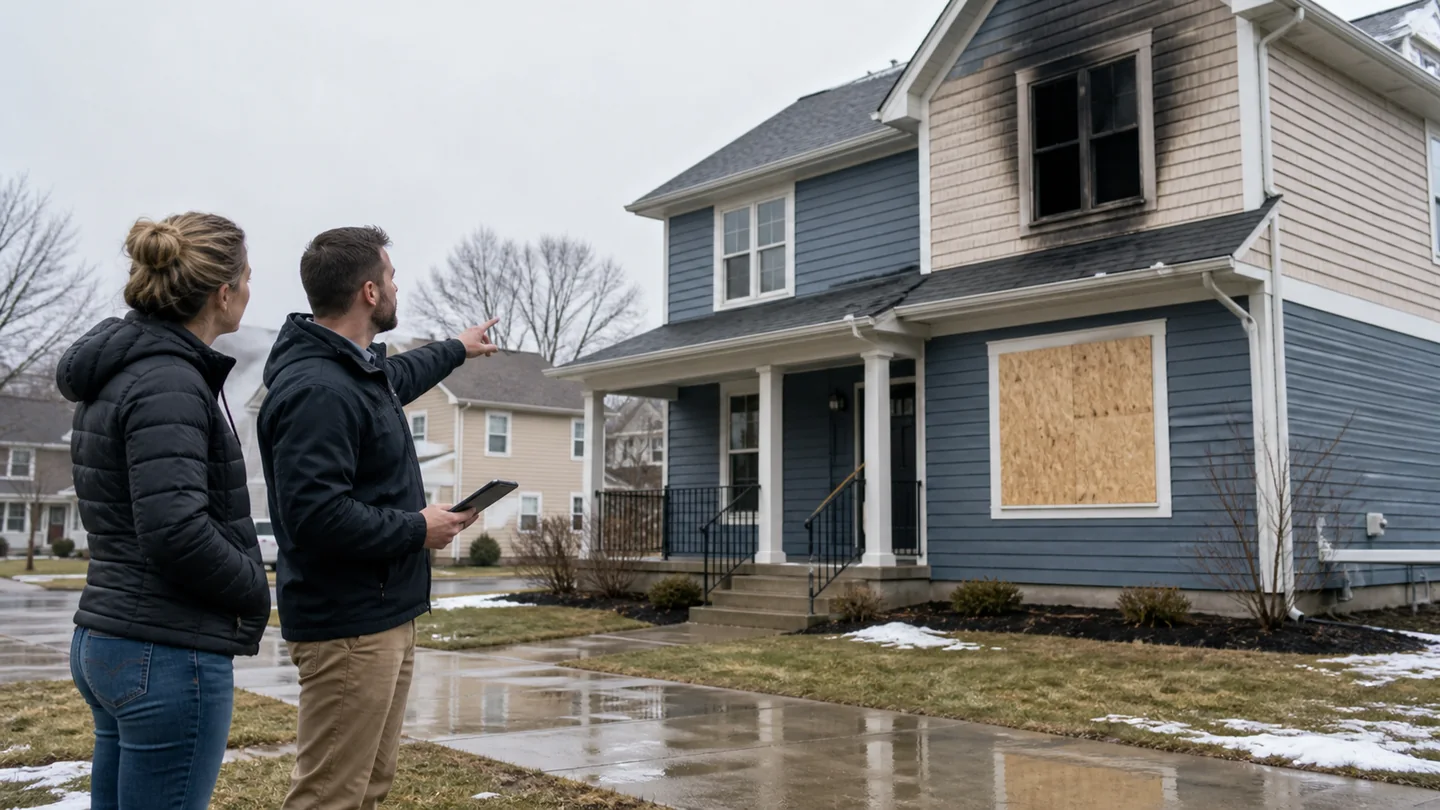
Do not enter until the fire department or responsible authority says it is safe. The U.S. Fire Administration warns that floors and walls may be unstable and that homeowners should not restart disconnected utilities.
Keep children and pets out. Leave if you smell gas, hear shifting, see exposed wiring, or encounter structural damage. Before demolition in an older home, ask whether hazardous materials require evaluation.
| Safety note This article is general homeowner guidance, not a clearance to enter a damaged building. Fire, soot, dirty water, damaged utilities, weakened structures, and disturbed building materials can create hazards that are not obvious from the doorway. |
|---|
What to do before anyone starts cleaning
- Contact the insurer promptly and ask what emergency work, documentation, inventories, and approvals it requires.
- Photograph each affected room, the apparent smoke path, surfaces, HVAC registers, and belongings before moving or cleaning them.
- Save receipts for temporary housing, security, cleaning, storage, clothing, meals, and other fire-related expenses.
- Ask whether the home needs board-up, roof protection, water extraction, or structural stabilization before odor work.
- Create a written inventory before discarding contents, and preserve high-value or sentimental items for specialist review.
Emergency stabilization need not become an open-ended authorization. Request separate written scopes for cleaning, contents, deodorization, and rebuilding.
Why smoke odor lingers after the visible soot is gone
Smoke settles as particles and residue on cool surfaces and can enter cabinets, cavities, fabrics, insulation, wood, and ductwork. A clean-looking room may smell because affected material was never reached.
The source matters. Wood and paper may leave loose powder; a slow fire may create sticky residue; cooking oil can leave greasy film. One cleaner and technique will not fit every loss.
| What you observe | What it may suggest | What to ask about |
|---|---|---|
| Loose, powdery soot | Residue may respond to careful dry removal before wet cleaning | HEPA filtration, nozzle control, test cleaning, and protection of clean rooms |
| Sticky or smeared film | Residue may need a compatible degreasing or specialty cleaner | Surface test, cleaner label, dwell time, rinsing, and finish damage |
| Odor with little visible soot | Residue may be hidden in contents, cavities, insulation, or HVAC pathways | Inspection boundaries, wipe checks, contents plan, and HVAC assessment |
| Odor returns when heat runs | The system or nearby materials may be redistributing odor | Filter replacement, component inspection, ducts, returns, and safe operating plan |
What actually works: the restoration sequence
1. Map the smoke, soot, ash, and water damage
Inspect beyond the fire room without assuming equal damage everywhere. Expect a room-by-room description of residue, odor, contents, HVAC pathways, and water exposure. Ask how boundaries were set.
2. Remove loose soot before rubbing or washing
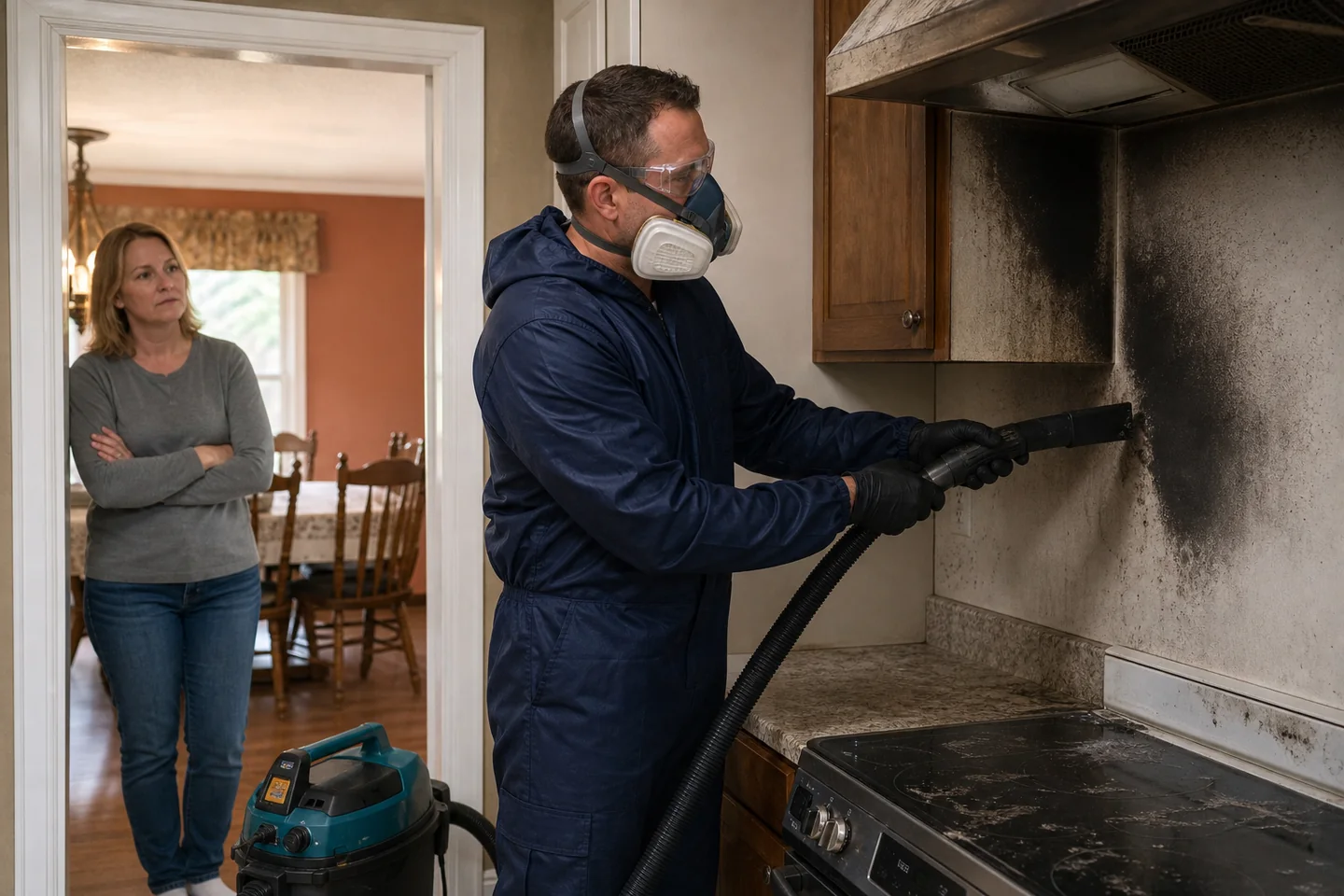
Soot smears and can scratch delicate surfaces. FEMA recommends limiting handling and using a HEPA-filtered vacuum on low suction without touching the object. Restoration teams may use dry-cleaning sponges or other tested tools on building surfaces.
A standard vacuum can exhaust fine particles. A brush or wet rag can drive dry soot deeper. The first pass should remove loose material without grinding it into the finish.
3. Clean hard surfaces with a tested method
After dry removal, washable surfaces may need detergent or a smoke-residue cleaner, with rinsing and drying as directed. Work high to low so residue is not redeposited.
Test a hidden spot. Drywall, wood, stone, metal, laminate, and electronics tolerate different chemistry and moisture. Never mix cleaners.
4. Separate contents into clean, restore, and discard
Washable textiles may need repeated laundering. Upholstery, rugs, books, artwork, electronics, and photographs may justify specialist cleaning. Food, medicine, cosmetics, and heat-damaged containers need cautious decisions.
Request a photographed contents inventory with condition, method, cost, storage, and replacement comparison. Sentimental value can change the decision.
5. Address HVAC pathways without spreading residue
Do not run the air handler just to improve the smell. FEMA advises removing bulk soot and ash first so HVAC does not spread particles. Filters, returns, ducts, blower components, and nearby insulation may need inspection.
Duct cleaning is not automatic. Ask what evidence shows residue entered the system and which components are included. A new filter cannot clean dirty ducts or equipment.
6. Dry the water damage
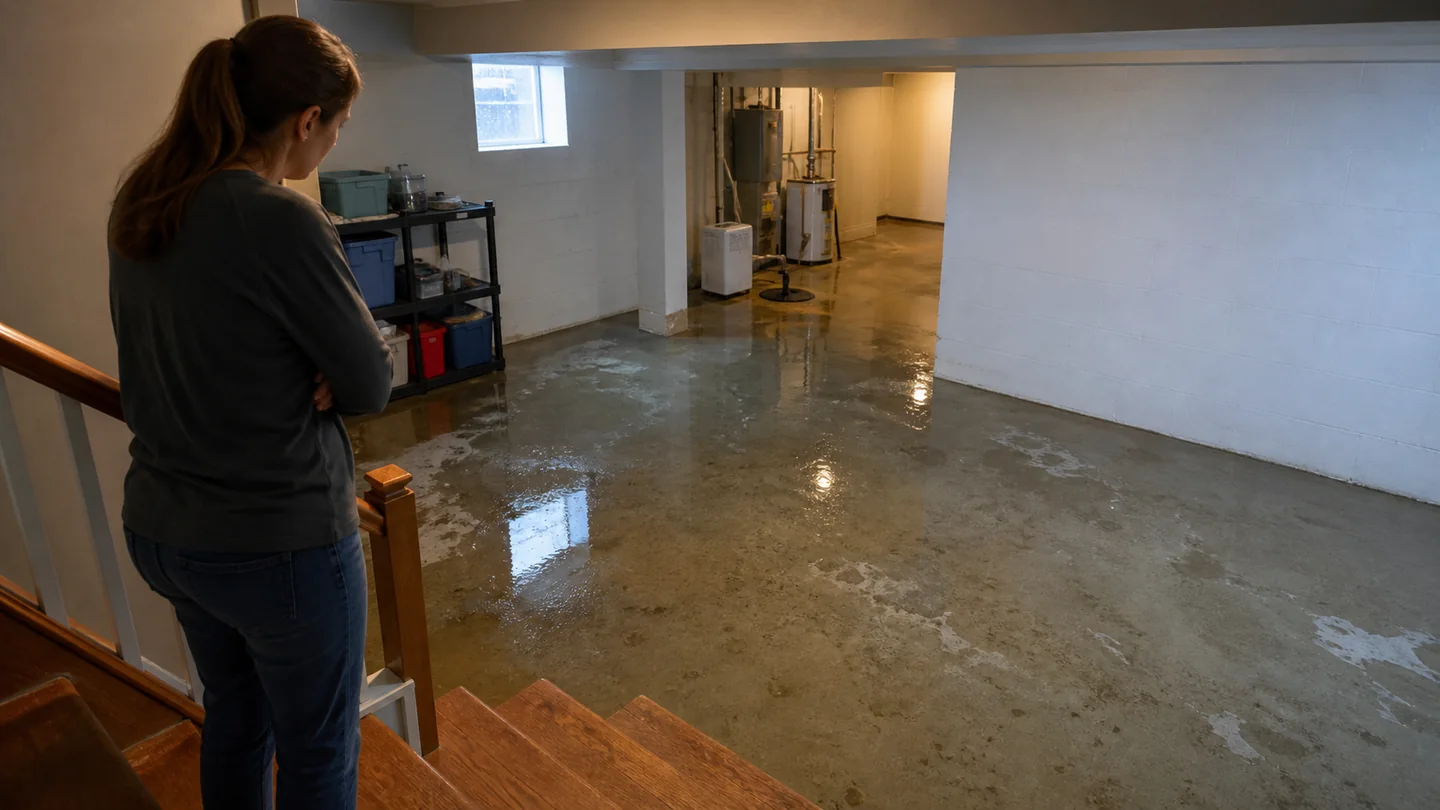
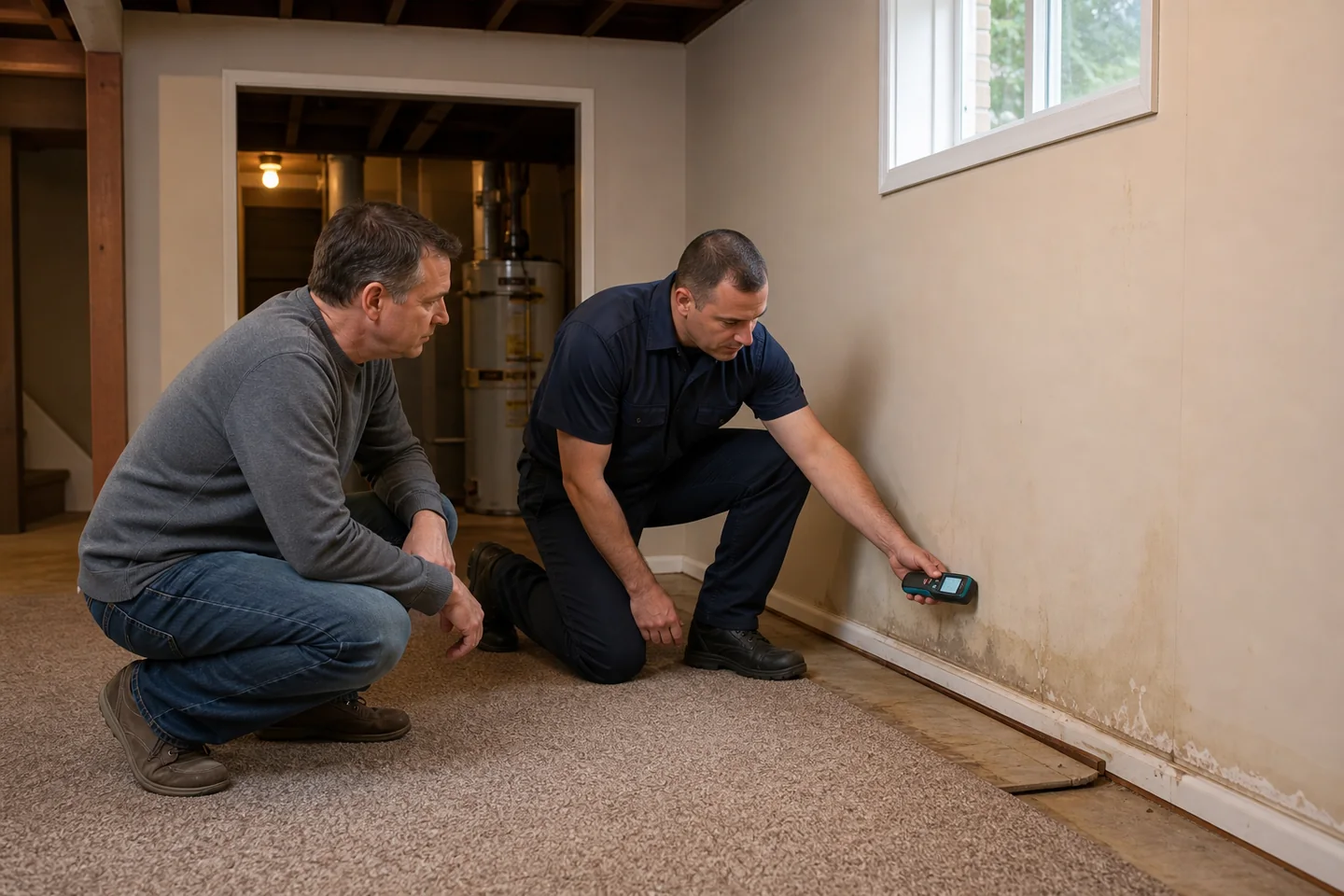
Firefighting water can wet drywall, subfloor, insulation, and contents. It needs a separate extraction and drying plan; deodorization cannot fix a wet cavity.
7. Use deodorization for what remains
After residue and unsalvageable material are addressed, ventilation, activated carbon, or targeted treatments may help. The method should match the odor source, not the highest-priced line item.
8. Seal and repaint only after cleaning
A stain-blocking sealer can help on cleaned, dry, sound material. Paint over soot may discolor, lose adhesion, or let odor return. Ask what is verified before coating.
What does not work - or works only temporarily
| Tempting shortcut | Why it disappoints | Better question |
|---|---|---|
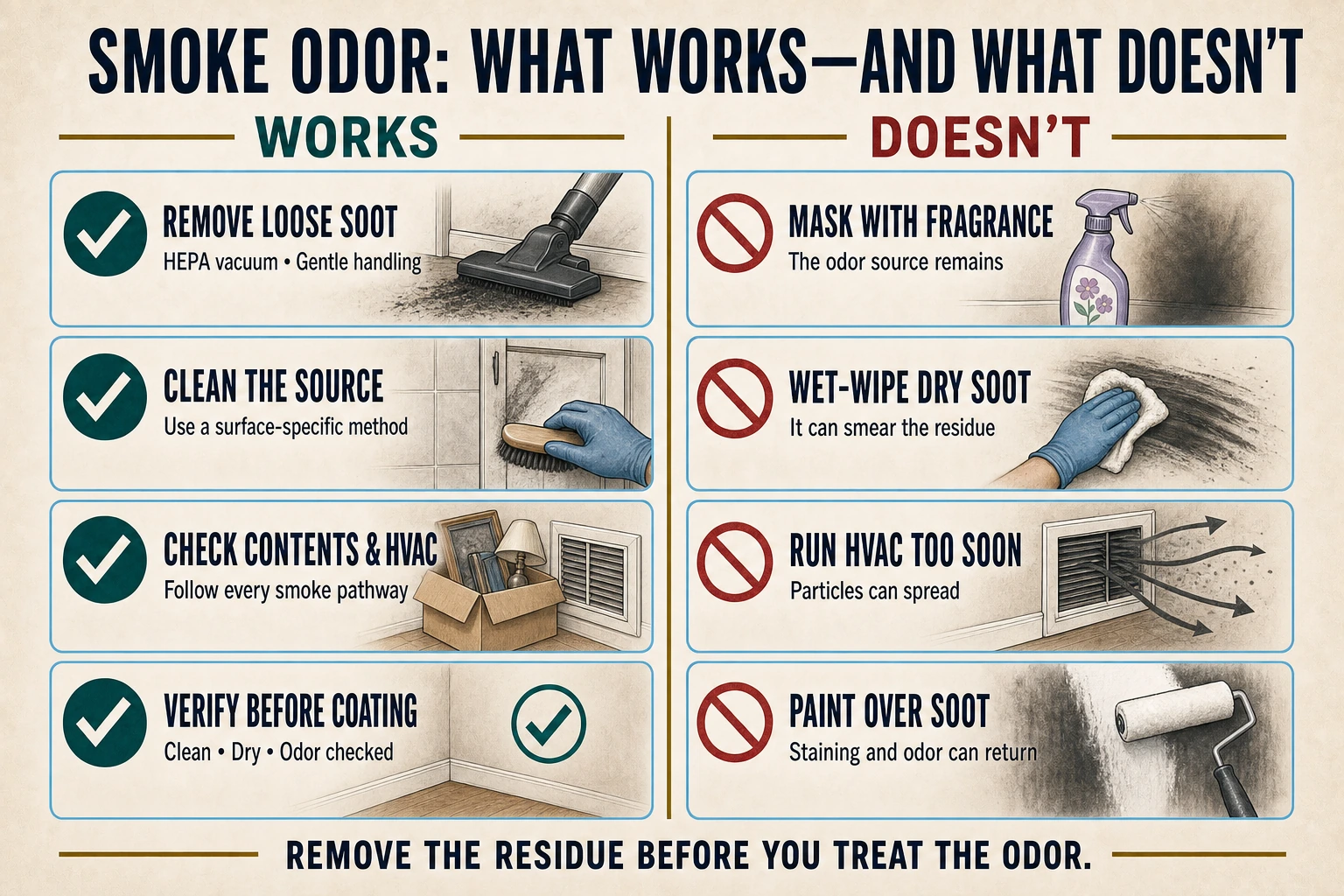
| Air freshener, candle, or fragrance spray | It masks odor without removing residue and may add irritants | Where is the remaining odor source? |
| Wet-wiping every soot mark immediately | Some soot smears or penetrates when rubbed with water | What dry-removal and test-cleaning step comes first? |
| Running the furnace fan right away | It may move soot through ducts and re-contaminate cleaned rooms | Has bulk residue been removed and the system inspected? |
| Painting over soot | Odor and staining may return and adhesion may fail | What was cleaned, rinsed, dried, and verified? |
| One odor machine for the whole loss | Air treatment cannot remove char, soot, or damaged porous material | What source removal happens before treatment? |
| Throwing everything away immediately | Some contents may be restorable and documentation may be lost | Can we inventory and compare restoration with replacement first? |
Ozone, hydroxyl, and thermal fogging: ask more questions
Ozone deserves caution. EPA calls it a lung irritant and says it is generally ineffective against many indoor contaminants at concentrations within health standards. Higher-concentration odor work requires an unoccupied, controlled process; people, pets, and plants should not be exposed.
EPA also advises against electronic air cleaners, photocatalytic oxidation, hydroxyl generators, and UV-component devices for smoke-particle removal because performance is uncertain and some may produce pollutants. HEPA captures particles without intentionally generating ozone, but still does not replace cleaning.
Thermal fogging distributes a chemical treatment into odor pathways. Ask for the product, safety data, label, treated surfaces, occupancy restrictions, ventilation, and why it fits the loss.
| Treatment test If a company proposes ozone, hydroxyl, fogging, or another odor process, ask what residue has already been removed, what material remains, what outcome will be checked, what safety protocol applies, and what happens if the odor returns. |
|---|
What can usually be cleaned, and what may need removal?
| Material | Possible restoration approach | Reasons replacement becomes more likely |
|---|---|---|
| Painted walls and ceilings | Dry removal, tested washing, drying, then stain-blocking coating if needed | Char, damaged paper face, heavy penetration, repeated cleaning failure |
| Sealed wood, tile, glass, and metal | Residue-specific cleaning with careful rinsing and drying | Heat distortion, corrosion, damaged finish, inaccessible joints |
| Carpet and rugs | HEPA vacuuming and specialty cleaning when lightly affected | Heavy soot, backing damage, water saturation, persistent odor |
| Upholstery and mattresses | Specialist assessment and cleaning for valuable salvageable items | Deep odor, soot penetration, water damage, uneconomical restoration |
| Insulation | Limited evaluation where smoke exposure is light and accessible | Heavy odor, soot entry, wetting, inaccessible contamination |
| Electronics and appliances | Qualified specialty cleaning and functional assessment | Heat, moisture, corrosive residue, unsafe operation |
| Photos, books, artwork, and heirlooms | Conservator or specialist handling with minimal contact | Fragility, wet soot, blistered surfaces, unsafe retrieval |
Can you handle smoke odor removal yourself?
Possibly, if the fire was tiny, the building is cleared, utilities are safe, soot is light, and you can isolate a limited area. Begin with documentation, protection, suitable ventilation, and gentle dry removal.
Professional help makes more sense for widespread or sticky soot, HVAC involvement, wet cavities, persistent odor, valuable contents, or demolition. Direct health and exposure questions to a clinician.
How much does smoke odor removal cost in your area?
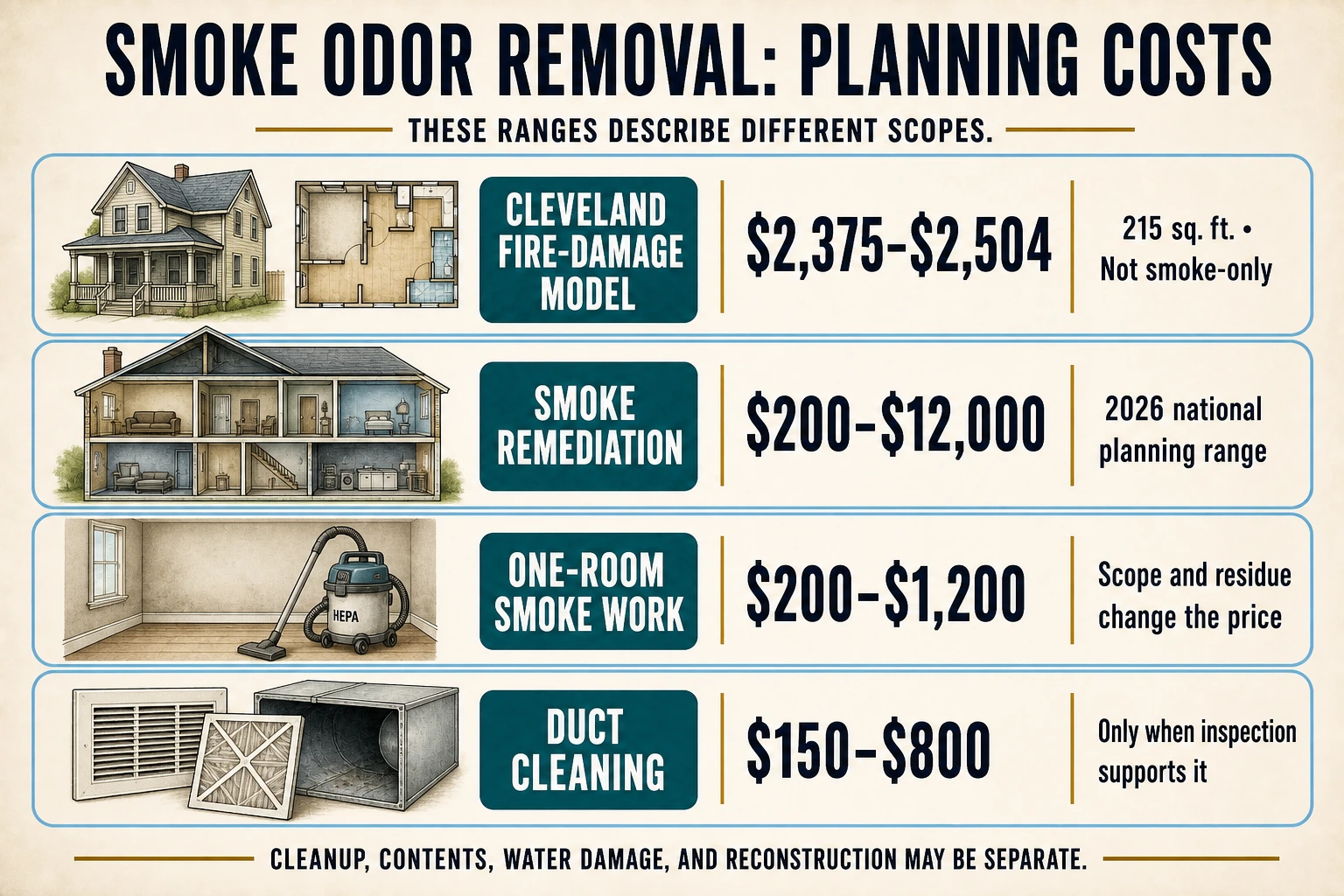
Cost pages vary because they often mix smoke cleaning, fire repair, water mitigation, contents, and reconstruction. HomeYou's your local area fire-damage page lists a typical range of about $2,406-$2,471 and a modeled 215-square-foot project of roughly $2,375-$2,504, or $12-$13 per square foot. The same page also describes a much broader $800-$12,000 range.
Use that only as local planning context. Its cost table is labeled inconsistently as water-damage repair, and the page does not define a smoke-only scope. A current Angi guide places smoke remediation around $200-$12,000 overall, with one-room work at about $200-$1,200 and duct cleaning at about $150-$800. Those national figures are not your local area bids.
| Planning reference | Published range | Important qualification |
|---|---|---|
| HomeYou your local area fire-damage model | $2,375-$2,504 for 215 sq. ft. | Local model; table label is inconsistent and scope is not smoke-only |
| HomeYou your local area broad description | $800-$12,000+ | May include different levels of fire repair, soot, smoke, and water work |
| Angi 2026 smoke remediation | $200-$12,000 overall | National planning range; source, rooms, soot, contents, and treatment change cost |
| Angi 2026 one-room smoke work | $200-$1,200 | A house-fire room may need more than odor treatment alone |
| Angi 2026 duct cleaning | $150-$800 | Only relevant when inspection supports HVAC cleaning |
What actually drives the estimate
- Number of affected rooms and the difference between light odor, visible soot, and heavy residue.
- Type of material burned and whether residue is dry, oily, acidic, or difficult to access.
- Ceilings, walls, unfinished framing, insulation, attics, closets, cabinets, and HVAC pathways included.
- Contents inventory, pack-out, specialty cleaning, storage, return, and items deemed unsalvageable.
- Water extraction, drying, mold work, demolition, hazardous-material controls, and reconstruction.
- Emergency response, equipment days, filtration media, odor-treatment method, and repeat visits.
Ask for quantities and unit prices: rooms, square footage, linear feet, labor hours, equipment type and daily rate, filter changes, contents units, storage period, cleaning methods, coating area, disposal, and taxes. A lump sum can be valid, but it should still describe the result you are buying.
Will homeowners insurance pay for smoke cleanup?
Fire and smoke are commonly covered perils in homeowners policies, but the policy, cause, limits, deductible, endorsements, and claim facts control. Coverage for the dwelling, contents, debris, code upgrades, and additional living expenses can be handled differently.
Report the loss promptly, protect the property from further damage when safe, photograph before major cleaning, and keep receipts. Ask whether contents are settled at actual cash value first and whether replacement-cost benefits require proof of replacement. A contractor can document scope and price; it cannot promise that the insurer will pay every line.
Questions to ask before giving a restoration company your information
- Will you inspect on site before giving a final price, and which rooms and systems will you evaluate?
- What type of residue did you observe, and what test cleaning supports the proposed method?
- What is cleaned dry first, what is washed, and what is removed?
- How will clean rooms, HVAC pathways, contents, and worker traffic be protected from cross-contamination?
- What are the labor, equipment, filter, contents, storage, disposal, and emergency rates?
- Is water mitigation, mold work, hazardous-material testing, duct work, sealing, painting, and reconstruction included or separate?
- What product will be used for deodorization, and what are the label, safety, occupancy, and ventilation requirements?
- What documentation and final walkthrough will show that the work is complete?
- Who authorizes change orders before the scope or price expands?
- What experience, insurance, references, and restoration standards can I verify independently?
You are not being difficult by asking. A company that understands smoke restoration should be able to explain the sequence in plain English and separate a treatment option from a guaranteed outcome.
Frequently asked questions
How long does smoke odor last after a fire?
It can persist until the residue or damaged material causing it is cleaned, removed, or properly sealed. A light, contained loss may resolve quickly; widespread soot, contents, HVAC, and reconstruction can extend the project.
Will opening the windows remove smoke smell?
Ventilation may reduce airborne odor when the building is safe and outdoor air is suitable. It will not remove soot from surfaces, contents, insulation, or ducts.
Does a HEPA filter remove smoke odor?
HEPA filtration is effective for particles. Odor-causing gases may require source removal, ventilation, activated carbon, or another appropriate treatment. A filter does not replace cleaning.
Can I paint over smoke odor?
Not as the first step. Clean and dry the surface, then use a compatible stain- or odor-blocking system when needed. Painting over soot can fail or let odor return.
Is ozone safe for smoke odor removal?
EPA identifies ozone as a lung irritant and says concentrations within health standards are generally ineffective for many contaminants. Any high-concentration professional use requires strict unoccupied-space controls and should not replace source removal.
Do air ducts always need cleaning after a fire?
No. The decision should follow evidence that soot or odor entered the HVAC system. Ask which components were inspected and why cleaning is recommended.
Can smoke-damaged furniture be saved?
Sometimes. Construction, fabric, soot penetration, water exposure, value, and cleaning cost matter. Request a test and compare restoration cost with replacement.
Can I stay in the house during cleanup?
It depends on the fire department's clearance, structural and utility safety, residue extent, treatment method, ventilation, and household health needs. Ozone and some chemical processes require an unoccupied area.
The practical next step
Start by separating four jobs: emergency safety, smoke and soot cleaning, contents restoration, and rebuilding. A company may handle all four, but the estimate should still show where one phase ends and the next begins.
The best proposal is not necessarily the one with the strongest deodorizer or the biggest demolition scope. Look for a documented explanation of where residue traveled, what can be tested and cleaned, what must be removed, how odor treatment will be used, and how completion will be checked.
Sources and cost methodology
Safety, cleanup, insurance, and cost sources were reviewed in August 2026. Government and Red Cross sources support the safety and cleanup sequence. HomeYou and Angi prices are planning references, not bids; their scopes are not identical and should not be averaged together.
U.S. Fire Administration: After the Fire
U.S. Fire Administration: Helping Residents After a Home Fire
American Red Cross: Cleaning Up After a Fire
American Red Cross: Disaster Cleanup and Repair
FEMA: Homeowner's Guide to Residential Smoke Damage
FEMA: Advice for Salvaging Damaged Family Treasures
EPA: Ozone Generators Sold as Air Cleaners
EPA: Ionizers and Ozone-Generating Air Cleaners
EPA: Guide to Air Cleaners in the Home
NAIC: A Consumer's Guide to Home Insurance