Roof Repair vs. Replacement: Costs, Warning Signs, and Timing
Repair: $350-$5,000 | Replacement: $8,500-$21,000+
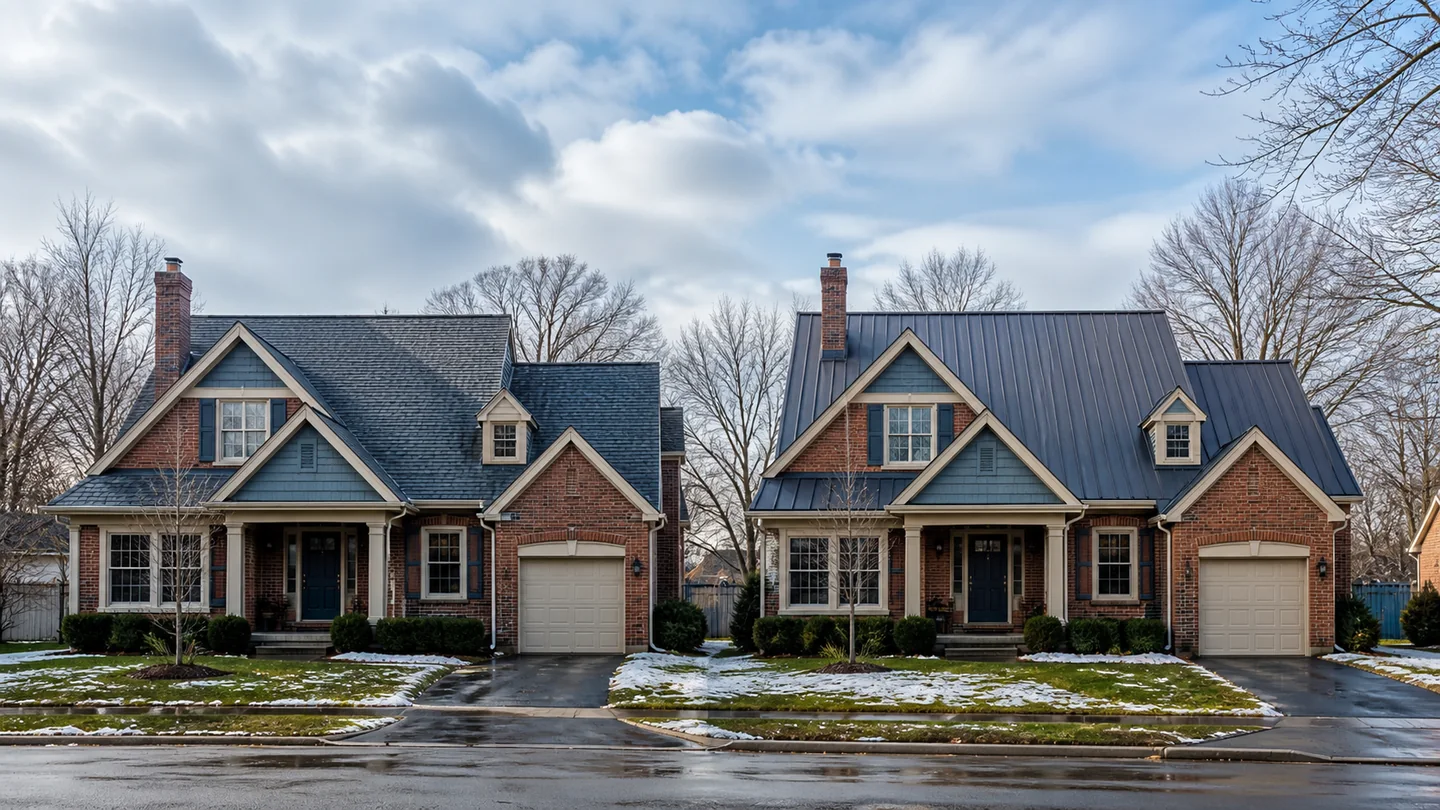
A roof problem does not automatically mean you need a new roof. In your area, a focused repair may cost a few hundred dollars, while a complex leak or damaged section can run into several thousand. A complete asphalt-shingle replacement commonly falls between about $8,500 and $21,000 for a standard single-family home, with large, steep, or complicated roofs costing more.
The right decision depends on more than the price of today's repair. Roof age, the size and location of the damage, the condition of the decking and flashing, previous repair history, and the remaining service life all matter. This guide gives homeowners in your local area, your local area, your local area, your local area, Warren, and nearby communities a practical way to compare repair and replacement.
Roof repair vs. replacement: quick answer
- Repair usually makes sense when damage is isolated and the surrounding roof is still in good condition.
- Replacement becomes more practical when wear is widespread, leaks keep returning, or the roof is near the end of its useful life.
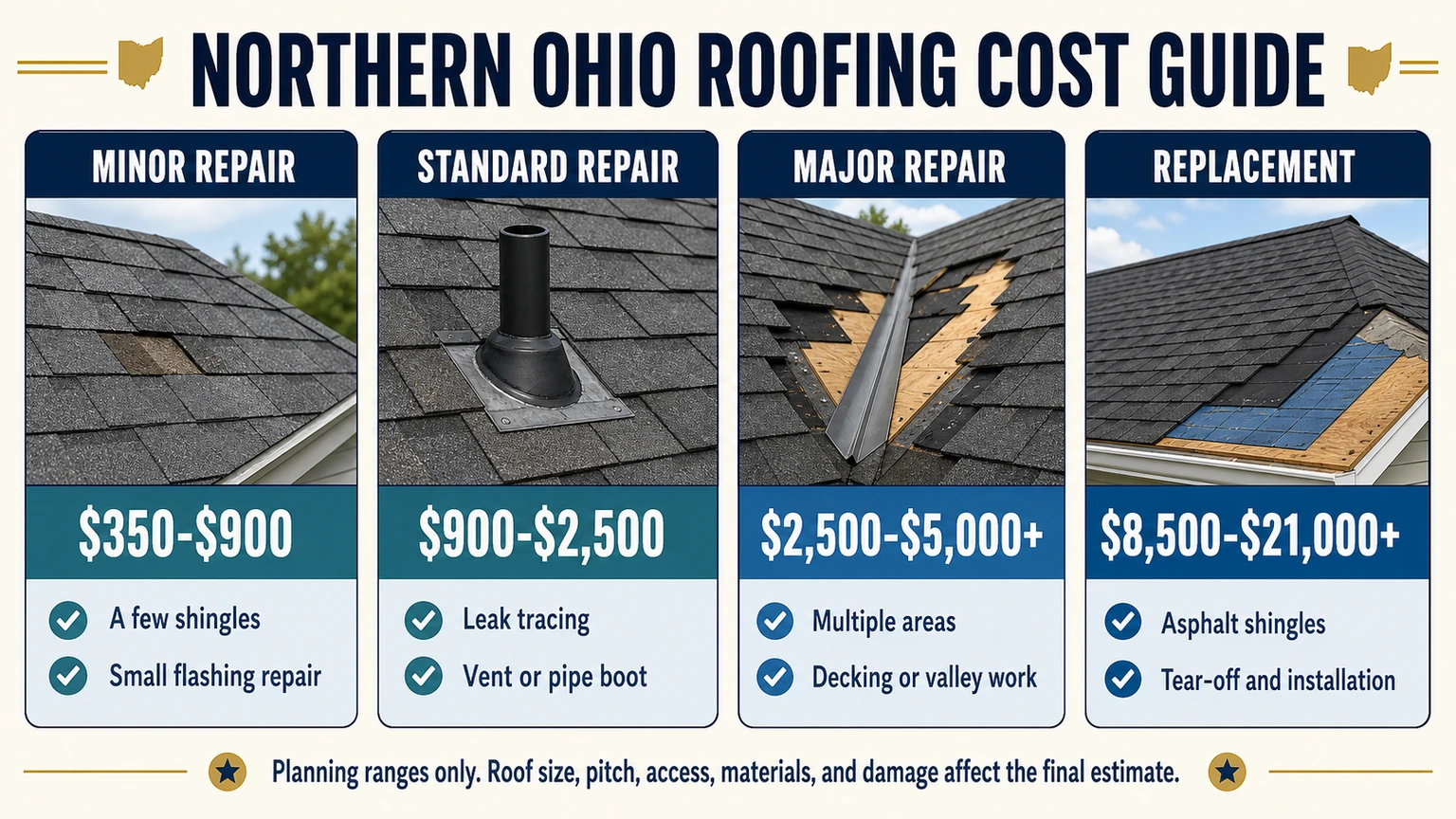
- Typical repair planning range: about $350-$1,500 for common work; $1,500-$5,000 for larger or more complicated repairs.
- Typical asphalt-shingle replacement range: about $8,500-$21,000, with many straightforward homes falling near the middle.
These are 2026 planning ranges, not guaranteed quotes. HomeYou publishes a broad national repair range of $347-$4,867 and a replacement range of $9,548-$19,327. Current your region sources place many asphalt-shingle replacements between roughly $8,500 and $21,000. An on-site inspection is necessary to price a specific roof.
Roofing cost comparison
| Project type | Planning range | Typical scope |
|---|---|---|
| Minor roof repair | $350-$900 | A few shingles, small flashing or sealant repair, accessible area |
| Standard roof repair | $900-$2,500 | Leak tracing, larger shingle area, flashing, vent or pipe-boot work |
| Major or complex repair | $2,500-$5,000+ | Multiple areas, decking work, steep access, chimney or valley details |
| Asphalt roof replacement | $8,500-$21,000+ | Tear-off, disposal, underlayment, shingles, standard flashing and cleanup |
A roofing square equals 100 square feet of roof surface. The roof area is not the same as the home's floor area because pitch, overhangs, hips, valleys, dormers, and attached structures add surface. Ask contractors to state the measured number of squares so estimates can be compared on the same basis.
When a roof repair is usually reasonable
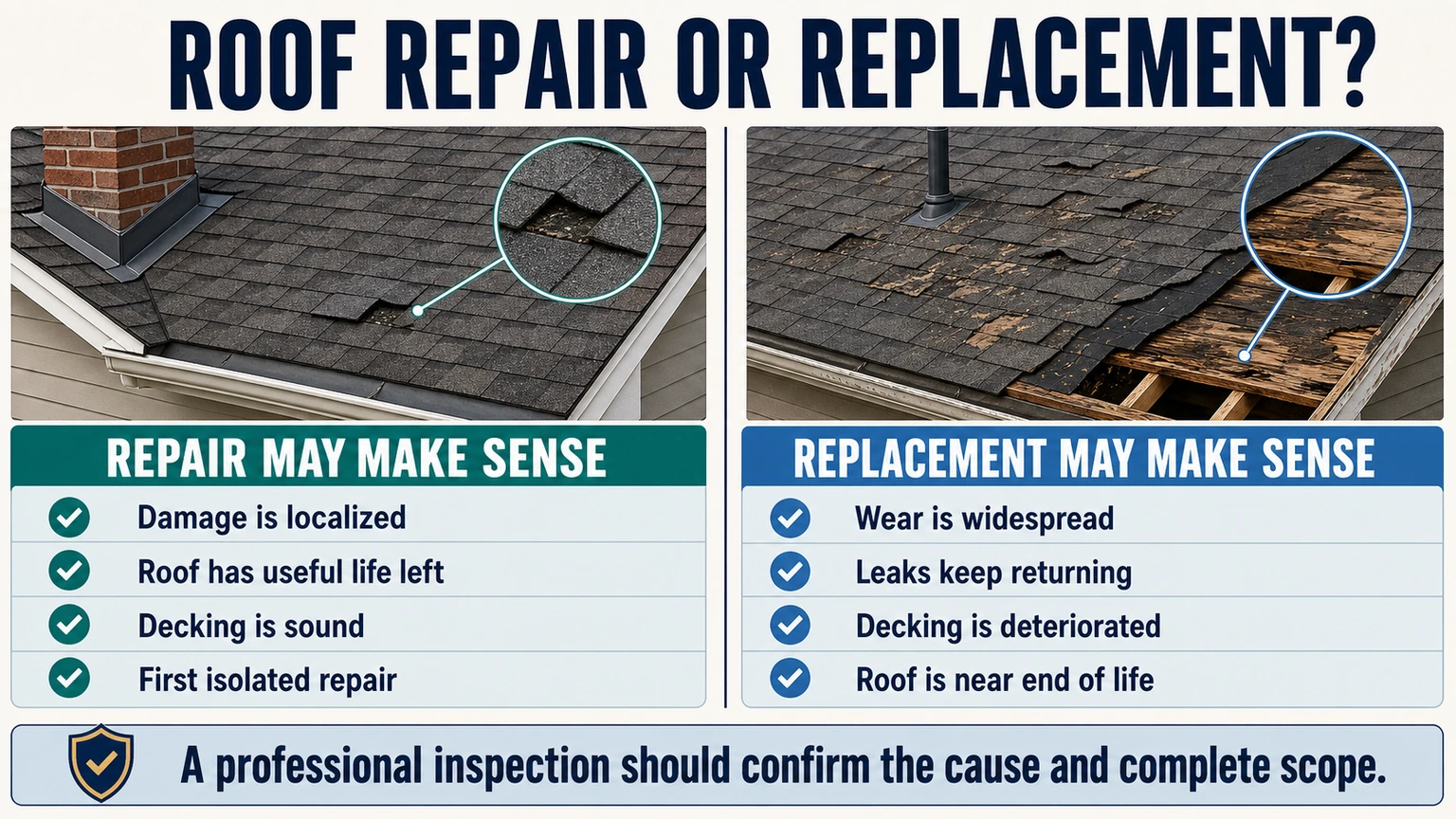
A repair is often the better value when the problem is limited and the rest of the system still has useful life. Examples include:
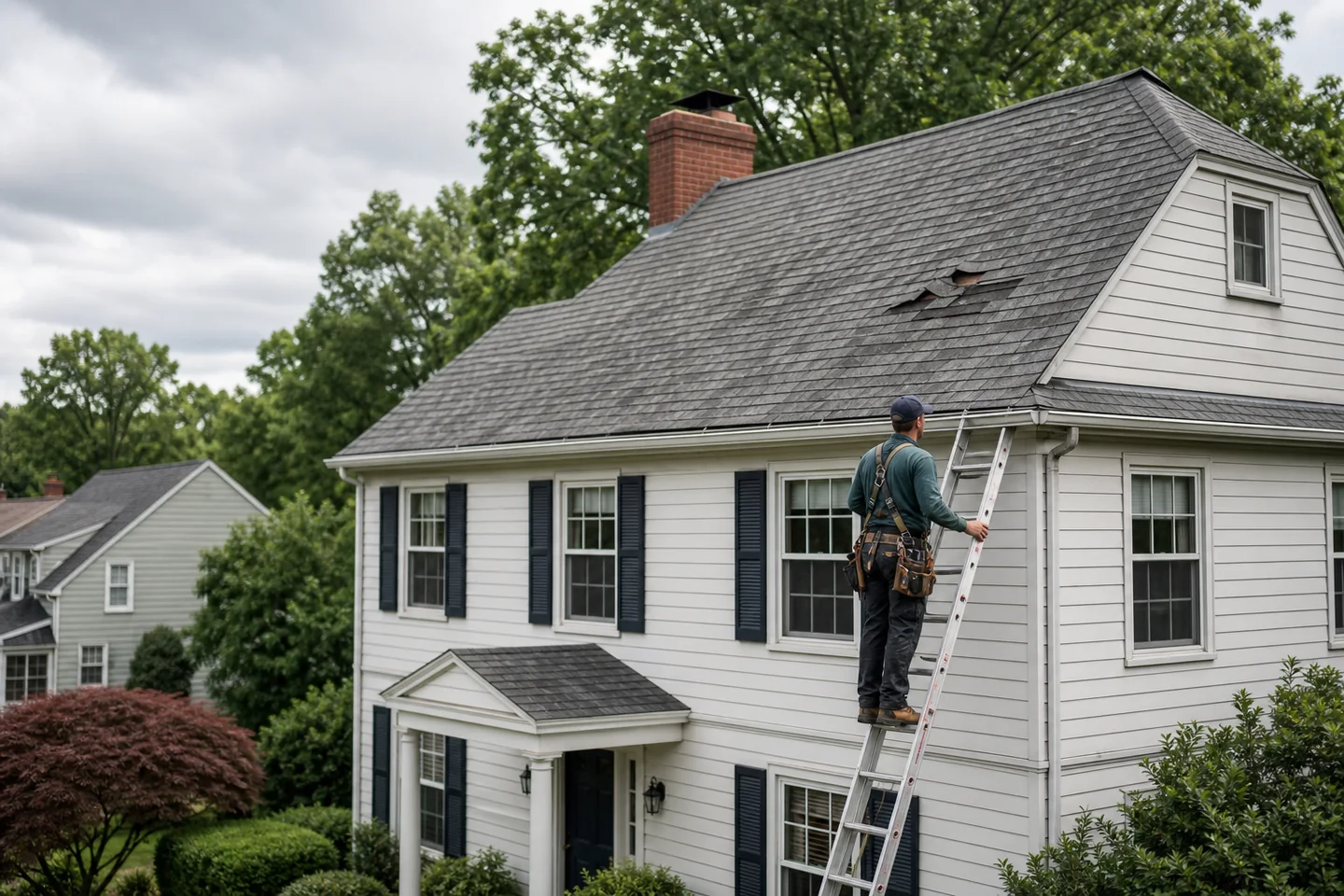
- A small group of missing or wind-damaged shingles after a storm
- A leak tied to one pipe boot, vent, skylight, chimney, valley, or flashing detail
- Minor damage from a fallen branch that did not affect a large roof area
- A newer roof with matching replacement material still available
- One repairable section while the remaining slopes are sound and wearing evenly
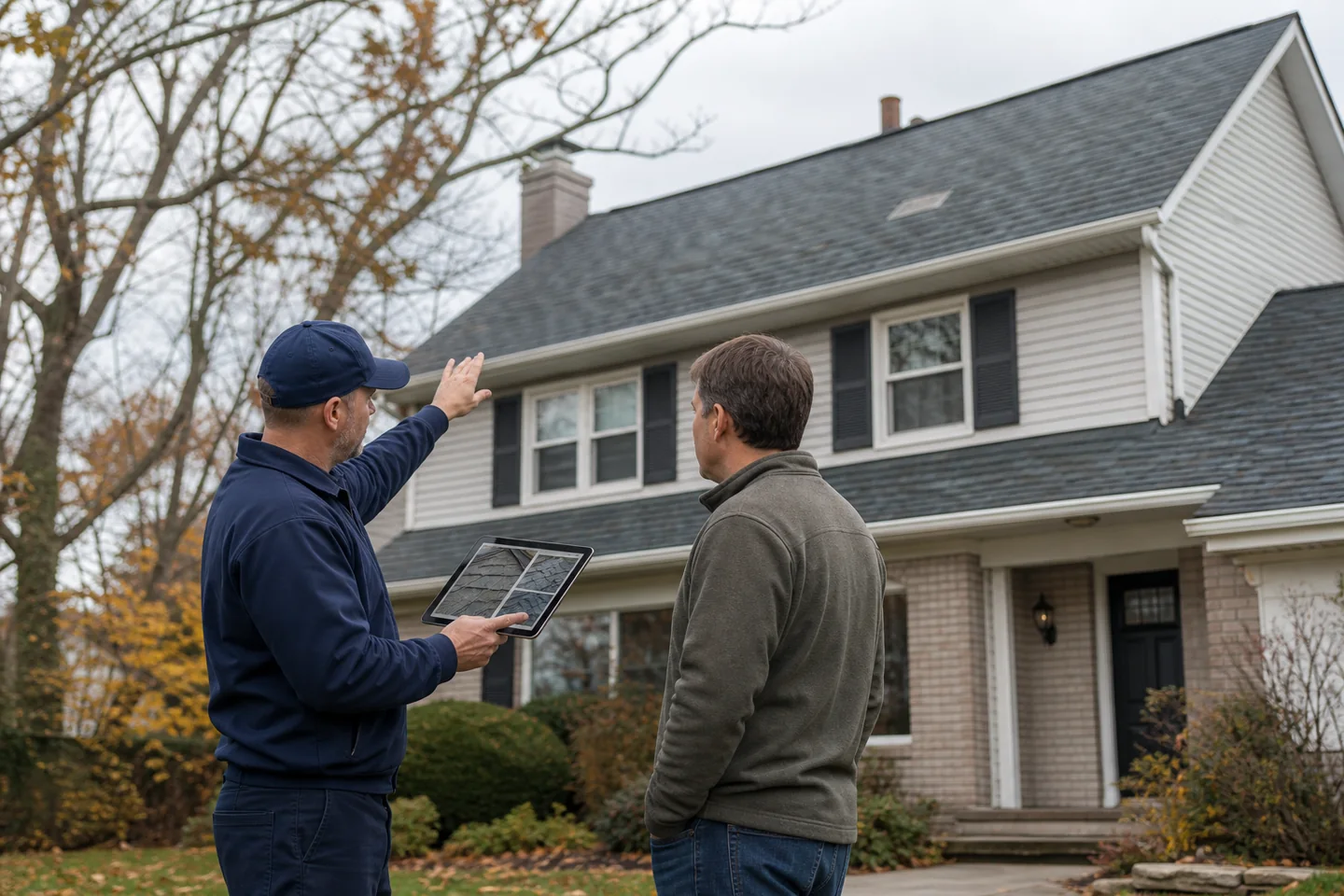
The important word is isolated. A roofer should inspect the surrounding shingles, underlayment, flashing, ventilation, and visible decking rather than patching only the wet spot inside. Water can travel along rafters or sheathing, so the ceiling stain may not sit directly under the entry point.
Warning signs that point toward replacement
Replacement deserves serious consideration when several of these conditions appear together:
- Widespread curling, cracking, bald spots, or heavy granule loss
- Leaks in multiple rooms or recurring leaks after previous repairs
- Soft, sagging, or visibly deteriorated roof decking
- Large areas of storm damage rather than one contained section
- Numerous patches, mismatched shingles, or repairs that are beginning to overlap
- An older roof with limited remaining life and expensive repairs ahead
- A replacement project already planned within the next few years
Age alone does not prove that a roof has failed. A well-installed roof with good ventilation may outlast a poorly installed younger roof. Use the installation date as context, then judge the actual condition. Architectural asphalt shingles are commonly expected to serve roughly 25-30 years in local cost guidance, but exposure, workmanship, ventilation, maintenance, and storm history can shorten or extend that period.
A practical repair-or-replace test
| Question | Repair leans stronger | Replacement leans stronger |
|---|---|---|
| How widespread is the damage? | One defined area | Several slopes or repeated failures |
| How old is the roof? | Substantial service life remains | Near expected end of life |
| What is below the shingles? | Decking is sound | Rot, sagging, or broad moisture damage |
| Will materials match? | Compatible shingles are available | Material is discontinued or badly faded |
| What has been repaired before? | First isolated repair | Recurring leaks or multiple patches |
A useful financial check is to compare the proposed repair cost with the roof's likely remaining life. Spending $3,500 on a roof expected to be replaced soon may only delay the larger expense. Spending $1,000 to correct one flashing failure on a sound, younger roof may be entirely sensible.
What affects roof repair costs?
Damage location: A simple field-shingle repair is usually easier than a leak involving a chimney, wall intersection, valley, skylight, or low-slope transition.
Access and pitch: Steep roofs, high eaves, tight side yards, landscaping, power lines, and limited parking can require more labor or equipment.
Material matching: Discontinued, faded, specialty, slate, tile, cedar, and metal components may require extra sourcing or a specialist.
Hidden moisture: Once the damaged area is opened, wet insulation, deteriorated decking, or framing repairs may expand the job.
Urgency: Emergency service, temporary tarping, winter conditions, and work after a major storm may carry additional charges.
What affects roof replacement costs?
Replacement pricing begins with measured roof area, then changes with the roof's difficulty and the proposed roofing system. Major cost drivers include:
- Roof pitch, number of stories, and complexity of hips, valleys, dormers, and penetrations
- Number of existing layers to remove, disposal volume, and site access
- Condition of plywood or OSB decking after tear-off
- Shingle grade or another material such as metal, slate, tile, or cedar
- Underlayment, ice-and-water protection, drip edge, flashing, and ventilation scope
- Chimneys, skylights, gutters, fascia, soffits, and related repairs
- Permit requirements, historic-district review, warranties, and cleanup standards
Decking is a common unknown because its full condition is not visible until tear-off. Ask for the installed price per sheet or per square foot of replacement decking before signing. The contractor should document damaged wood and obtain approval before exceeding any allowance.
Seasonal weather and roof wear
Roofs around Lake Erie and inland your area handle snow, wind, heavy rain, summer heat, and repeated freezing and thawing. Those cycles can expose weak flashing, lift loose shingles, widen small openings, and turn a minor leak into damaged sheathing or insulation. Ice buildup at eaves can also push water toward vulnerable joints when attic heat and roof temperatures are uneven.
A replacement should address the full water-management system, not just install new shingles. The proposal should explain underlayment, eave protection, valleys, wall and chimney flashing, pipe penetrations, drip edge, ventilation, and how water reaches the gutters. New shingles will not correct a bad detail that is rebuilt the same way.
| Safety note: Do not climb onto a wet, icy, steep, or storm-damaged roof. Use binoculars or photos from the ground and check the attic only when it is safe. Temporary covering is not a permanent repair; damaged roofing should be evaluated by a qualified professional. |
|---|
Best timing for repair or replacement
Active leaks and storm openings should be stabilized promptly, regardless of season. Waiting can increase damage to decking, insulation, drywall, and finishes. A safe temporary measure may buy time, but the permanent repair still needs to address the cause.
Planned replacement is more flexible. Spring through fall usually offers longer daylight and more predictable installation conditions, but contractor schedules can fill quickly after storms and during peak season. Roofing can be completed in colder weather when materials, surface conditions, and manufacturer instructions allow it. Ask how the crew protects an exposed roof if weather changes and what temperature limits apply to the selected products.
Permits and historic-district considerations
Rules vary by city, village, and township. your local area requires a residential permit for reroofing, while limited maintenance such as replacing the same material on no more than 10% of the roof may be treated as a minor repair. Other your area municipalities set their own thresholds, fees, registration rules, and inspection steps.
Homes in designated historic districts may need an additional review if the material, color, shape, vents, flashing, gutters, or other visible details will change. Ask the contractor who will confirm requirements, obtain approvals, and provide permit copies. A proposal should state whether those costs are included.
Storm damage and homeowners insurance
Insurance treatment depends on the policy, the cause of damage, roof age, deductible, coverage type, exclusions, and claim deadlines. Sudden wind, hail, or falling-object damage may be handled differently from wear, neglected maintenance, or a long-term leak. Do not assume that a roof will be covered simply because it needs replacement.
Photograph visible damage from a safe location, note the date and weather event, and prevent additional damage when it can be done safely. Keep invoices and damaged materials when requested. Contact the insurer for policy-specific instructions before authorizing extensive permanent work, unless emergency action is needed to protect the home. Never let a contractor promise claim approval or waive a required deductible.
How to compare roofing estimates
A good proposal makes the roofing system and the contractor's responsibilities easy to understand. Compare:
- Measured roof area, number of squares, pitch, and included structures
- Repair boundaries or the exact slopes included in replacement
- Tear-off layers, disposal, decking allowances, and change-order rates
- Manufacturer, product line, color, underlayment, flashing, vents, and accessories
- Permit responsibility, property protection, cleanup, magnet sweep, and final inspection
- Material and workmanship warranties, exclusions, transfer rules, and service process
- Deposit, payment schedule, start window, weather plan, and project supervision
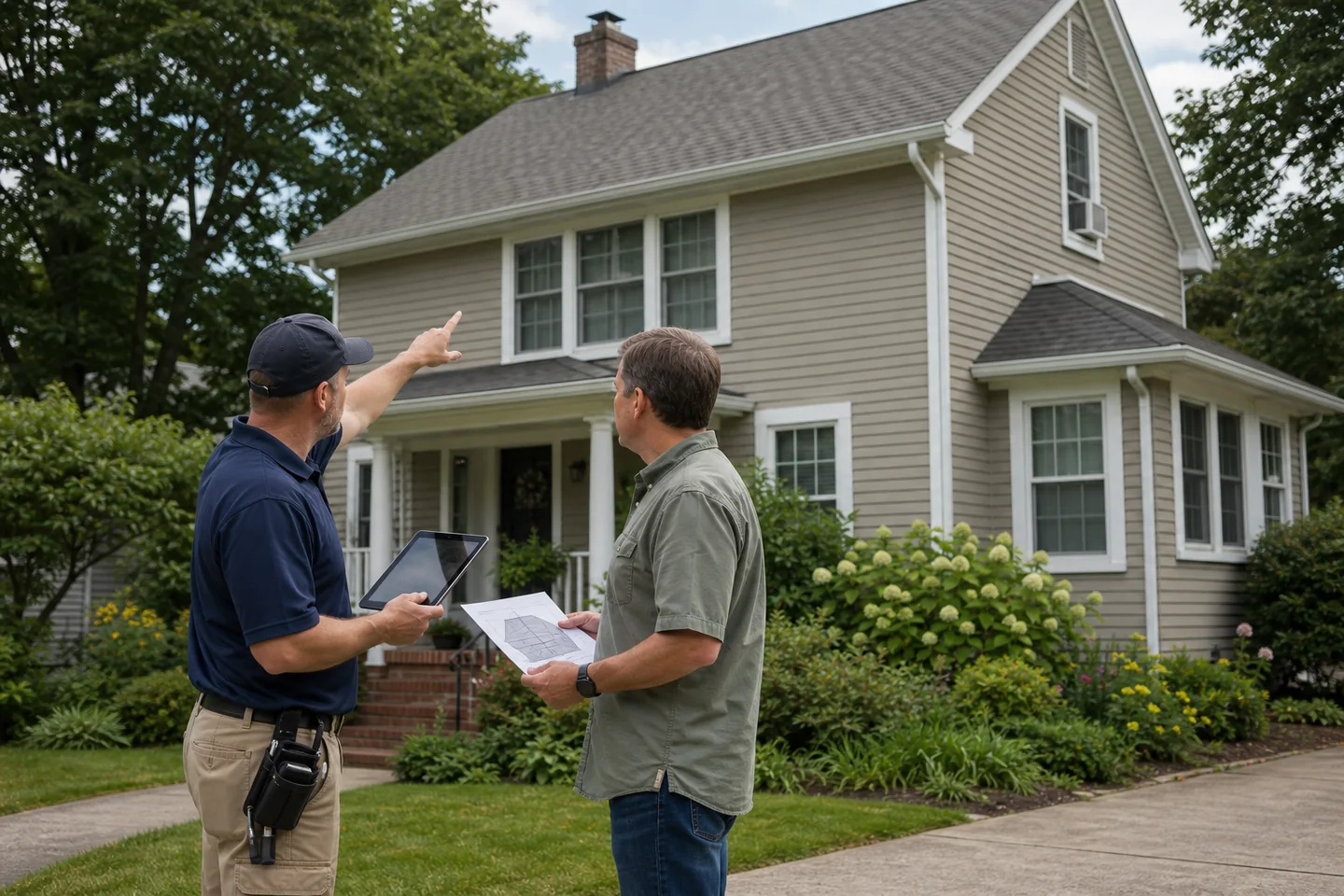
For a repair, ask how the contractor identified the source and what happens if the first repair does not stop the leak. For replacement, ask whether ventilation and flashing will be evaluated rather than automatically reused. Compare the written scope—not only the total price or monthly payment.
Frequently asked questions
Can one roof slope be replaced instead of the whole roof?
Sometimes. A slope replacement may work when damage is limited, transitions can be waterproofed correctly, and the remaining roof has meaningful life. Color matching, warranty terms, and local rules should be checked first.
Is a roof leak always a sign that I need replacement?
No. A leak may come from one flashing detail, pipe boot, damaged shingle area, or penetration. Multiple leaks, broad deterioration, or recurring failures make replacement more likely.
How long does roof replacement take?
Many standard asphalt-shingle homes can be completed in one to three working days. Large or steep roofs, multiple layers, decking repairs, specialty materials, inspections, and weather can extend the schedule.
Should I repair a roof that will be replaced soon?
A small repair may be worthwhile if it safely stops active water entry while you plan and schedule replacement. Avoid spending heavily on a temporary fix without comparing that cost with the remaining roof life.
Do I need a permit for a roof replacement?
Often. your local area specifically requires a residential permit to reroof, and surrounding municipalities have their own rules. Confirm requirements for the property address before work starts.
How many estimates should I get?
Three written estimates are a useful starting point for non-emergency work. Make sure each contractor inspected the roof and priced comparable materials, tear-off, flashing, ventilation, decking, permits, cleanup, and warranties.
Choose the scope that solves the roof's real problem
The best roofing decision is not automatically the least expensive repair or the largest replacement proposal. It is the smallest complete scope that controls water, corrects failed details, and provides reasonable service life for the money. Start with a documented inspection, ask why the problem occurred, and require the estimate to explain exactly what will be repaired or replaced.
Sources
HomeYou: Roofing Cost Guide 2026
your region 2026 roofing cost reference
your local municipality: Department of Building and Housing
your local municipality: Construction permits and minor-repair guidance
your local municipality: Landmarks design standards and roof guidance
National Roofing Contractors Association: Asphalt Shingle Roof Systems