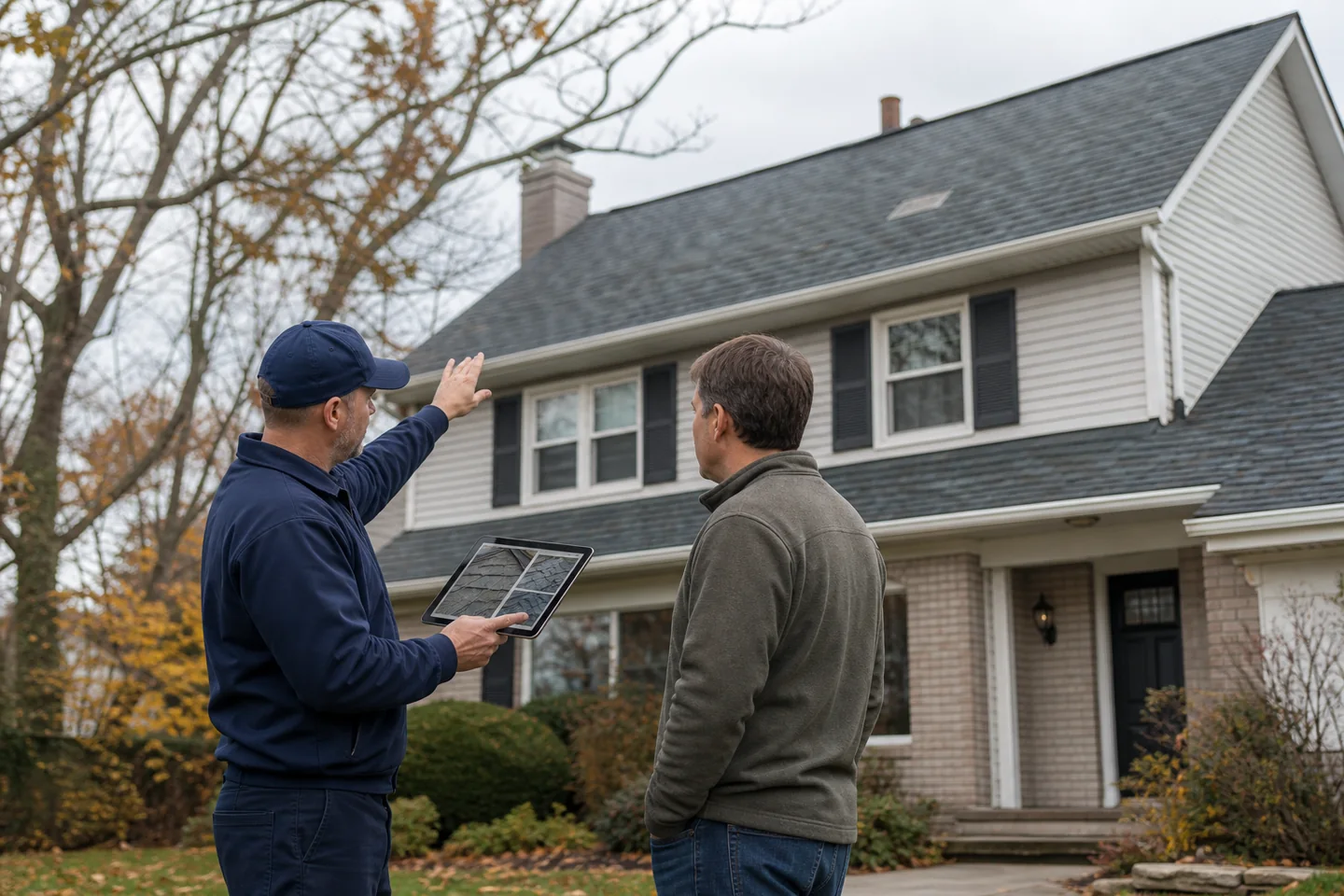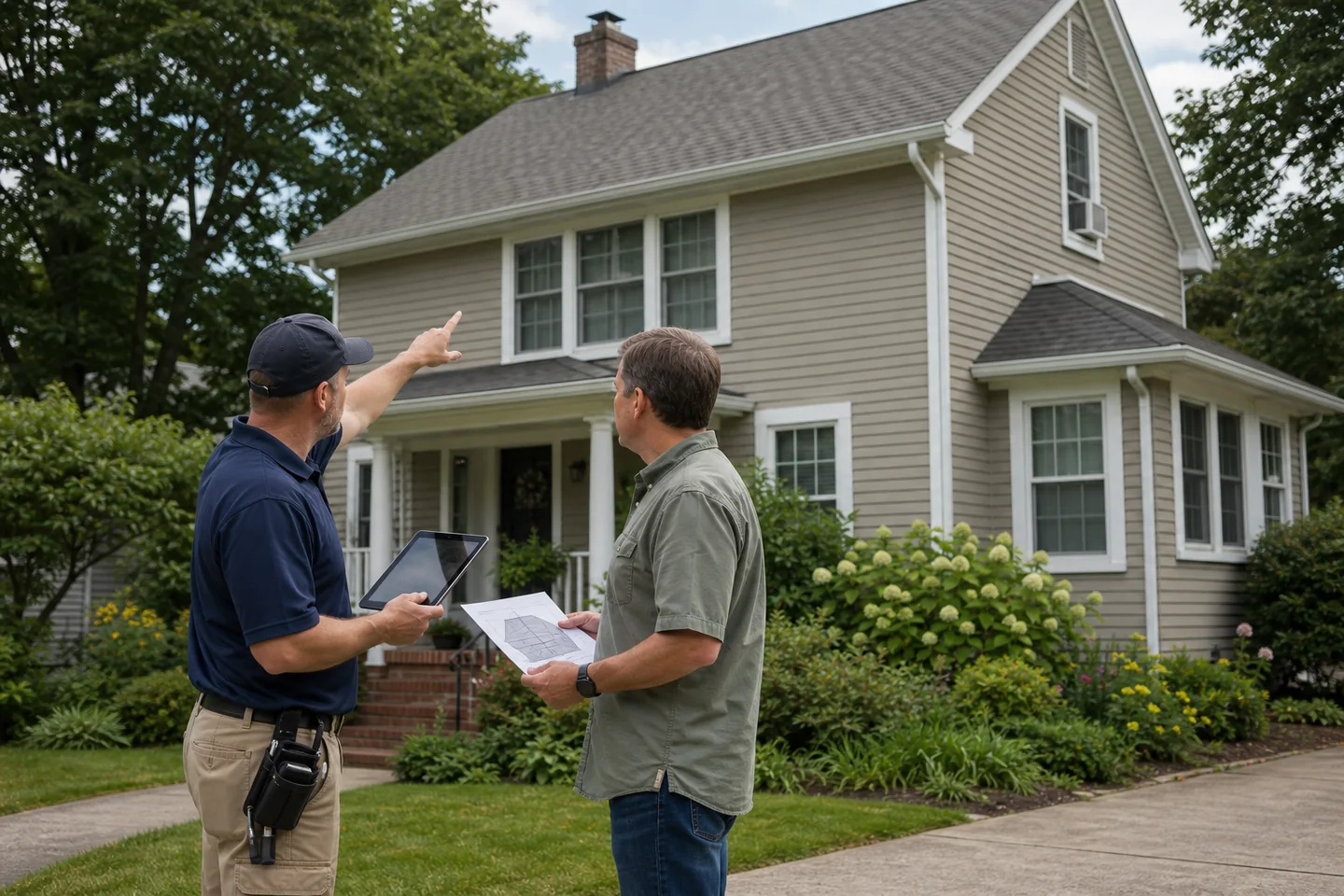
Best Roofing Materials for Seasonal Weather: Asphalt Shingles vs. Metal Roofing
2026 national planning range: asphalt $1-$5/sq. ft. | metal $7-$24/sq. ft.
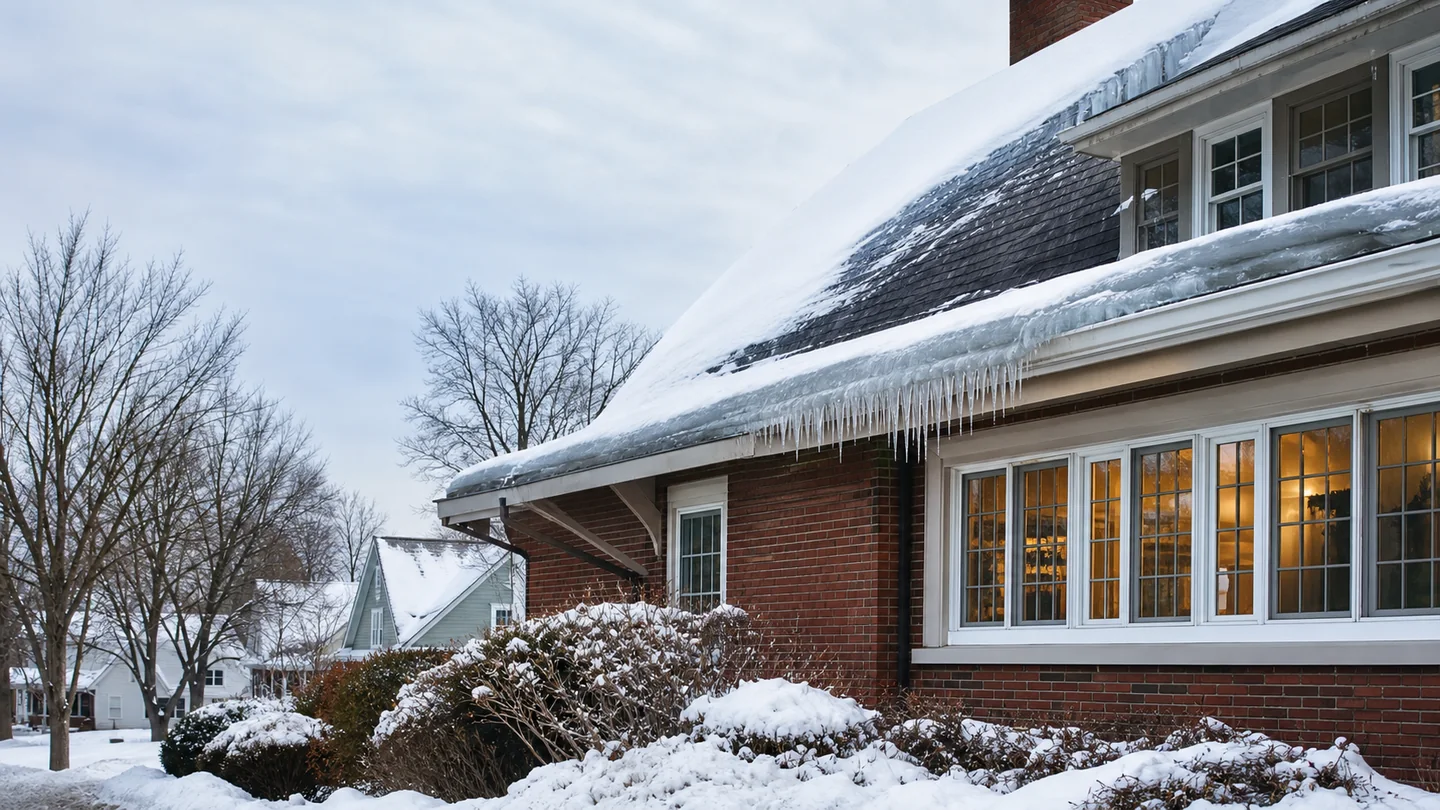
A your area roof faces lake-effect snow, wind-driven rain, hail, and freeze-thaw cycles that test flashing, fasteners, sealants, and the roof deck. The best material is not simply the one with the longest advertised warranty.
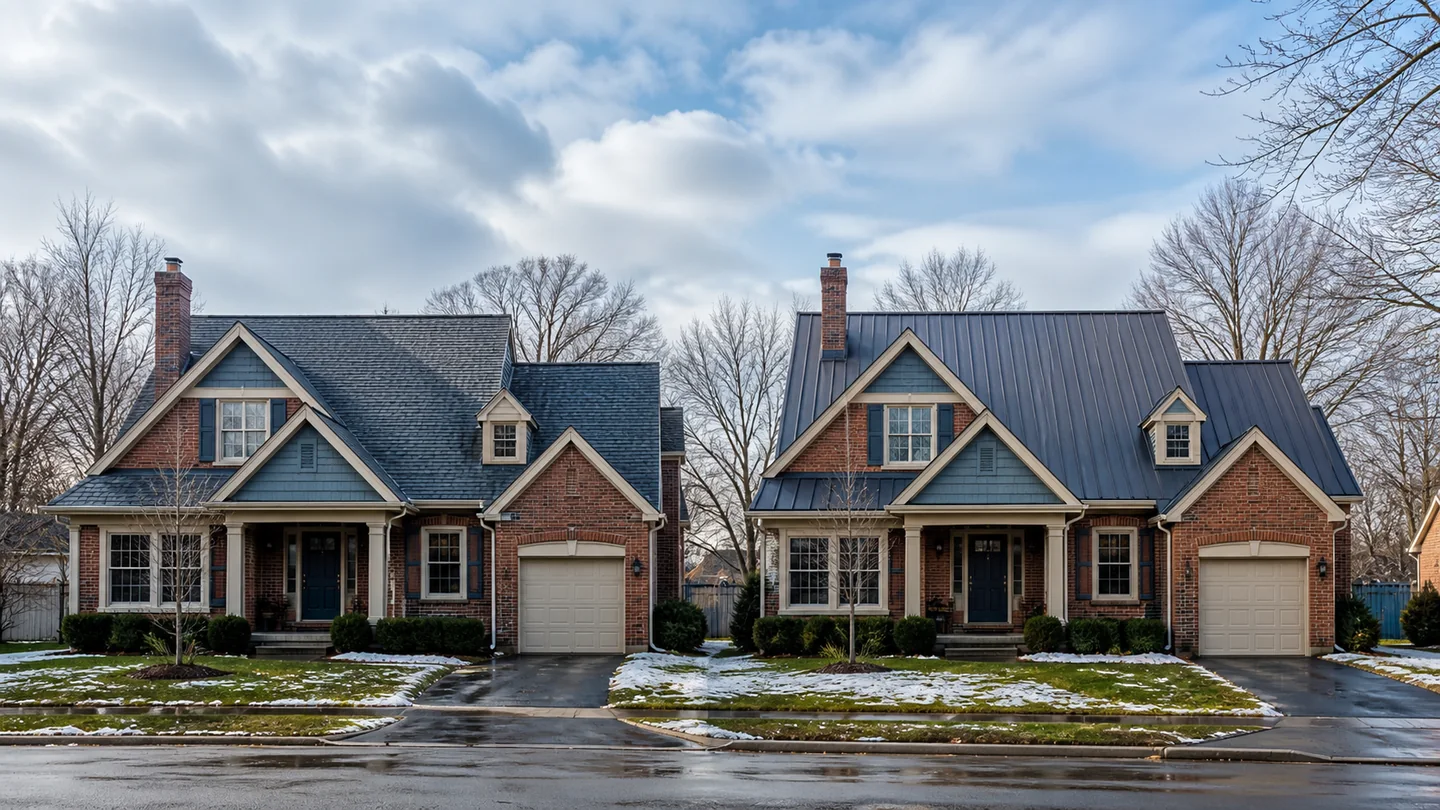
For homes in your local area, your local area, your local area, your local area, Warren, and nearby communities, the choice often comes down to architectural asphalt shingles or residential metal roofing. Asphalt usually wins on initial price and familiar appearance; metal on service-life potential. Value depends on the house, budget, installation, and ownership horizon.
The quick answer: asphalt or metal?
Choose architectural asphalt shingles when upfront cost, traditional appearance, and easy spot repairs are priorities. Choose a properly designed metal system when the higher initial investment fits the budget and long service life, snow shedding, and distinctive appearance matter more.
Neither material is automatically weatherproof. Premium shingles can fail when the deck, nailing, ventilation, or flashing is wrong. Metal can leak when seams, clips, fasteners, or transitions are poorly detailed. Installation and water management matter as much as the covering.
What seasonal weather demands from a roof
- Snow and ice: the roof structure must carry design loads, while the assembly must manage meltwater, ice dams, and refreezing at cold eaves.
- Wind and rain: edges, corners, valleys, flashing, and penetrations must resist uplift and wind-driven water.
- Freeze-thaw cycles: repeated expansion and contraction stress sealants, flashings, fasteners, and aging roof surfaces.
- Hail and falling branches: impact can bruise or tear shingles and can dent metal, even when the roof remains watertight.
- Summer heat and moisture: roof color, solar reflectance, attic air sealing, insulation, and ventilation affect comfort and material aging.
The National Weather Service records recent your area events with heavy lake-effect snow, widespread winter storms, ice, and strong wind. That history argues for choosing a complete roof system, not selecting a surface material in isolation.
How much do asphalt shingles and metal roofing cost in 2026?
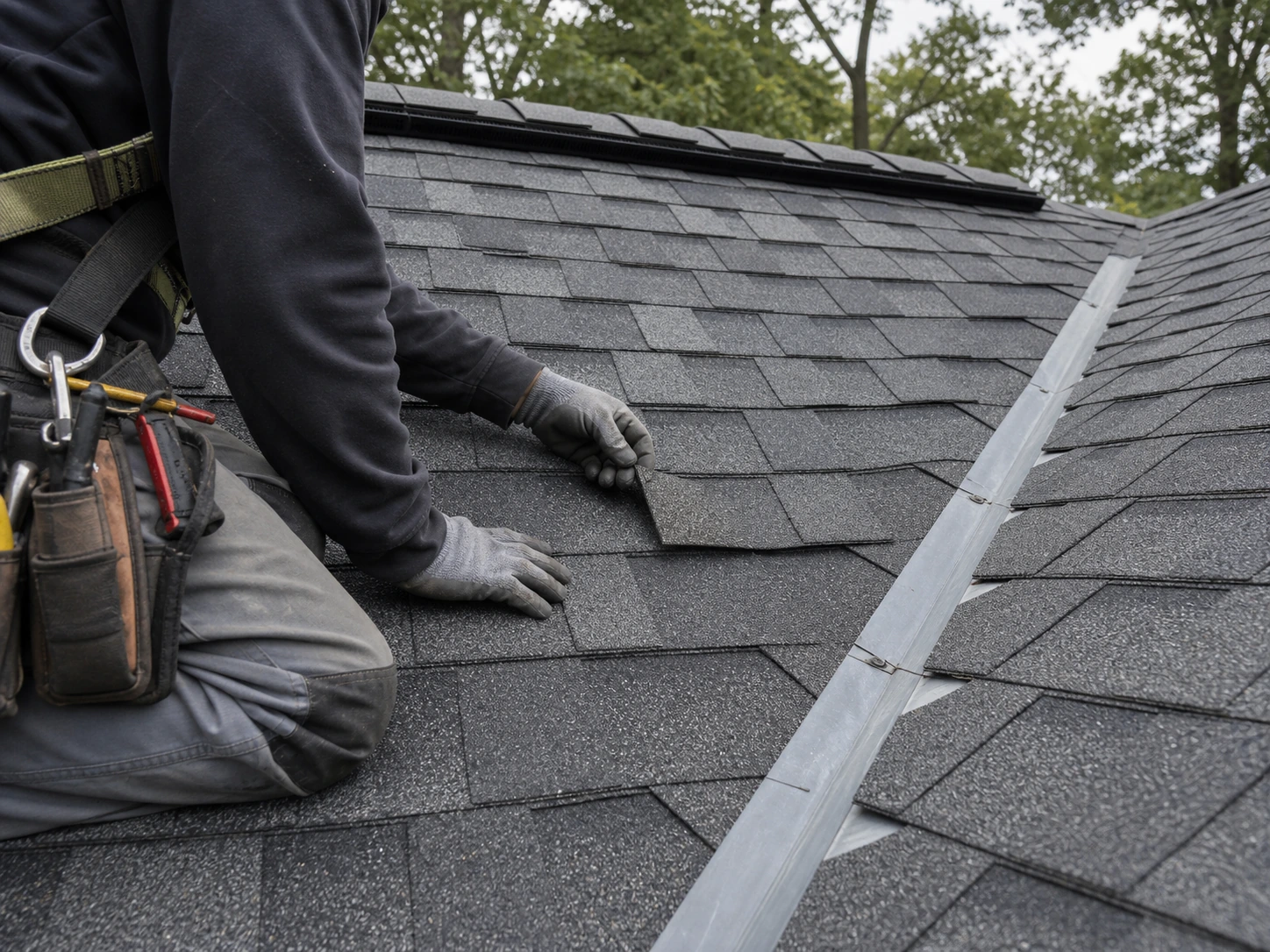
HomeYou's 2026 national roofing guide lists asphalt shingles at roughly $1 to $5 per square foot with an estimated 15- to 30-year lifespan, while metal roofing is listed at about $7 to $24 per square foot with an estimated 40- to 70-year lifespan. Those figures are broad planning ranges, not guaranteed your area installed prices.
| Roofing option | 2026 planning range | Major cost drivers |
|---|---|---|
| Architectural asphalt shingles | $1-$5 per sq. ft. | Shingle grade, roof size, pitch, layers, valleys, flashing, and deck repair |
| Standing-seam or panel metal | $7-$24 per sq. ft. | Metal type, gauge, coating, seam profile, clips, fabrication, and complexity |
| Tear-off and deck work | Project-specific | Number of layers, damaged sheathing, access, disposal, and weather protection |
| Winter-system upgrades | Project-specific | Ice-barrier underlayment, ventilation, insulation coordination, and snow retention |
Roof area is not the same as living-area square footage. Pitch, overhangs, dormers, hips, valleys, and waste increase the measurement. A complete estimate should identify deck replacement rates, flashing, ventilation, penetrations, snow guards, cleanup, permits, and warranty requirements. Compare scope and specifications, not just price per square.
Asphalt shingles: the practical value choice
Architectural asphalt shingles remain a strong fit for many your area houses. They are available in colors and profiles that suit Colonials, Cape Cods, ranches, and other common local styles. Most roofing crews are familiar with them, and damaged sections can often be repaired without replacing an entire roof plane.
Where asphalt performs well
- Lower initial cost than most residential metal systems.
- Broad color and style selection for traditional neighborhoods.
- Straightforward repair and replacement using widely available materials.
- Impact-resistant and higher-wind-rated products are available for homeowners who want upgraded storm performance.
Where asphalt needs attention
As shingles age, they may lose granules, curl, blister, buckle, or become unsealed. IBHS research notes that wind can exploit an unsealed tab and start a chain of damage that exposes the underlayment. Product selection matters, but so do correct nailing, starter strips, edge details, deck condition, and enough warm weather for self-sealing adhesive to activate after installation.
Cold-weather installation is possible when the manufacturer permits it, but the crew may need special storage, handling, fastening, and hand-sealing procedures. In a snowy climate, attic ventilation and ice-dam protection should be planned with the roof rather than treated as optional add-ons.
Metal roofing: the long-horizon durability choice
Residential metal roofing includes standing-seam panels, metal shingles, and exposed-fastener panels. They are not interchangeable. Standing seam is often the premium option because concealed clips reduce exposed penetrations and allow thermal movement. Exposed-fastener roofs may cost less, but screws and gaskets require periodic inspection.
Where metal performs well
- Long service-life potential when the panels, coating, fasteners, flashing, and structure are correctly specified.
- Strong resistance to cracking, shrinking, and routine weathering.
- Smooth panels can shed rain and snow efficiently when roof geometry and drainage are properly designed.
- Reflective colors and coatings can reduce roof-surface heat, although northern-climate energy savings vary by house.
Where metal needs attention
Metal costs more upfront and demands an installer experienced with the exact panel system. Poorly planned transitions at valleys, sidewalls, chimneys, skylights, and low-slope areas can erase the material's durability advantage. Panels also expand and contract with temperature, so clips, fasteners, spacing, and sealants must follow the manufacturer's engineering.
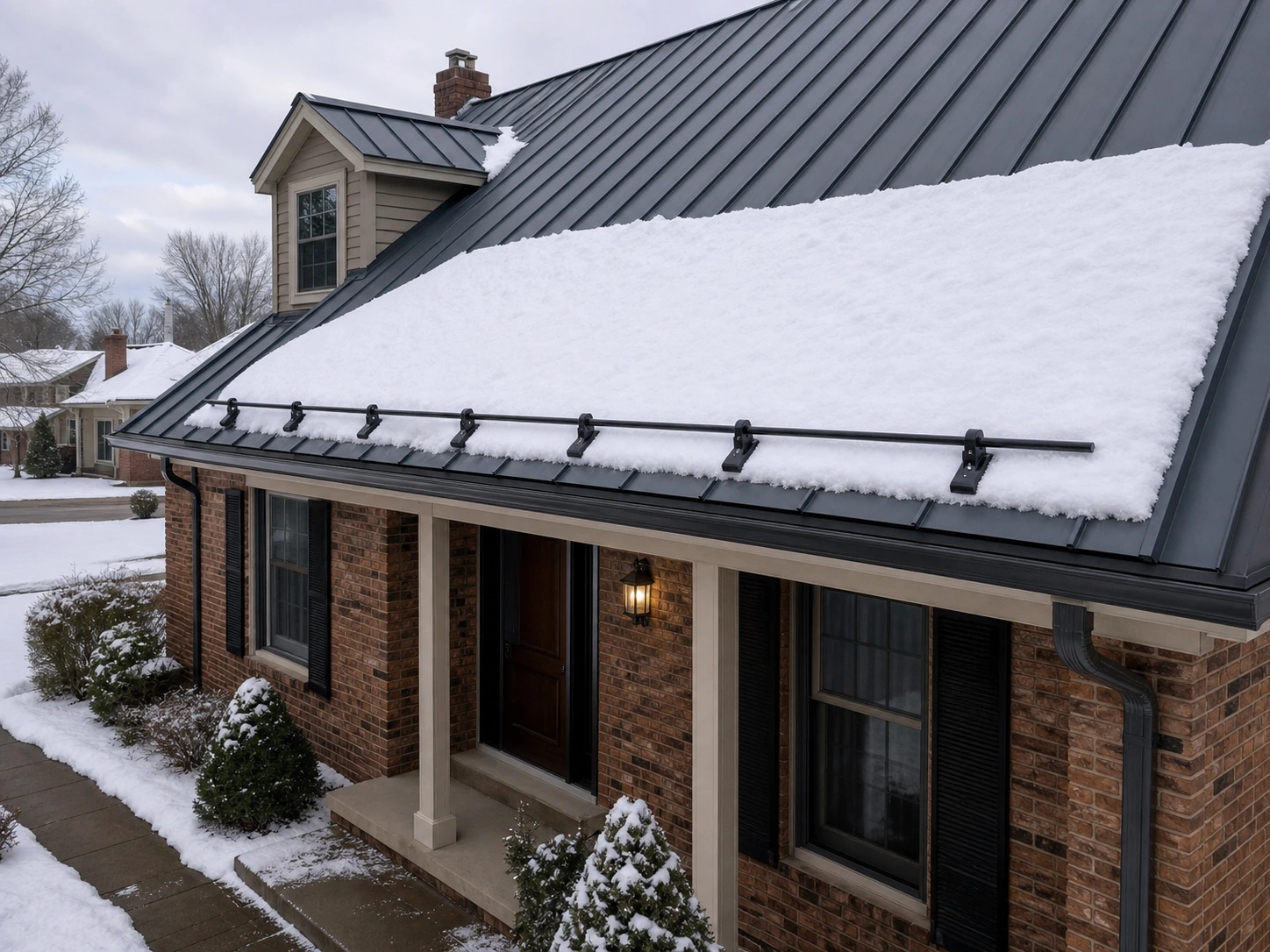
Hail may leave cosmetic dents even when water-shedding performance remains intact. Smooth metal can also release snow suddenly. The Metal Construction Association recommends engineered snow-retention systems where sliding snow could threaten entrances, sidewalks, vehicles, gutters, landscaping, or lower roofs. Random rows of untested guards are not a substitute for a designed system.
Asphalt shingles vs. metal roofing: side-by-side
| Decision factor | Architectural asphalt shingles | Residential metal roofing |
|---|---|---|
| Initial investment | Usually lower | Usually substantially higher |
| Planning lifespan | About 15-30 years | About 40-70 years |
| Storm aging | Can lose granules, unseal, curl, or tear | Can dent; seams and fasteners still need inspection |
| Snow behavior | Usually holds snow longer | Often sheds snow faster; retention may be needed |
| Repairability | Individual areas are often easier to blend and repair | Repairs may require matching panels, finish, and specialized labor |
| Appearance | Familiar and widely accepted | Distinctive; many colors, seams, and shingle-like profiles |
| Best fit | Budget-conscious replacement and traditional styling | Long ownership horizon and durability-focused investment |
Snow, ice dams, and winter performance
Metal can shed snow more readily, but no roof covering cures an ice-dam problem by itself. Ice dams usually begin when heat escaping into the attic melts snow higher on the roof and the water refreezes near colder eaves. Air sealing, insulation, balanced ventilation, correct underlayment, and careful eave flashing are the core defenses for both materials.
With asphalt, ask how the contractor will protect eaves and valleys and how a winter installation will be sealed. With metal, ask where snow may release and whether engineered retention is needed above doors, walks, driveways, decks, heat pumps, or lower roof sections. Gutters and downspouts must be coordinated with the expected snow and water movement.
Wind, hail, and storm resistance
Do not compare roofs using one marketing number. Ask for the exact product's wind rating, impact classification, approved deck, underlayment, fastening pattern, edge metal, and installation instructions. The roof's corners and edges experience high uplift, while penetrations and valleys create water-entry opportunities.
IBHS observes that hail can bruise, tear, and displace granules on asphalt shingles. Metal commonly dents, and those dents may be cosmetic rather than functional, but seams, coatings, flashings, and substrate still need inspection after a serious storm. Impact-resistant labels reduce risk; they do not make any roof hail-proof.
Energy efficiency, condensation, and noise
A metal roof is not automatically cooler, and a dark asphalt roof is not automatically inefficient. Solar reflectance depends on the specific color and coating. ENERGY STAR notes that reflective roofing can reduce heat transfer, but savings are generally stronger in hot, sunny climates. In your area, attic air sealing and insulation often have a larger year-round effect on comfort.
Modern metal roofing installed over solid decking, underlayment, and an insulated attic is not expected to sound like a bare metal barn roof. Noise and condensation depend on the complete assembly. The contractor should explain ventilation, vapor control, underlayment, and any above-sheathing air space rather than promising that the panel alone solves moisture or sound.
How to compare roofing warranties
A long warranty headline does not equal full replacement coverage for the same period. Read product and workmanship warranties separately. Ask about proration, labor, disposal, registration, transfer, and the ventilation, deck, slope, accessory, maintenance, or installer conditions that can limit a claim.
For metal, review substrate corrosion coverage plus coating terms for chalking, fading, peeling, and finish integrity. For asphalt, review wind and algae provisions, impact claims, sealing requirements, and whether enhanced coverage requires a certified installer or complete accessory system.
How to choose the best roof for your home
- Choose asphalt when the budget is tighter, the home has traditional styling, and a 15- to 30-year planning horizon is reasonable.
- Consider metal when you expect long ownership, can absorb the initial premium, and value lower replacement frequency.
- Give extra weight to snow retention and drainage when roof planes discharge above entrances, sidewalks, driveways, or lower roofs.
- Have the roofer inspect the deck, attic, ventilation, flashing, and past leak areas before finalizing the material recommendation.
- Request exact product names, specifications, colors, accessories, warranty documents, and comparable addresses before signing.
Frequently asked questions
Which roof is better for snowy climates?
Both can work when the structure, underlayment, flashing, insulation, and ventilation are correct. Metal often sheds snow faster, which may require engineered snow retention above vulnerable areas.
Is a metal roof worth the extra cost in your state?
It may be when the homeowner plans to stay long enough to benefit from the longer service-life potential and values durability. Asphalt may provide better value when upfront affordability is the priority.
Are metal roofs noisy during rain or hail?
A residential metal roof over solid decking and underlayment, with adequate attic insulation, is generally much quieter than an exposed metal roof on a barn or shed. Assembly and installation determine sound transmission.
Can metal roofing be installed over existing shingles?
Some systems and jurisdictions allow it, but it is not always the best choice. Existing layers can hide damaged decking, complicate flashing, affect ventilation or warranties, and make future work harder. Ask for both overlay and tear-off scopes when appropriate.
Do metal roofs prevent ice dams?
No material guarantees that. Metal may shed snow efficiently, but heat loss into the attic can still create melting and refreezing. Air sealing, insulation, ventilation, and eave protection remain essential.
Which roofing material handles hail better?
Performance varies by exact product and assembly. Impact-rated shingles can reduce damage risk; metal may dent without losing function. Ask about tested ratings, finish thickness, substrate, and insurance implications.
Will a metal roof look out of place in my neighborhood?
Not necessarily. Standing seam creates a clean contemporary or farmhouse look, while metal shingles can imitate more traditional profiles. Check neighborhood rules and view completed local projects in daylight before choosing.
The best material is the one installed as a complete system
Asphalt shingles suit many homes because they balance cost, appearance, and repairability. Metal can be the stronger long-term investment when the budget and ownership horizon support it. Either way, examine the deck, attic, flashing, drainage, and storm details first.
A qualified roofer should explain why a particular product fits the home's slope and exposure, how snow and water will move, how the roof is attached, what happens at every penetration, and exactly what the warranty covers.
Sources
HomeYou: Roofing Cost Guide 2026
National Weather Service your local area: Local Weather Event Summaries
IBHS: Natural Weathering and Hazard Exposure
Asphalt Roofing Manufacturers Association: Ventilation and Moisture Control
Asphalt Roofing Manufacturers Association: Preventing Damage from Ice Dams
Asphalt Roofing Manufacturers Association: Cold-Weather Shingle Installation
Metal Construction Association: Snow Retention for Metal Roofing