Ice Dams on Roofs: Causes, Warning Signs, Prevention, and Costs
Professional removal: $650-$2,400 | Typical average: about $1,200
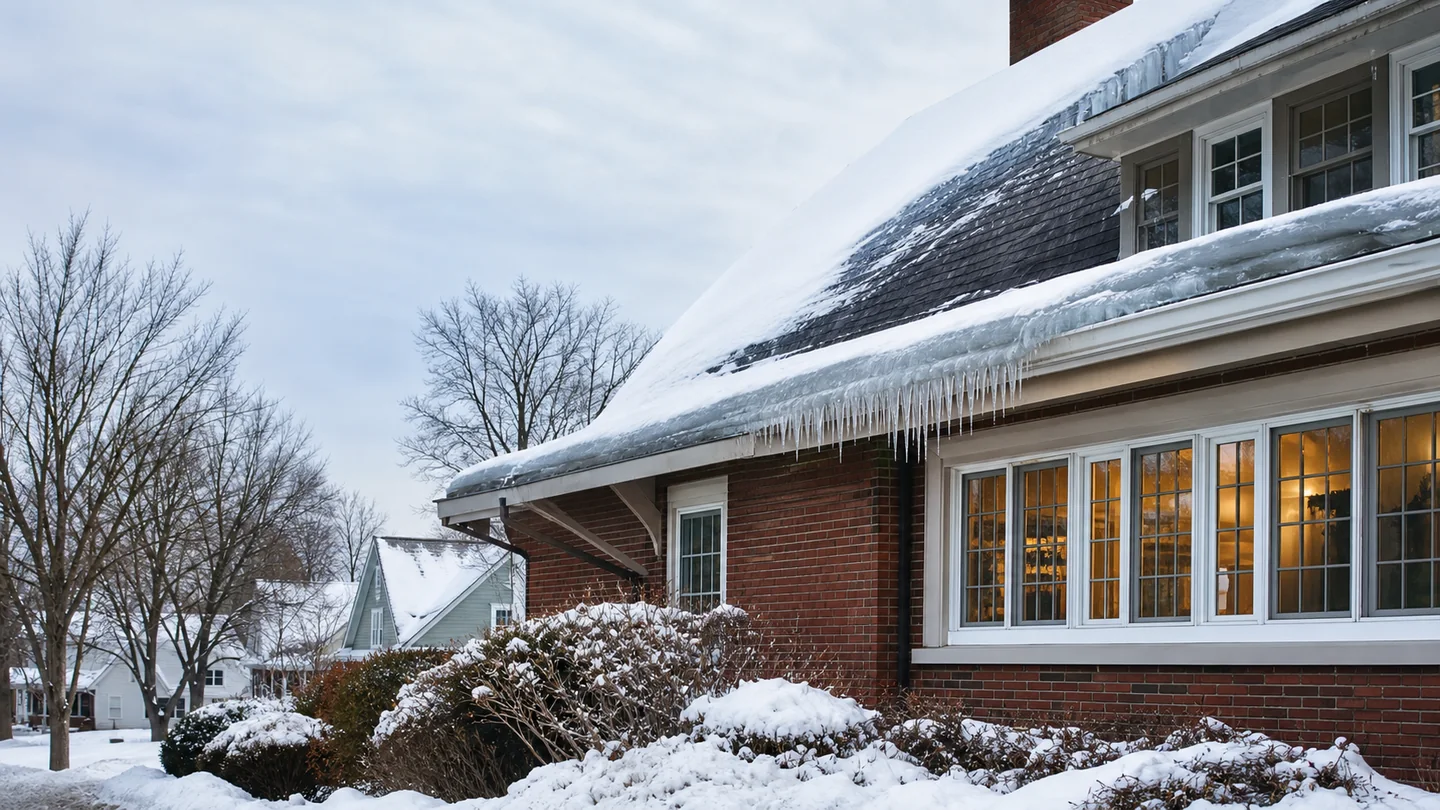
A row of icicles can look like an ordinary part of a cold winter. Sometimes it is. But when a ridge of ice traps melting snow at the eave, water can work beneath shingles and enter the attic, walls, or ceilings. That is an ice dam, and it is a symptom of uneven roof temperatures rather than simply a gutter problem.
Homes from your local area and your local area to your local area, your local area, Warren, and the eastern snowbelt can experience deep snow, attic heat loss, cold eaves, and repeated freeze-thaw cycles. This guide covers immediate action, costs, and prevention.
Ice dam quick answer
- An ice dam forms when snow melts on a warmer upper roof, flows downhill, and refreezes at a colder eave. Repeated melting builds a barrier that can trap water behind it.
- Large icicles do not prove water has entered the roof, but ice concentrated along an eave, valley, or gutter deserves attention.
- If water is entering the home, protect people and belongings, keep away from wet electrical fixtures, document the damage, and call a qualified roofer or ice-dam specialist.
- Do not walk on a snowy roof, chip ice with an axe or hammer, use an open flame, or pressure-wash frozen roofing.
- Long-term prevention usually starts with attic air sealing, then properly installed insulation and ventilation suited to the roof design.
How much does ice dam removal cost in 2026?
Angi reports a 2026 national ice-dam removal range of $650 to $2,400, averaging about $1,200. Its broader reported range is $400 to $4,000, reflecting small accessible areas through large, complex, or emergency jobs. HomeYou reports roof inspections at $130 to $419 and roof leak repair at $168 to $690.
| Service | 2026 planning range | What the price generally covers |
|---|---|---|
| Roof inspection | $130-$419 | Condition review; specialty testing may cost more |
| Ice-dam removal | $650-$2,400 | Typical professional project range |
| Professional steam removal | $800-$2,400 | Controlled commercial steam removal |
| Roof snow removal | $200-$700 | Snow reduction before or apart from dam removal |
| Roof leak repair | $168-$690 | Localized leak work; interior repairs are separate |
| General roof repair | $347-$4,867 | Broader HomeYou range based on damage and access |
| Heat-cable installation | $500-$4,600 | Targeted system; not a substitute for correcting heat loss |
These are national planning figures, not guaranteed your area prices. Snow depth, ice thickness, roof height and pitch, complex rooflines, equipment setup, and storm demand affect the total. Drying, insulation, interior finishes, mold work, and structural repairs are normally separate.
How an ice dam forms
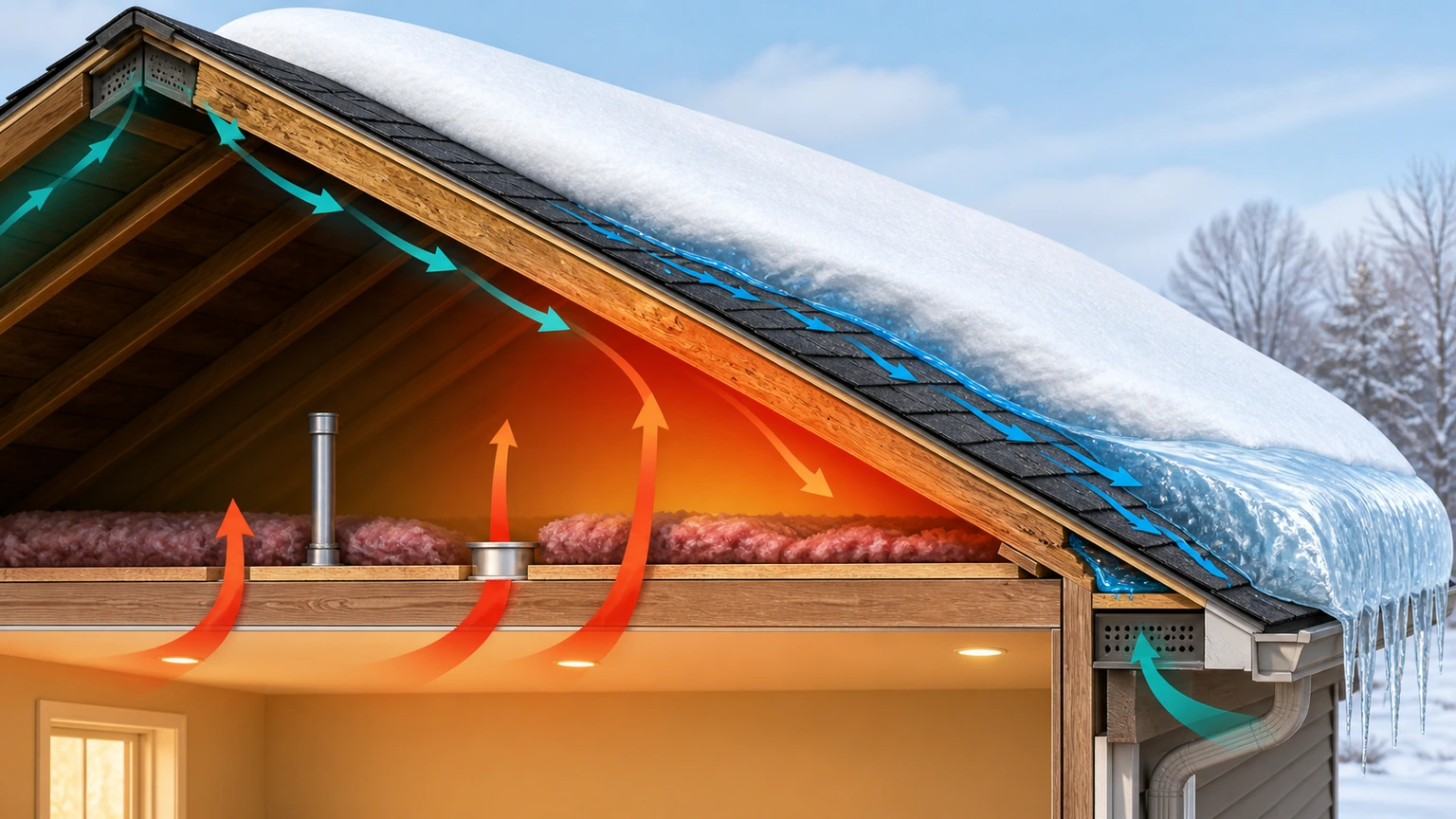
Warm indoor air leaks through ceiling openings, or heat conducts through thin insulation, warming part of the roof deck. Snow melts and flows toward the colder overhang. There it refreezes and builds a ridge that traps more water.
Shingles shed flowing water but are not designed for prolonged ponding from below. Backed-up water may reach underlayment, fasteners, flashing, sheathing, and the interior, especially at valleys, dormers, skylights, and roof-wall intersections.
Why roofs in cold climates are vulnerable
Lake-effect snow can create intense, localized accumulation across Cuyahoga, Lake, Geauga, Ashtabula, and Trumbull counties. Risk increases when deep snow remains long enough to melt from below while outdoor temperatures cycle around freezing.
Older one-and-a-half-story homes, finished attics, knee walls, additions, recessed lights, attic hatches, bath fans, plumbing chases, and ducts can create uneven heat loss. Newer homes can also develop ice dams when air barriers are incomplete, insulation is disturbed, or ventilation paths are blocked.
Warning signs outside and inside
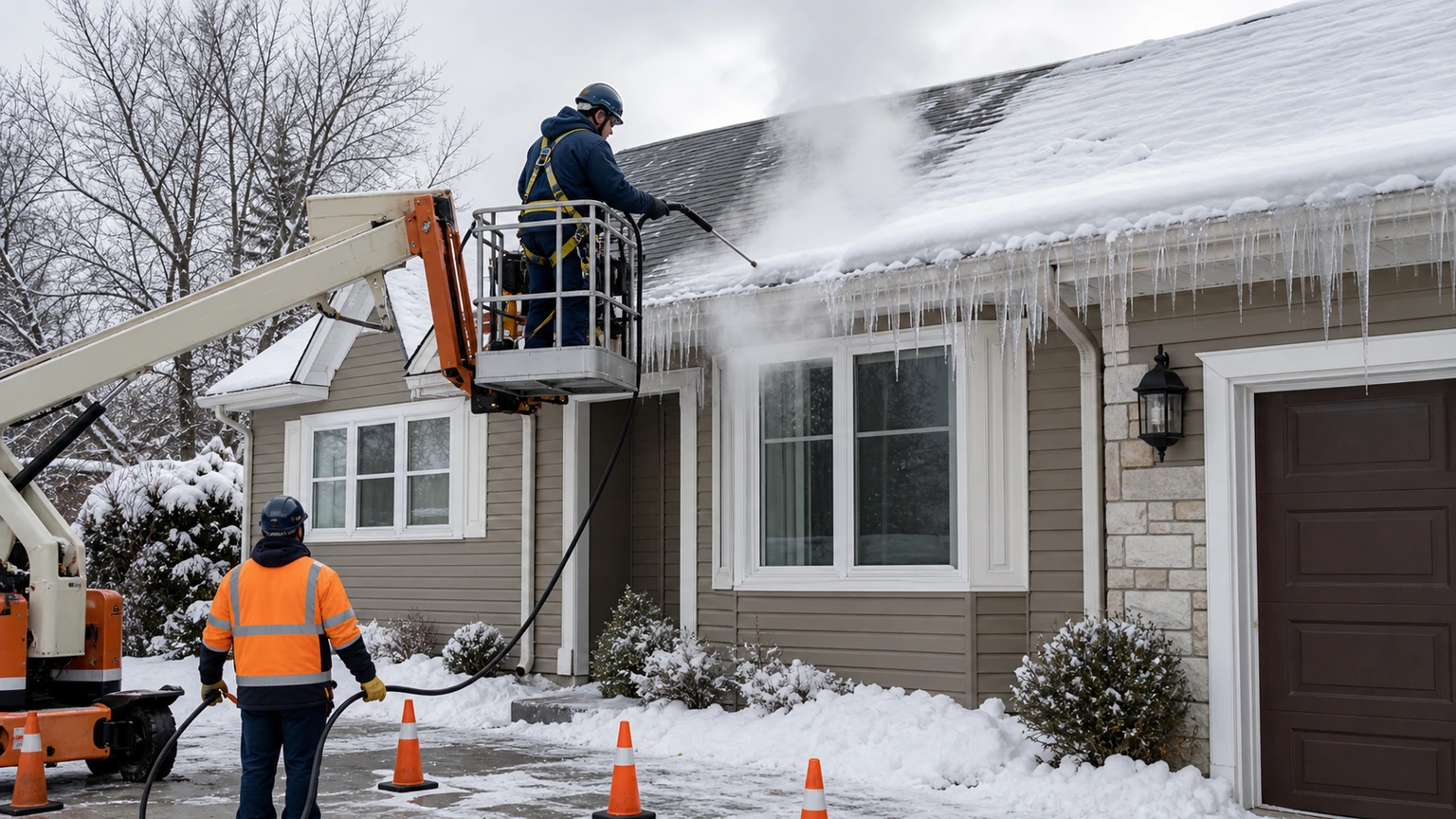
- A thick ridge of ice along the eave, in a valley, behind a chimney, or above a gutter
- Icicles concentrated below one warm roof area while nearby sections remain clear
- Snow melting in patches or narrow lines while the rest of the roof stays covered
- A gutter pulling away, bent edge metal, damaged shingles, or ice hanging over a walkway
- New ceiling or wall stains near an exterior wall, window, roof transition, or light fixture
- Damp attic sheathing, wet insulation, peeling paint, musty odor, or visible dripping
A clear roof patch does not prove the leak point. Water can travel along decking, framing, or insulation before appearing indoors, so both the exterior entry route and interior moisture path should be traced.
What to do when an ice dam is active
- Keep people, pets, and vehicles away from areas below icicles or overhanging ice. Falling ice and released roof snow can be dangerous.
- If it can be done entirely from stable ground, a purpose-made roof rake may reduce loose snow near the eave. Follow the tool instructions and stay clear of overhead lines and falling material.
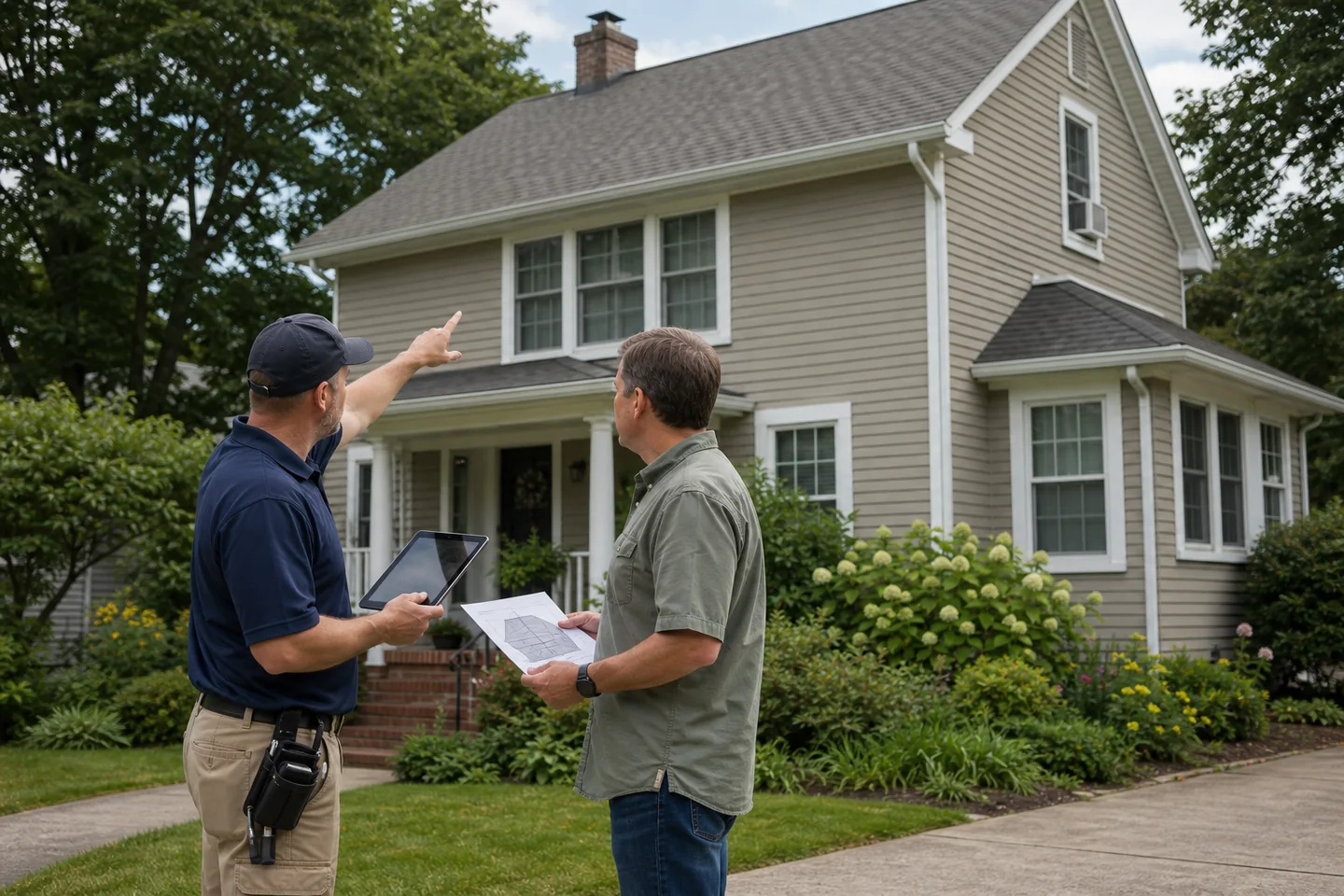
- Call a qualified ice-dam or roofing professional for thick ice, a steep or high roof, multiple rooflines, difficult access, or an active leak.
- Ask how the crew will protect shingles, gutters, landscaping, entrances, and occupants, and whether commercial steam is appropriate for the roofing material.
- Move belongings away from an interior drip, place a container where safe, photograph conditions, and contact the insurer when damage may lead to a claim.
| Electrical warning Do not touch a wet ceiling light, switch, outlet, appliance, or electrical panel. Keep out of the affected area and contact the utility, emergency service, electrician, or other qualified professional appropriate to the hazard. |
|---|
What not to do
- Do not climb onto a snowy or icy roof. Cold-weather falls are not worth a temporary repair.
- Do not hammer, chop, drill, or pry at the dam. Impact can cut shingles, puncture underlayment, bend gutters, and release heavy ice without warning.
- Do not use a torch, open flame, or uncontrolled high heat. Fire and roof damage can be worse than the original leak.
- Do not use a pressure washer on frozen roofing. Water can be driven into the assembly and refreeze elsewhere.
- Do not spread ordinary rock salt across the roof. Deicers can damage metal, roofing, siding, plants, and masonry; use only a roof-compatible product under qualified guidance.
If water is already leaking indoors
An interior drip is a water-loss problem as well as a roofing problem. Protect the room without taking electrical or structural risks. If a ceiling is bulging, keep people out from beneath it; trapped water and wet material can fall. Do not puncture a ceiling unless a qualified professional has assessed the hazards and directed the work.
A roofer addresses the exterior cause. A restoration contractor may be needed for extraction, drying, material removal, and moisture verification. Wet insulation, sheathing, and wall cavities can remain damp after the visible drip stops.
The long-term fix: control heat at the roof
Removal addresses the immediate dam, not the temperature pattern. In a conventional vented attic, keep indoor heat and moisture out, maintain continuous insulation, and preserve the designed ventilation path.
1. Air-seal the attic floor
The U.S. Department of Energy recommends sealing attic-floor penetrations before adding insulation. Common leakage points include attic hatches, plumbing and wiring openings, top plates, dropped soffits, bath-fan housings, and recessed fixtures. Combustion vents, chimneys, and non-rated lights require code-compliant clearances and materials, so this is not a place for indiscriminate spray foam.
2. Restore continuous insulation
Insulation works best when it is dry, evenly distributed, and in contact with the air barrier. Thin areas at eaves, compressed batts, wind-washed loose fill, and missing coverage over additions can create warm roof stripes. A qualified insulation or energy professional should choose the assembly and target level for the house and current code requirements.
3. Preserve the ventilation design
Ventilation can help a vented attic stay cold and manage moisture, but it cannot compensate for major air leakage. Soffit-to-ridge airflow needs clear baffles and unobstructed vents. Some roofs are designed as unvented conditioned assemblies; adding random vents can make them worse. Diagnose the existing assembly before changing it.
Roof details that limit damage
At reroofing, evaluate damaged decking, flashing, drip edge, valleys, penetrations, and code requirements for ice-barrier protection. A properly installed membrane can reduce leakage risk but does not prevent ice formation.
Gutter cleaning supports drainage, yet clean gutters do not cure heat loss and ice dams can form on roofs without gutters. Heat cables may provide targeted relief at a known trouble area when correctly designed and installed, but they add energy use, require inspection, and should not be used to hide an unresolved attic problem.
When to request a professional inspection
- Water is entering the attic or living space
- Ice extends across a long eave, valley, dormer, or several roof sections
- Shingles, flashing, gutters, soffit, or fascia appear displaced or damaged
- The roof is steep, high, snow-loaded, or close to power lines
- Ice dams return in the same location after ordinary maintenance
- The attic shows frost, condensation, wet insulation, or darkened sheathing
How to compare ice-dam and prevention estimates
For urgent removal, ask for the method, hourly rate or project total, minimum charge, crew size, estimated duration, weather limitations, safety setup, cleanup, and responsibility for accidental damage. Confirm insurance and experience with the specific roofing material.
A prevention proposal should identify heat-loss paths and separate air sealing, insulation, ventilation, roofing, and finish work. Ask what evidence supports each item, who coordinates the trades, and how completion will be verified.
Will homeowners insurance cover ice-dam damage?
Coverage depends on the policy, cause, maintenance history, exclusions, deductible, and type of damage. Removal intended only as maintenance may be treated differently from sudden resulting water damage. Notify the insurer promptly, follow its emergency-protection instructions, and keep dated photos, contractor reports, moisture readings, invoices, and a list of damaged property.
Frequently asked questions
Do icicles always mean I have an ice dam?
No. Icicles can form without trapped water entering the roof. A continuous ice ridge, uneven melting, or interior moisture makes an ice dam more likely and warrants inspection.
Can clogged gutters cause ice dams?
Debris and frozen gutters can worsen drainage, but the primary cycle is melting on a warmer roof and refreezing at a colder edge. Ice dams can form even when gutters are clean or absent.
Can I remove an ice dam with a roof rake?
A roof rake used from stable ground can reduce loose snow and slow additional melting. It is not a tool for striking solid ice. Follow the manufacturer's instructions and keep clear of falling snow, ice, and utility lines.
Is steam safe for shingles?
Professional low-pressure steam is commonly used for removal, but equipment, operator technique, roof material, temperature, and condition matter. Ask the contractor to explain the method and damage protections.
Will adding more roof vents stop ice dams?
Not by itself. Air leakage and uneven insulation should be addressed first, and ventilation must match the roof assembly. Adding vents without diagnosing the system can create moisture or performance problems.
Does an ice-and-water membrane prevent ice dams?
No. It is a secondary water-control layer intended to reduce leakage if water backs up. It does not control attic heat or stop ice from forming.
Should I replace the whole roof after an ice dam?
Not automatically. Removal and inspection may reveal no lasting damage, a localized repair, or broader deterioration. Replacement should be supported by roof condition, leak history, decking damage, age, and the repairable area.
Solve the immediate dam and the reason it formed
Stay off the roof, control interior damage, avoid electrical and falling-ice hazards, and use qualified help beyond safe ground-level snow reduction. Inspect both the roof and attic rather than blaming the gutter alone.
A durable solution maps where snow melts, finds heat-loss paths, restores insulation and the correct ventilation design, and repairs damaged roofing. That gives homeowners a better chance of preventing the next winter leak.
Sources
HomeYou: Roofing Cost Guide 2026
HomeYou: Roof Repair Cost Guide 2026
Angi: Ice Dam Removal Cost 2026
National Weather Service: Preventing Roof Ice Dams
U.S. Department of Energy: Air Sealing Existing Attics
U.S. Department of Energy: Energy Renovations - Insulation Guide
National Weather Service: Lake-Effect Snow
University of Minnesota Extension: Protecting Your Home From Rain and Ice