How Much Do Replacement Windows Cost?
Price range: $600-$2,500+ per standard installed window
Replacement windows in your area commonly cost between $600 and $1,500 per standard installed window. Mid-range vinyl projects often fall near $850 to $1,100 per opening, while wood, fiberglass, full-frame work, and specialty windows can cost $2,500 or more. For a typical 10-window project, a practical starting budget is about $8,500 to $11,000.
Why is the range so wide? One estimate may cover a basic insert window, while another includes a higher-performance glass package, exterior capping, full-frame removal, trim repairs, disposal, and a stronger labor warranty. This guide breaks down those differences so you can compare quotes with confidence.
Window replacement cost: quick answer
- Standard installed replacement window: $600-$1,500
- Common mid-range vinyl window: $850-$1,100
- Premium wood, fiberglass, or composite window: $1,100-$2,500+
- Bay, bow, oversized, or specialty window: $1,500-$7,500+
- Typical 10-window project: about $8,500-$11,000
These are planning ranges based on your area pricing published in 2026, not guaranteed quotes. Window size, material, frame condition, access, glass package, and finish work can move your project above or below the ranges shown.
Average window replacement costs in your area
| Window or project type | Estimated cost | What the price may include |
|---|---|---|
| Basic vinyl insert | $600-$850 each | Standard opening, sound existing frame, basic options |
| Mid-range vinyl | $850-$1,200 each | Upgraded glass, capping or trim, disposal, warranty |
| Wood, fiberglass, or composite | $1,100-$2,500+ each | Premium material, finishes, hardware, custom options |
| Bay, bow, or specialty window | $1,500-$7,500+ each | Large unit, structural work, siding or trim repairs |
| Ten standard windows | $8,500-$11,000 | Common mid-range whole-project planning range |
What should an installed window price include?
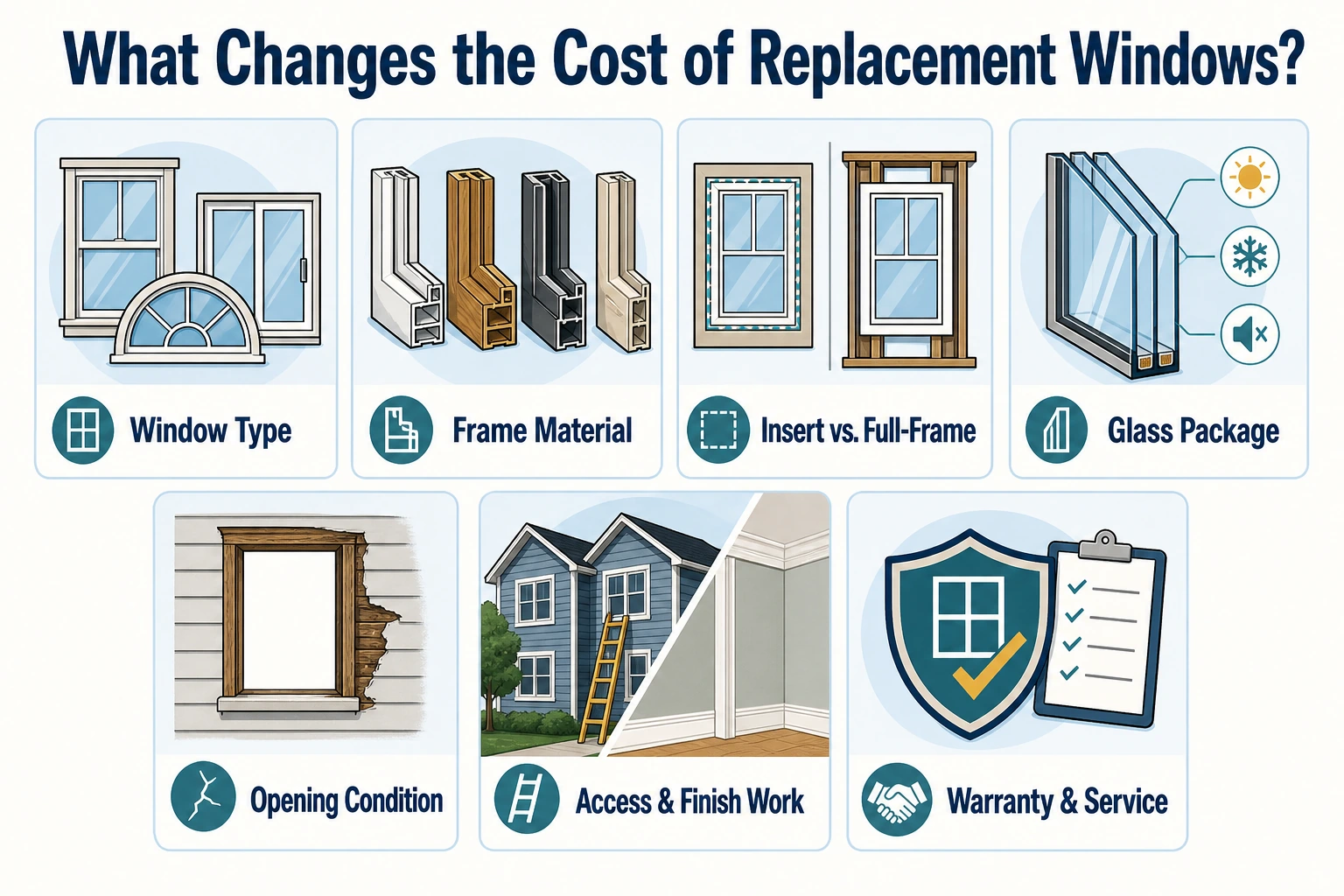
A low advertised price may cover only the window unit or the simplest possible installation. Before comparing totals, make sure each estimate describes the same completed job. A professional installed price should clearly address:
- On-site measurement and confirmation of the final window specifications
- The window, glass package, screens, hardware, grids, and selected colors
- Removal and disposal of the old sash or complete window assembly
- Shimming, fastening, and low-expansion air sealing around the opening
- Flashing or water-management work required by the installation method
- Interior trim, exterior capping, caulking, and minor finish repairs
- Protection of floors and furnishings, cleanup, and debris removal
- Manufacturer and labor warranty coverage, including future service procedures
Also ask what is specifically excluded. Painting, stained interior trim, siding repairs, permits, lead-safe work, structural carpentry, and concealed rot may be separate charges. Two estimates can look far apart until these details are placed side by side.
What affects the cost of replacement windows?
Installation method: Insert windows fit inside a sound existing frame and usually cost less. Full-frame replacement removes the old unit to the rough opening and may require flashing, insulation, carpentry, and finish work.
Frame material: Vinyl is generally the most affordable. Fiberglass, composite, and wood cost more but may offer different appearance, strength, finish, and maintenance benefits.
Window style and size: Standard double-hung or slider windows usually cost less than casement, picture-window combinations, bay, bow, garden, or custom-shaped units.
Glass package: Low-e coatings, gas fills, laminated glass, sound-control glass, and triple-pane options can increase the product price.
Opening condition: Rot, failed flashing, water damage, out-of-square framing, damaged trim, or masonry repairs can add labor and materials.
Access and finish work: Upper stories, steep grades, landscaping, interior trim, exterior aluminum capping, custom colors, and siding repairs can affect the total.
Warranty and service: Product, glass, finish, hardware, and labor warranties vary. A lower upfront price may include less service coverage.
Insert vs. full-frame window replacement
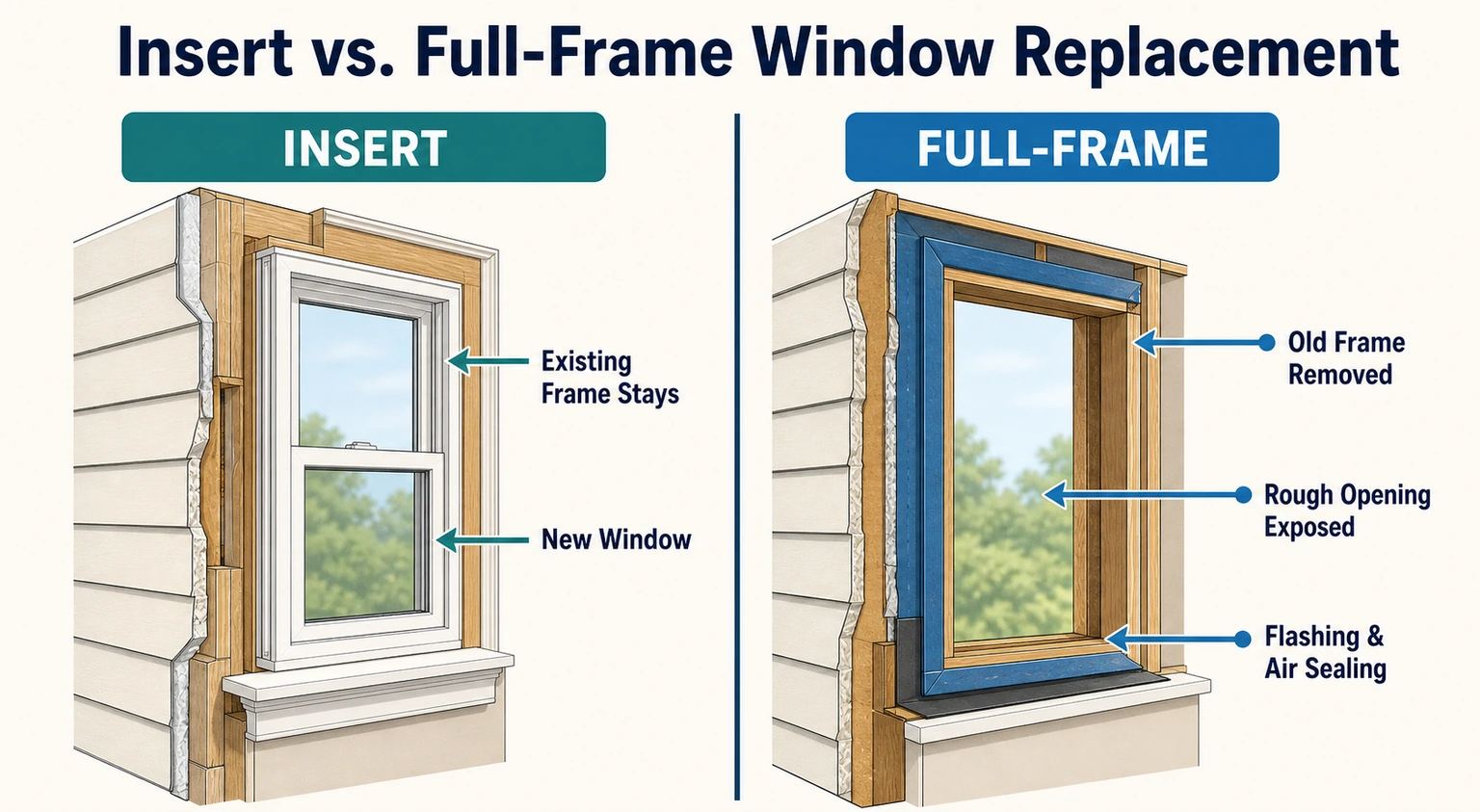
An insert, also called a pocket replacement, places the new window inside the existing frame. It can be a smart, budget-friendly choice when the frame and sill are solid, square, and free of ongoing leaks. It also limits disruption to the surrounding trim. The tradeoff is that the existing frame stays in place, and the new unit may slightly reduce the visible glass area.
A full-frame replacement removes the window and frame to expose the rough opening. It usually costs more, but it lets the installer address damaged wood, old insulation, incorrect flashing, and water-management problems. Full-frame work is often the better choice when the existing frame is deteriorated, the opening leaks, or you want to change the window size or style.
| Helpful tip: Ask every contractor to identify the proposed installation as insert or full-frame. Also ask how concealed rot will be documented and priced before additional work begins. |
|---|
Window materials and value
Vinyl windows are popular because they are affordable, low maintenance, and widely available. Still, not every vinyl window is equal. Compare frame construction, reinforcement, glass, weatherstripping, color limitations, and warranty coverage.
Fiberglass and composite windows typically cost more but may provide slimmer profiles, strength, and additional finish options. Wood and clad-wood windows offer a traditional appearance that can work well in older homes, although maintenance and exterior-cladding details matter. The best value is the window that suits the home, performs well, and is installed correctly - not simply the least expensive frame material.
Choosing energy-efficient windows for your area
Your area's heating season makes insulating performance important. ENERGY STAR currently recommends lower U-factors for Northern climates, generally 0.22 or lower, while allowing certain equivalent-performance options. A lower U-factor means less heat moves through the complete window.
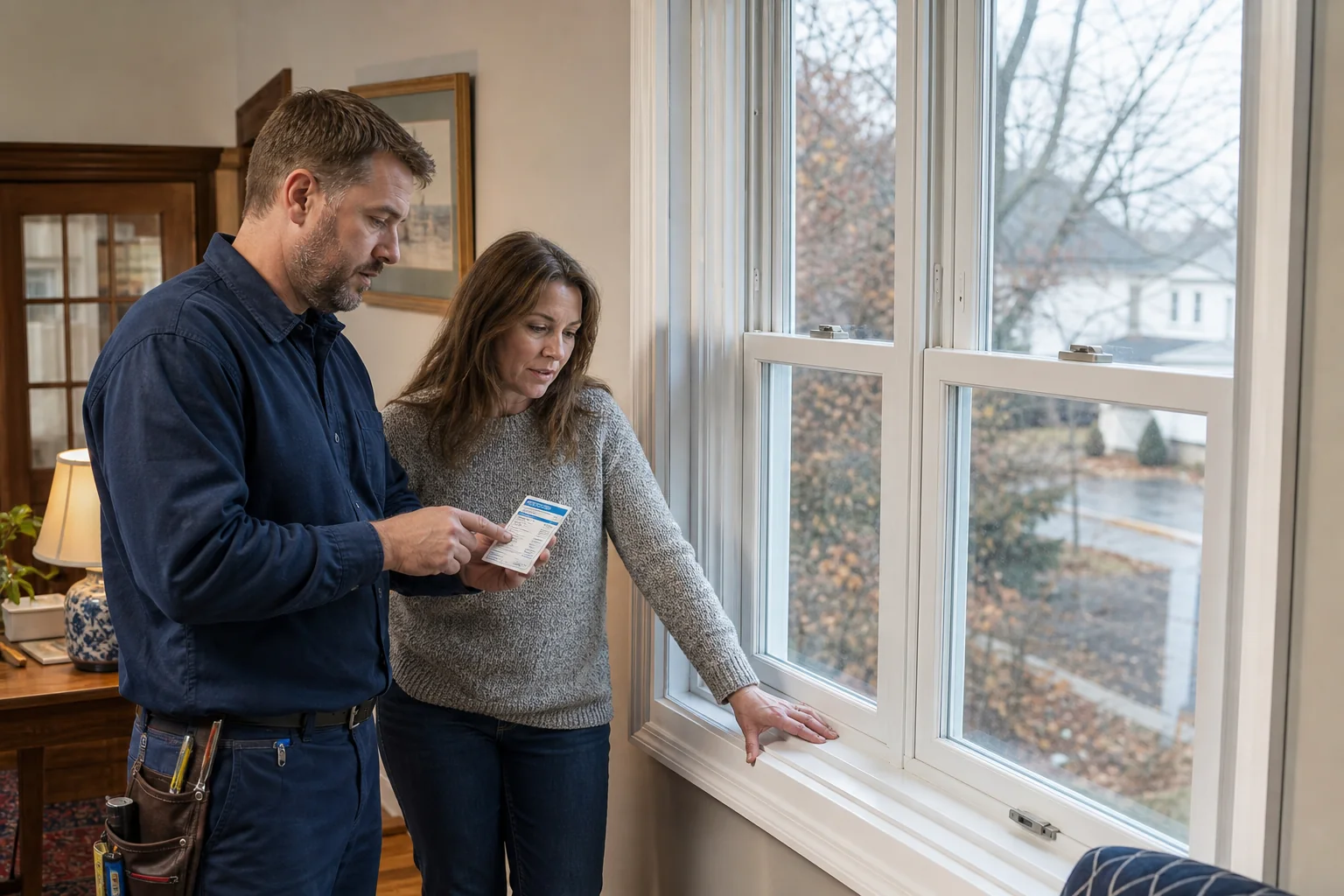
Use the NFRC label to compare complete products. It lists standardized ratings such as U-factor and solar heat gain coefficient, or SHGC. Ask for the exact label for the window configuration in your estimate; the same product line may include several frame and glass combinations.
Energy-efficient windows can improve comfort and reduce drafts, but be careful with guaranteed savings claims. Results depend on the old windows, air leakage, insulation, energy prices, thermostat settings, orientation, and installation quality. Proper air sealing and flashing are just as important as the product itself.
Important considerations for older homes
Older homes around your local area, your local area, your local area, your local area, and Warren may have original trim, out-of-square openings, hidden water damage, or masonry details that require extra planning. Homes in historic districts may also have rules governing window material, profiles, divided-light patterns, or exterior appearance.
Window replacement can disturb painted surfaces. For most paid work in pre-1978 housing, the EPA Renovation, Repair and Painting Rule requires covered firms to be certified and use lead-safe practices. Ask how the crew will contain dust, protect occupants, clean the work area, and document compliance.
Unexpected window replacement costs
Most projects are straightforward once the old windows come out, but a detailed contingency plan helps prevent surprises. Extra costs may arise from rotted sills or framing, water damage behind trim, openings that are badly out of square, damaged siding or masonry, and code-related changes to bedroom egress or safety glazing.
Access can also matter. Upper-floor windows, steep grades, heavy specialty units, and landscaping may require additional labor or equipment. In older homes, lead-safe setup and cleanup can add time. If a contractor expects possible extras, ask for unit prices or a written change-order process before work begins. You should have the opportunity to review photos, understand the recommended repair, and approve the price before concealed work moves forward.
How to save on replacement windows
- Compare at least three written estimates using the same product and installation scope.
- Replace the worst windows first if a whole-house project is outside the current budget.
- Choose standard colors, styles, and sizes when they meet your needs.
- Ask whether a quality insert is appropriate before paying for full-frame work - but do not cover up rot or leakage.
- Review financing by total cost and interest, not only the monthly payment.
- Check current manufacturer, utility, state, and local incentives before ordering.
One important 2026 update: the IRS states that the federal Energy Efficient Home Improvement Credit cannot be claimed for property placed in service after December 31, 2025. Be cautious with older articles that still advertise the former federal window credit.
How to compare window estimates
A good estimate should make the project easy to understand. Before choosing a contractor, confirm the following:
- Manufacturer, series, frame material, style, color, glass package, U-factor, and SHGC
- Insert or full-frame installation for each opening
- Removal, disposal, insulation, flashing, trim, capping, caulking, and cleanup
- How hidden damage and change orders will be photographed, approved, and priced
- Product, glass, finish, hardware, and labor warranty terms
- Deposit, payment schedule, lead time, weather policy, and final inspection
Do not let a same-day discount make the decision for you. Compare the written scope, not just the total or monthly payment. The clearest proposal is often the easiest one to hold accountable later.
Repair or replace your windows?
A failed lock, worn weatherstripping, damaged screen, isolated glass problem, or deteriorated caulk may be repairable. Replacement becomes more reasonable when several windows have failed seals, serious frame decay, recurring water intrusion, poor operation, or severe drafts.
If you see condensation, notice where it appears. Moisture on the room side may point to indoor humidity and a cold glass surface. Fog trapped between panes usually signals a failed insulated-glass seal. A professional assessment can help separate a repairable issue from a full replacement need.
Frequently asked questions
How much should I budget for 10 replacement windows?
A practical your area starting budget is about $8,500 to $11,000 for 10 mid-range vinyl windows. Straightforward inserts may cost less, while premium materials, full-frame work, large units, and hidden damage can raise the total.
Is $1,000 per window a fair price?
It can be. Around $1,000 may be reasonable when the quote includes a quality window, professional installation, removal, disposal, insulation, trim or capping, cleanup, and labor coverage. Check the written scope before judging the price.
Are triple-pane windows worth it in your area?
They can improve insulating performance and the interior glass temperature, but compare the price premium and NFRC ratings against a strong double-pane option. The best choice depends on comfort goals, home conditions, and budget.
Can windows be installed during a cold winter?
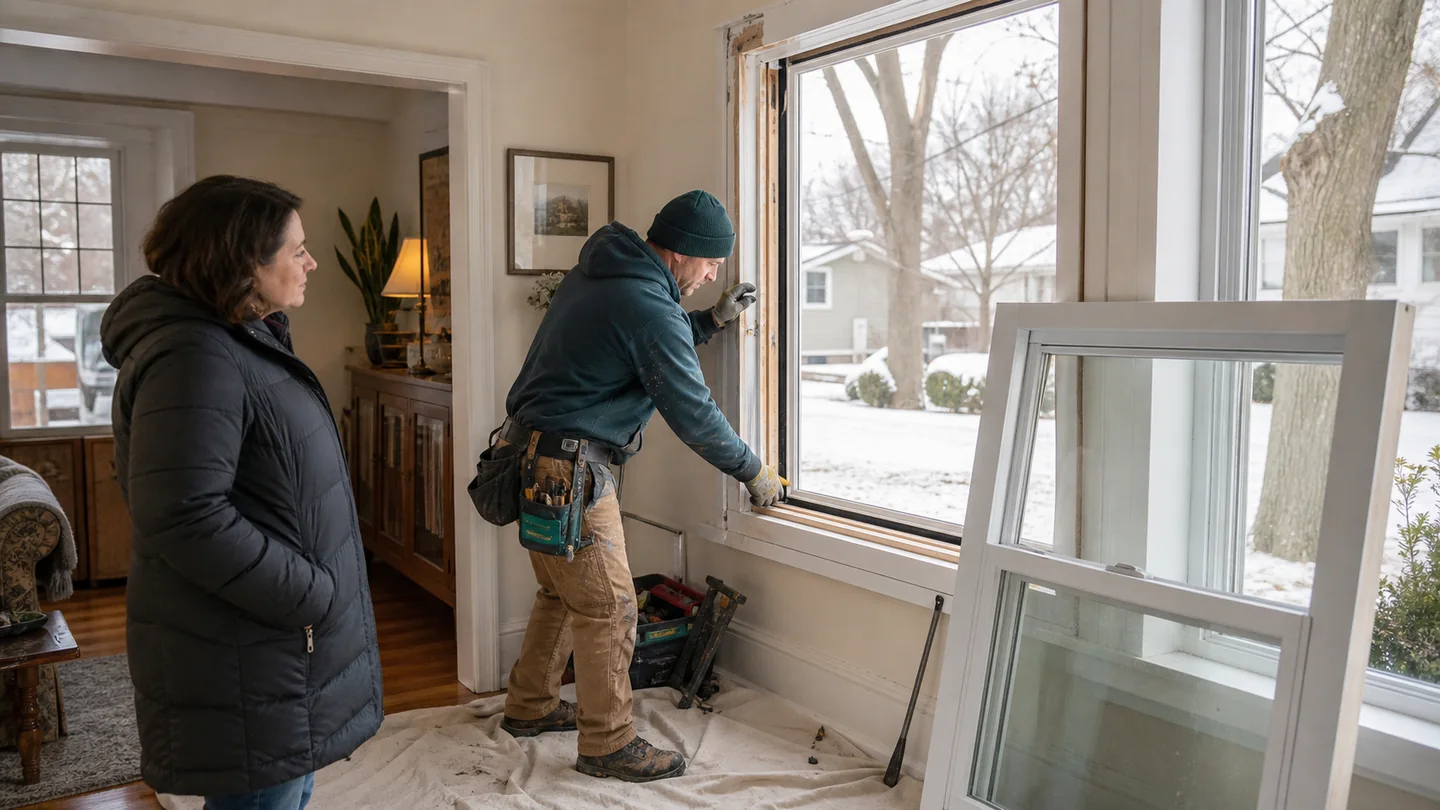
Yes. Experienced crews can work one opening at a time to limit exposure. Ask about sealant temperature requirements, snow or ice delays, interior protection, and how the opening will be kept dry.
How long does a typical window project take?
Many standard installations can be completed in one or two working days after the custom windows arrive. Full-frame reconstruction, interior finishing, masonry repairs, concealed damage, weather, and inspections may extend the schedule. Manufacturing lead time is separate from installation time.
Do replacement windows qualify for a federal tax credit in 2026?
No. Current IRS guidance says the Energy Efficient Home Improvement Credit is unavailable for property placed in service after December 31, 2025. Check for other current incentives before purchasing.
Find window professionals in your area
The right replacement window project starts with a clear assessment of your existing openings and a detailed written estimate. Compare local professionals, review product ratings and warranties, and choose the scope that solves the home's actual problems.
Sources
ENERGY STAR window buying guidance
National Fenestration Rating Council
U.S. Department of Energy: rough-opening air sealing
U.S. Department of Energy: fully flashed openings
U.S. EPA Lead Renovation, Repair and Painting Program