Full-Frame vs. Pocket Window Replacement: Which Does Your Home Need?
How to compare frame condition, water management, glass area, disruption, installation time, and the real cost of doing the opening correctly

A pocket replacement sounds appealing: keep the existing window frame, slide a new unit into it, and avoid tearing up the trim. Sometimes that's exactly the sensible choice. Other times, it puts a new window inside an old frame that is wet, out of square, badly flashed, or already stealing too much glass area.
A full-frame replacement removes the old window down to the rough opening. That usually costs more and disturbs more finishes, but it exposes the parts that control water, air, insulation, and structural support. The decision isn't really “cheap versus premium.” It is whether the frame and wall connection you plan to keep are worth keeping.
Here's what to look for before a contractor recommends the same installation method for every window in your house.
The short answer: pocket works only when the existing frame earns the right to stay
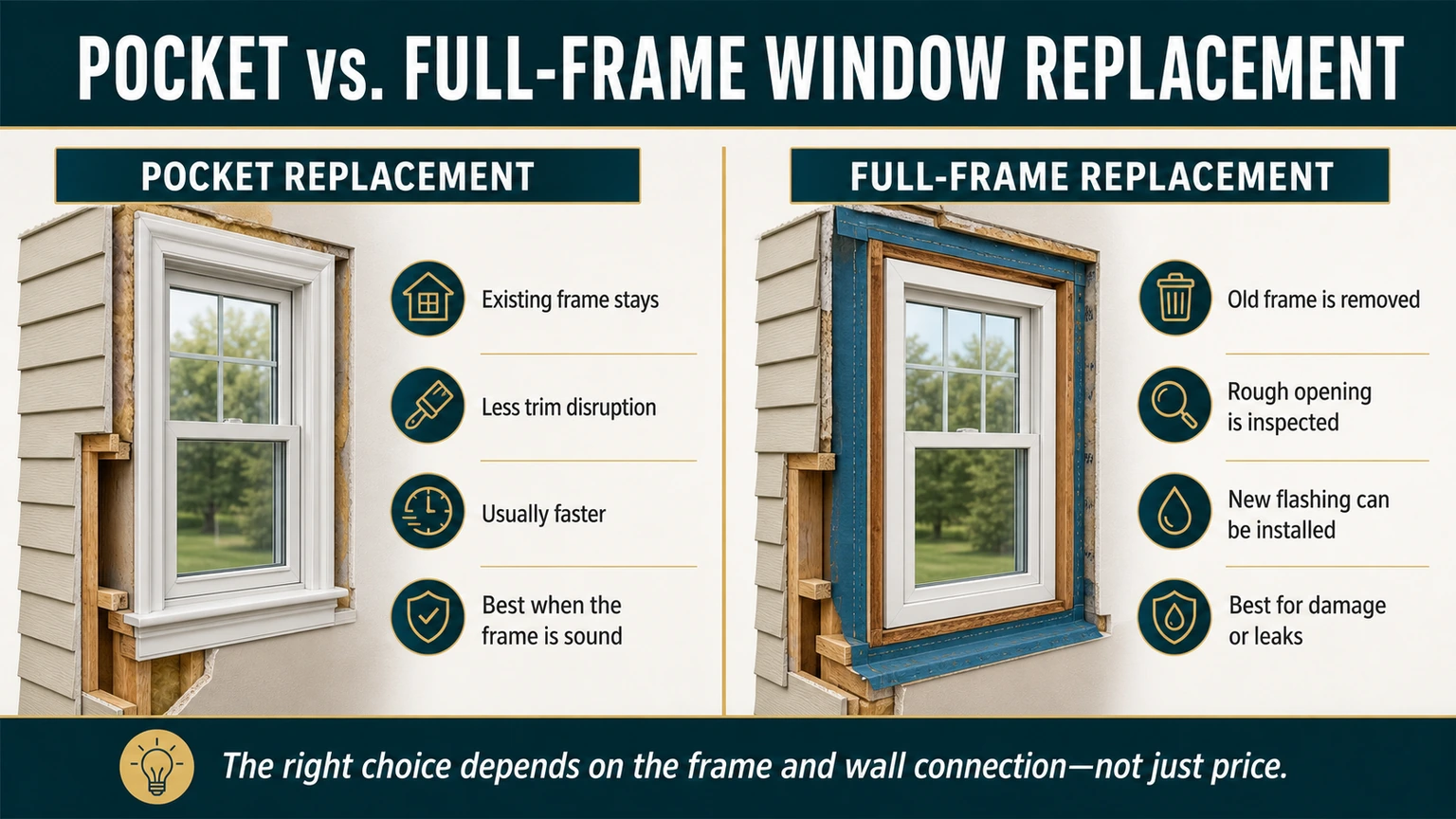
Choose pocket replacement when the existing perimeter frame is sound, dry, square enough, appropriately flashed, and well connected to the wall. It can preserve interior and exterior trim, reduce disruption, and shorten installation time.
Choose full-frame replacement when there is rot, chronic leakage, failed flashing, significant distortion, a poor previous installation, or a need to change window size or style. It is also worth considering when a pocket unit would make the visible glass noticeably smaller.
| Decision point | Pocket replacement | Full-frame replacement |
|---|---|---|
| What is removed | Sashes and selected operating parts | Sashes, jambs, frame, and related components to the rough opening |
| Existing frame | Remains part of the assembly | Removed so the opening can be inspected |
| Trim disruption | Usually limited | Interior or exterior trim may be removed or replaced |
| Glass area | Usually reduced because one frame sits inside another | Often preserves or improves the opening's potential glass area |
| Water-control access | Limited to visible and reachable details | Allows new sill pan and flashing integration where conditions permit |
| Best fit | Sound frame with finishes worth preserving | Damaged, leaky, altered, or questionable opening |
What contractors mean by pocket, insert, retrofit, and full-frame
The vocabulary is not perfectly standardized. Pocket, insert, and frame-in-frame often describe a replacement unit installed inside the existing perimeter frame after the old sashes are removed. The old jambs and sill remain.
Full-frame usually means removing the old window frame to expose the rough opening. Some contractors use “new construction” for a flanged replacement unit, even though the house isn't new. Others offer a full-frame product without a conventional nailing flange, especially at masonry or brick openings.
Ask for a section drawing or a sample detail showing exactly what stays and what comes out. A product name doesn't define the demolition scope.
How a pocket replacement is installed
The installer removes the old sashes, balances, stops, or other parts required by the new system. The existing frame is cleaned and prepared, the replacement unit is set inside it, shimmed and fastened, and the perimeter is insulated and sealed. Exterior caps, stops, or trim pieces finish the transition.
This can be efficient because the wall opening remains largely intact. FGIA guidance recognizes existing-frame approaches when the perimeter framing is in good condition and preserving interior and exterior finishes is desirable. It still calls for a continuous air barrier between the new window and the wall assembly.
Where pocket replacement makes sense
- The existing frame is structurally sound, dry, and free of meaningful decay.
- The opening is reasonably square and the sill drains outward.
- There is no history of unexplained leakage around the window or wall.
- Interior casing, plaster, tile, masonry, or exterior trim is valuable to preserve.
- The remaining glass area will still be acceptable after the new frame is inserted.
- The existing frame can accept a durable air and water seal without blocking drainage.
What a pocket installation cannot see
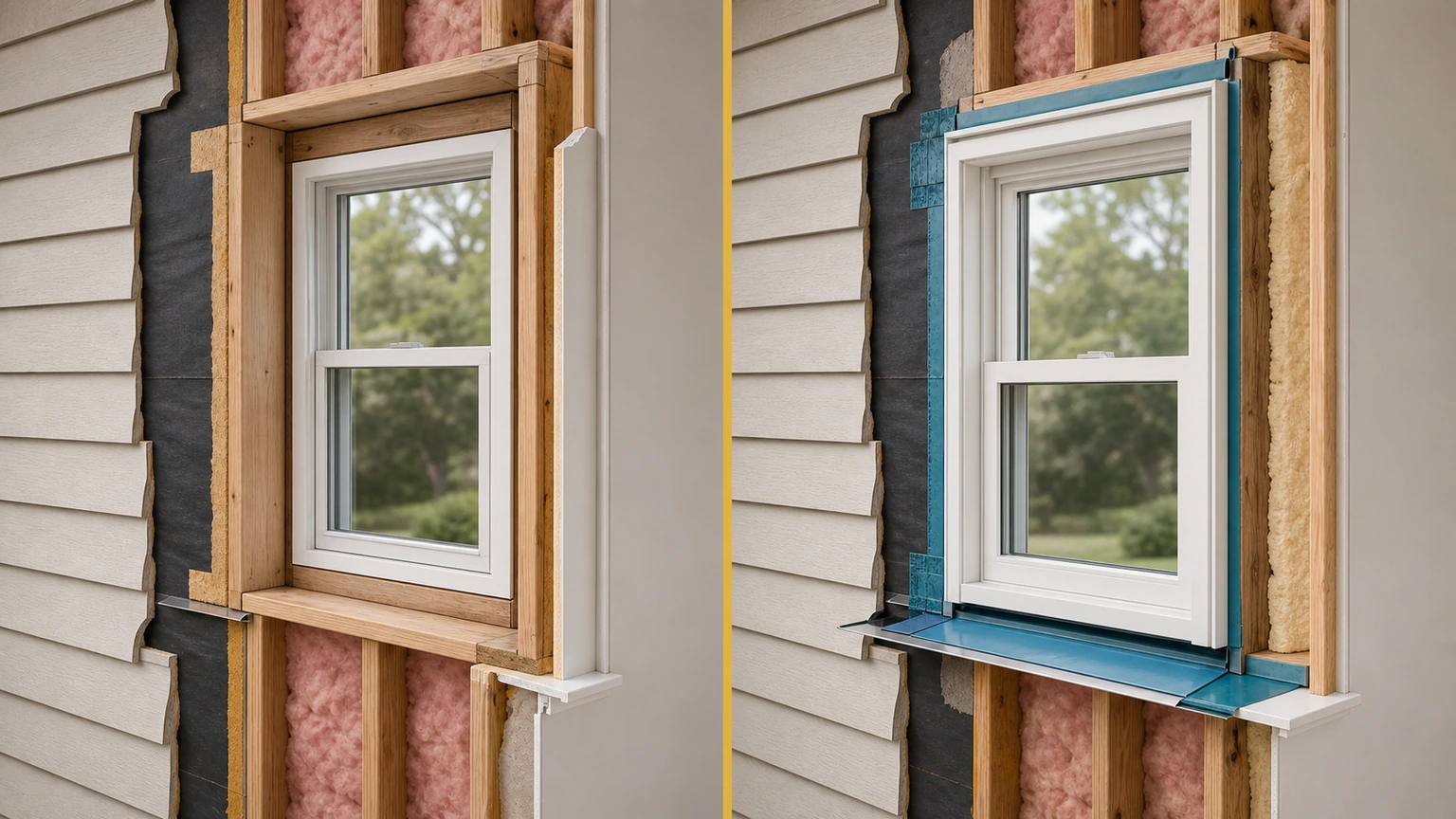
A pocket job does not fully expose the rough opening. Hidden rot, missing sill flashing, wet insulation, gaps behind the old jamb, and poor integration with the wall's drainage plane may remain concealed. That doesn't mean every insert is risky; it means the pre-installation inspection has to be honest about what can and cannot be verified.
If the contractor says exterior aluminum capping will make a questionable wood frame “as good as new,” ask how the wood was checked and how trapped water will escape. Capping can protect sound material. It does not reverse decay.
How a full-frame replacement is installed
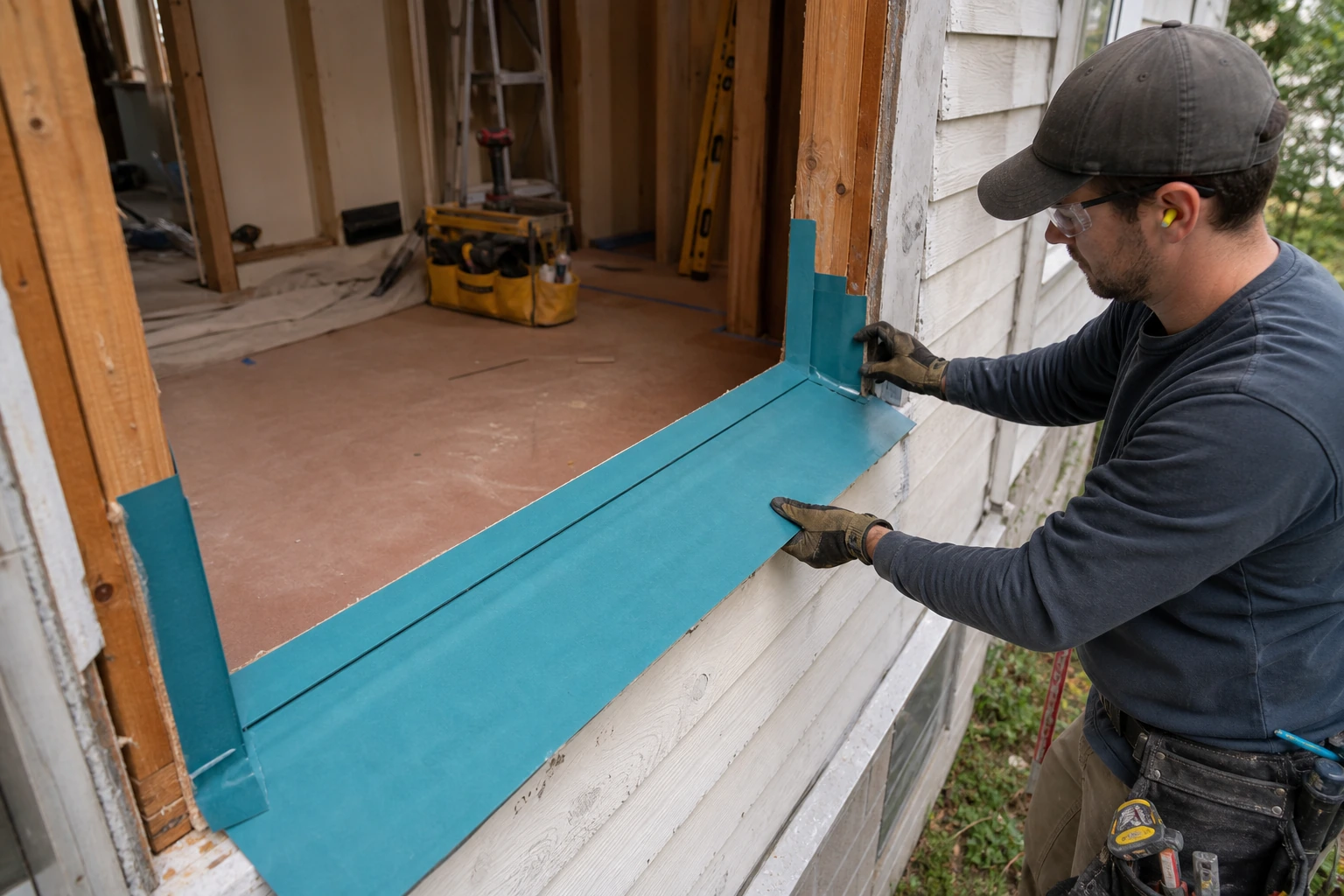
The old sash and frame are removed, exposing the rough opening and more of the wall connection. The installer can inspect the sill, framing, insulation, sheathing, and signs of water entry. Damaged material is repaired, the opening is prepared, and the new window is set, flashed, insulated, air-sealed, and trimmed.
Building-science guidance treats full replacement as an opportunity to use current water-management practices. Pan flashing below the window is intended to collect water that reaches the opening and direct it outward. Jamb and head details connect the window to the wall's water-control layer rather than relying on a bead of exposed caulk as the only defense.
When full-frame is the safer recommendation
- The old sill, jamb, brickmould, or surrounding trim is soft, split, or visibly decayed.
- Water stains, peeling paint, damp drywall, or repeated caulk repairs suggest chronic leakage.
- The frame is bowed, racked, loose, or badly out of square.
- A previous replacement window was installed inside an already reduced opening.
- You want to restore glass area, change the operating style, or alter the opening size.
- The exterior wall, siding, masonry, or flashing detail needs correction while the opening is accessible.
- The existing window contains weights, cavities, or air paths that need more complete sealing.
The water question matters more than the window label
Windows are part of the wall's drainage system. Rain should be shed down and out through overlapping materials. Building Science Corporation describes pan flashing as the element below an opening that collects water leaking through or around a window and directs it to the exterior.
A full-frame project usually provides better access to create or repair that path. A pocket installation depends more heavily on the existing sill, frame, and flashing continuing to work. If those pieces are sound, that's reasonable. If their condition is unknown after repeated leaks, preserving them may be false economy.
Caulk is a joint, not a drainage strategy
Exterior sealant has an important role, but it ages and moves. It shouldn't be the only thing keeping water out of the wall. Ask where incidental water goes if the outer sealant joint eventually cracks.
Also ask whether exterior capping leaves drainage paths open. Completely sealing the bottom of some window assemblies can trap water that was supposed to exit. The correct detail depends on the window, wall, and manufacturer instructions.
Pocket replacement usually costs less - but compare the same finished result
Pocket installations often cost less because demolition, flashing access, trim replacement, painting, and disposal are reduced. Full-frame work adds labor and materials and may uncover repairs that could not be priced confidently before removal.
National cost guides are broad. Angi's 2026 window-replacement guide places individual windows across materials and styles roughly between $300 and $2,500, with a reported project average around $7,348. That range does not tell you which installation method is included or how much trim and repair work is required.
| Estimate layer | Pocket scope may include | Full-frame scope may include |
|---|---|---|
| Removal | Sash, stops, balances, and limited trim | Complete old unit plus additional trim or cladding |
| Opening work | Cleaning and minor frame preparation | Sill and framing inspection, leveling, and repair |
| Water management | Seal to verified existing frame | New pan, jamb, and head flashing integration where applicable |
| Air and insulation | Seal between insert and old jamb | Seal between new frame and rough opening |
| Finishes | Stops, caps, and touch-up | New casing, extension jambs, exterior trim, paint, or siding repair |
| Unknowns | Hidden conditions remain less visible | More conditions exposed and potentially repaired |
A lower pocket quote is a good value only if the existing frame deserves to stay. A full-frame quote is not automatically better if it includes vague allowances, poor flashing, or unnecessary finish replacement.
How much glass area will you lose?
A pocket unit sits inside the old frame, so the new sash and frame reduce the visible opening. The difference may be modest on a large picture window and noticeable on a narrow double-hung window. Multiple generations of inserts can create especially bulky sightlines.
Ask the salesperson to provide the daylight opening or visible-glass dimensions for the actual unit, not just the outside frame size. Put painter's tape on the existing glass to show the proposed edge. You'll understand the tradeoff in thirty seconds.
Which method is more energy efficient?
Neither method wins automatically. Energy performance starts with the exact window's NFRC ratings, but installation determines whether air bypasses the frame or insulation. ENERGY STAR specifically advises insulating the space between the window frame and rough opening.
A careful pocket installation can perform well when the old frame and wall connection are sound and the remaining gaps are sealed. Full-frame replacement creates better access to the rough opening, which can help address old air leakage, pulley cavities, missing insulation, and irregular gaps.
The bigger question is what the installer will seal. Ask for interior air-seal materials, low-expansion foam or backer rod details, and exterior water-management details separately. One line saying “caulk and foam” is not enough.
What about old local wood windows?
Older wood windows are not automatically beyond repair. Sound frames may be candidates for sash repair, weatherstripping, storm windows, glass upgrades, or a carefully planned insert. Historic proportions and old-growth wood can be worth preserving.
On the other hand, repeated paint failure, soft sills, failed joints, distorted frames, and chronic water entry may support full removal. If the home has historic-district rules or significant architectural features, check requirements before changing profiles, muntins, trim, or opening dimensions.
Lead-safe work belongs in the schedule and quote
Window replacement can disturb painted trim and friction surfaces. For pre-1978 homes, EPA's Renovation, Repair and Painting Rule may apply to contractors disturbing painted surfaces. Ask about certification, containment, cleanup, and how those requirements affect cost and access.
Can a contractor mix pocket and full-frame methods in one house?
Yes, and sometimes that is the most rational plan. The dry, square bedroom windows may be good pocket candidates while a leaking bay, rotten bathroom window, or repeatedly capped front elevation needs full-frame work.
A mixed approach should follow documented conditions, not convenience. Ask the estimator to classify each opening and note the reason. That makes it easier to understand why two windows of similar size carry different labor costs.
| A useful photo checklist Before work begins, photograph the interior and exterior of every opening. During full-frame work, capture the exposed sill, framing, damage, repairs, flashing, shims, insulation, and air seal. During pocket work, document the condition and drainage of the frame being retained. |
|---|
Red flags in a replacement-window proposal
- Every window gets the same method without an opening-by-opening condition review.
- The proposal says “replacement window” but never states what frame or trim remains.
- Visible rot will be covered with aluminum rather than removed or repaired.
- No one can explain where water drains if exterior sealant fails.
- The installer cannot describe the sill, jamb, and head flashing approach.
- Foam is treated as both the complete air seal and the complete water-management system.
- The quote omits interior casing, extension jambs, exterior trim, painting, disposal, or hidden-damage rules.
- Glass-area loss is dismissed without providing finished sightline dimensions.
Questions to ask before giving a company your information
- For each opening, what stays and what is removed?
- How did you verify that the existing frame is dry, sound, square, and suitable for a pocket unit?
- What signs would make you change from pocket to full-frame after work starts?
- How much visible glass will remain in the finished window?
- How will the sill, jambs, and head manage water, and where does drainage exit?
- How will the window connect to the wall's air barrier and water-control layer?
- Which insulation and interior air-seal materials are included?
- Which trim, cladding, paint, siding, masonry, and disposal work is included?
- How are hidden rot or framing repairs documented and priced before you proceed?
- Does lead-safe work apply, and who is responsible for permits or local approvals?
- What product, glass, labor, installation, seal-failure, and transfer warranties apply?
Frequently asked questions
Is pocket replacement the same as insert replacement?
Usually, yes. Both generally refer to installing a new unit inside the existing perimeter frame, but ask the contractor to define the exact removal scope.
Is full-frame replacement always better?
No. It provides more access and is appropriate for damaged or questionable openings, but it costs more and can unnecessarily disturb good trim when the existing frame is sound.
Can pocket windows leak?
Any installation can leak. Pocket performance depends on the retained frame, sill, flashing, drainage, perimeter seals, and the new unit.
Does full-frame replacement damage siding?
It may disturb siding, brickmould, trim, or interior casing, depending on wall construction and installation method. A detailed proposal should explain the boundaries and repair plan.
Will full-frame replacement give me more glass?
Often, because the new window is not nested inside the old frame. The actual gain depends on product profile and opening dimensions.
Can a pocket window fix a rotten sill?
Not by itself. Decayed material should be exposed enough to assess, remove, and repair. Covering it does not restore structural integrity.
Which method is faster?
Pocket installation is usually faster and less disruptive. Full-frame work takes longer because removal, inspection, flashing, insulation, trim, and repairs are more extensive.
Can I decide after the old sash is removed?
Sometimes hidden conditions change the scope, but the contract should define inspection steps, allowances, and written change-order approval before work begins.
The practical next step
Don't begin by asking which method is cheaper. Begin by asking whether the existing frame and wall connection are sound enough to keep. If the answer is yes, compare the pocket option's glass-area loss and sealing detail. If the answer is no or uncertain after repeated leaks, price full-frame work with a clear flashing and repair scope.
The best estimate will not force one method onto every house. It will show you the condition, explain the tradeoff, and put the finished boundaries in writing.
Sources and cost methodology
Installation and cost sources were reviewed in August 2026. Building details vary with the window, wall, cladding, exposure, and manufacturer instructions. Published prices are broad national planning references, not your area bids.
FGIA: Best Practices for Window and Door Replacement
FGIA: Full-Frame Replacement Guidelines
Building Science Corporation: Wood Window Repair and Replacement
Building Science Corporation: Pan Flashing for Openings
Building Science Corporation: Understanding Drainage Planes
ENERGY STAR: Residential Windows, Doors, and Skylights
ENERGY STAR: Sealing Behind Window and Door Trim
U.S. EPA: Renovation, Repair and Painting Program